Academic translation services for researchers and universities
myTranscriptionPlace provides academic translation support for researchers, universities, research institutions and academic professionals working with multilingual content. From research papers and journal manuscripts to theses, dissertations and research questionnaires, academic translation requires careful attention to subject-specific terminology, context and the original meaning.
Whether you are preparing research for an international audience or translating academic materials for a multilingual study, our team can help you identify the appropriate translation and review requirements for your project.
4.6/5 | 120+ Customer Reviews
$0.7 per word


What are academic translation services?
Academic translation services convert scholarly and research-related documents from one language into another while preserving their meaning, terminology, structure and academic tone. These services support researchers and institutions that need to communicate findings, methodologies and educational materials across language barriers.
Academic translation may be required for journal submissions, university research projects, dissertations, surveys, research proposals and international collaborations.

What Are Academic Transcription Services?
Academic transcription services convert recorded academic and research content, including interviews, focus groups, lectures, seminars, and discussions, into accurate written transcripts.
Researchers use transcripts to review participant responses, code qualitative data, perform thematic analysis, prepare research reports, and support academic publications.
myTranscriptionPlace provides human-reviewed academic transcription for researchers, universities and students in the UK, with options for speaker identification, timestamps, verbatim transcription and customised formatting.
How to Order
We combine native talent, tested processes and lean technology, to deliver fast service and accurate outputs
Upload Your Files
Upload your audio or video files using our secure upload or share them over email.
Picked by Transcribers
Our team of 100+ native transcriptionists transcribe with 99% accuracy.
Quality Check
Every file is peer-checked by another native linguist to ensure 99% accuracy.
Delivered by Deadline
Predictable pricing. No quote games.
What academic content can we transcribe?
Academic documents we translate
We support academic and research translation requirements across a range of document types, depending on the project scope.
Research papers and journal manuscripts
Translate research findings, literature reviews, abstracts and manuscripts while maintaining terminology consistency and the intended academic meaning.
Theses and dissertations
Support multilingual academic projects involving doctoral theses, master's dissertations and other substantial research documents.
Research proposals and reports
Translate project proposals, grant-related materials, study reports and research documentation for relevant academic audiences.
Questionnaires and research instruments
Translate surveys, questionnaires, interview guides and participant-facing research materials while considering the context and intended meaning of each question.
Academic and educational materials
Translate course materials, academic reports, presentations and other educational content according to the required language, format and audience.
Translation expertise for academic research
Academic content often includes specialized terminology, complex arguments and discipline-specific concepts. A suitable translation workflow should preserve the author's intended meaning while maintaining consistent terminology throughout the document.
When assessing an academic translation project, we consider the subject area, document type, target language, intended audience and any project-specific terminology or formatting requirements.
What to look for in academic translation quality
- Subject-specific terminology and consistent language use
- Preservation of meaning, methodology and research context
- Appropriate academic tone and readability
- Proofreading or additional review where required
- Compliance with the client's formatting and submission requirements
Academic project in progress? Contact our team to discuss your document, target language and review requirements.
Our academic translation quality process
A structured translation workflow helps maintain accuracy and consistency throughout an academic project.
Project assessment
Review the document type, source language, target language, subject area and intended use.
Terminology preparation
Identify key terms, reference materials and client-specific language preferences where applicable.
Translation
Translate the document while preserving its meaning, context and academic tone.
Language review
Conduct proofreading or additional linguistic checks according to the agreed service scope.
Final delivery
Check agreed formatting and deliver the translated files in the requested format where supported.
A structured translation workflow helps maintain accuracy and consistency throughout an academic project.
Academic subjects and research areas
Academic translation requirements vary by discipline. Depending on available expertise, projects may include:
- Social sciences and humanities
- Education and educational research
- Psychology and behavioural research
- Business and management
- Scientific and technical research
- Public health and medical research
Share your subject area and document requirements so the project can be assessed for appropriate linguistic and technical expertise.
Why work with myTranscriptionPlace

Handpicked Talent
Repeatable process paired with human oversight, to deliver consistently dependable results

Predictable Turnaround
Pick your delivery date and rest assured that we’ll meet it

Transparent Pricing
We work with predefined prices across services. Our pricing calculator ensure all our clients have absolute cost transparency.

Accuracy Promise
99% accuracy, thanks to our native speakers reviewing and peer-checking each transcript
How to order academic translation services
Getting started with an academic translation project involves a few straightforward steps.
- Share the document type, word count and source language.
- Specify the target language, subject area and intended use.
- Explain any formatting, terminology, confidentiality or review requirements.
- Receive a project assessment and quotation.
- Confirm the scope and delivery timeline before work begins.
Get accurate academic translation services
Turn your international research into reliable, publication-ready text. Whether you are translating PhD interviews, qualitative field data, university focus groups, or cross-border academic research, myTranscriptionPlace helps convert your multilingual source materials into highly accurate, contextually precise translations. Save valuable research time, protect the nuance of your data, and streamline your global workflow. Start your academic translation project today.
Case Studies
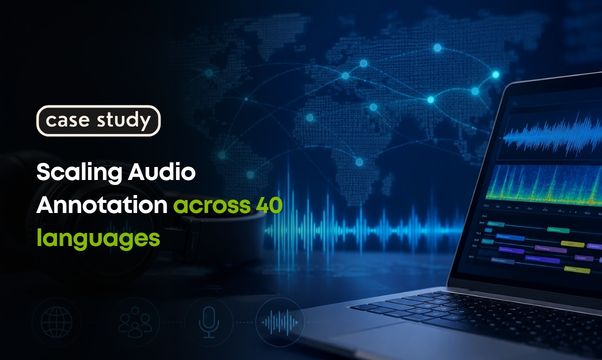
Scaling Audio Annotation Across 40 Languages: 150 Hours Delivered with 300+ Freelancers
Discover how audio annotation was successfully scaled across 40 languages, overcoming multilingual challenges while maintaining accuracy, consistency and efficiency.
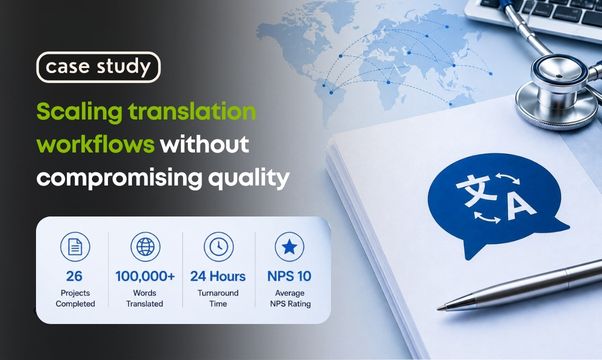
How myTranscriptionPlace Scaled Medical Translation for Global Research Projects
See how scalable translation workflows can handle growing multilingual demands without compromising quality, accuracy or consistency.

Case Study : How we streamlined Translation Workflows for ESC-20
Education Service Center, Region 20 (ESC-20) was challenged with inconsistent and hard to standardize translations. Read on to understand how myTranscriptionplace brought in efficiencies to their translation workflows.