Transcription is the process of converting spoken language from an audio or video recording into written text, usually in the same language as the original speech. For example, Telugu speech can be transcribed into written Telugu, while Kannada speech can be converted into written Kannada.
Professional transcription involves more than simply listening and typing. Accuracy can depend on accents, pronunciation, regional expressions, background noise, multiple speakers, audio quality, and industry-specific terminology.
For organizations working with multilingual recordings, understanding what transcription means and how language-specific transcription works can help them choose the right transcription approach. MyTranscriptionPlace provides professional transcription services for businesses, researchers, healthcare organizations, legal professionals, media companies, educational institutions, and other organizations.
What Does Transcription Mean? Quick Answer
Transcription means converting spoken words from an audio or video recording into written text. Transcription generally preserves the original language and meaning of the speaker.
For example:
Telugu speech → written Telugu = Telugu transcription
Marathi speech → written Marathi = Marathi transcription
Malayalam speech → written Malayalam = Malayalam transcription
Kannada speech → written Kannada = Kannada transcription
Transcription is commonly used for interviews, meetings, research studies, lectures, podcasts, focus groups, business discussions, healthcare recordings, legal recordings, and media content.
What Is Transcription?
The basic definition of transcription is the conversion of spoken language into written language.
When an interview, meeting, lecture, podcast, focus group, conference, or research session is recorded, transcription creates a written record of the spoken content. Both audio and video recordings can be transcribed.
A transcript can make recorded information easier to:
Read and review
Search and organize
Analyze for research
Share with teams
Reference later
Archive for documentation
Extract important information from
However, creating an accurate transcript can require more than speech-to-text software. Recordings may contain regional accents, informal expressions, overlapping conversations, background noise, unclear speech, technical terminology, or several speakers talking at once.
Professional transcription combines careful listening, language knowledge, contextual understanding, editing, and quality control to create a reliable written record.
How Does Transcription Work?
A professional transcription process generally includes several stages:
1. Audio or Video Is Provided
The client provides an audio or video recording containing an interview, meeting, lecture, podcast, research session, call, or other spoken content.
2. The Recording Is Reviewed
The recording is listened to carefully to understand the language, speakers, subject matter, pronunciation, accents, and overall context.
3. Speech Is Converted Into Text
The spoken words are written in the appropriate language while preserving the meaning and important details of the original recording.
4. Context and Terminology Are Checked
Names, technical terms, industry-specific vocabulary, regional expressions, and potentially unclear sections are reviewed.
5. The Transcript Is Edited and Proofread
The transcript is checked for accuracy, consistency, speaker identification, formatting, and readability according to the project's requirements.
6. The Completed Transcript Is Delivered
The final written document can then be searched, analyzed, shared, or archived.
Telugu Transcription
What Is Telugu Transcription?
Telugu transcription is the process of converting spoken Telugu from an audio or video recording into written Telugu while preserving the original meaning and context.
Telugu recordings can vary considerably in pronunciation, vocabulary, accents, and conversational style. Regional speech patterns and informal expressions may make some recordings more challenging for automated transcription systems.
Telugu transcription can be useful for:
Research interviews
Academic studies
Focus groups
Market research
Business meetings
Media recordings
Educational content
Customer interviews
Podcasts and other recorded conversations
Professional Telugu transcription requires attention to pronunciation, context, speaker intent, names, terminology, and regional language variations.
Marathi Transcription
What Is Marathi Transcription?
Marathi transcription is the process of converting spoken Marathi from an audio or video recording into written Marathi while retaining the original meaning and important details.
Marathi recordings may contain regional variations, informal speech, specialized vocabulary, or multiple speakers. These factors can influence transcription accuracy.
Marathi transcription is commonly useful for:
Research interviews
Focus groups
Academic projects
Corporate meetings
Educational recordings
Media content
Customer research
Business discussions
A carefully prepared Marathi transcript gives organizations a searchable written record that can be reviewed and analyzed without repeatedly listening to the original recording.
Malayalam Transcription
What Is Malayalam Transcription?
Malayalam transcription is the process of converting spoken Malayalam from an audio or video recording into written Malayalam.
Accurate Malayalam transcription may require careful attention to pronunciation, regional accents, conversational expressions, background noise, and technical terminology.
Malayalam transcription can support:
Research interviews
Healthcare-related recordings
Educational content
Academic research
Business meetings
Media projects
Focus groups
Customer research
For multilingual organizations, reliable Malayalam transcription makes recorded information easier to analyze, document, search, and share.
Kannada Transcription
What Is Kannada Transcription?
Kannada transcription is the process of converting spoken Kannada from an audio or video recording into written Kannada while preserving the meaning and context of the original speech.
Kannada recordings can include regional pronunciation differences, informal expressions, multiple speakers, and industry-specific terminology.
Kannada transcription can be useful for:
Interviews
Academic research
Customer research
Business meetings
Focus groups
Educational recordings
Media projects
Market research
A reliable Kannada transcript transforms spoken information into a written resource that organizations can review, analyze, and preserve.
Telugu vs. Marathi vs. Malayalam vs. Kannada Transcription
Although the fundamental purpose of transcription is the same across languages, each language can present different challenges.
The language may differ, but the goal remains the same: create an accurate written representation of the original spoken content.
Transcription vs. Translation: What Is the Difference?
Transcription and translation are not the same thing.
The simplest distinction is:
Transcription changes speech into written text, while translation changes content from one language into another.
For example:
Spoken Telugu → written Telugu = Transcription
Spoken Marathi → written Marathi = Transcription
Spoken Telugu → English text = Translation
Written Kannada → English = Translation
Transcription
Transcription usually keeps the original language and converts spoken words into written form.
Example:
Telugu audio → written Telugu
Translation
Translation communicates the content in another language.
Example:
Telugu audio → English text
If your goal is to create a written record of what someone said, you generally need transcription. If your goal is to make that content available in another language, you generally need translation.
Transcription vs. Translation vs. Transliteration
These three terms are often confused.
Understanding the difference is important when ordering a language service because the required process depends on the final format and purpose of the content.
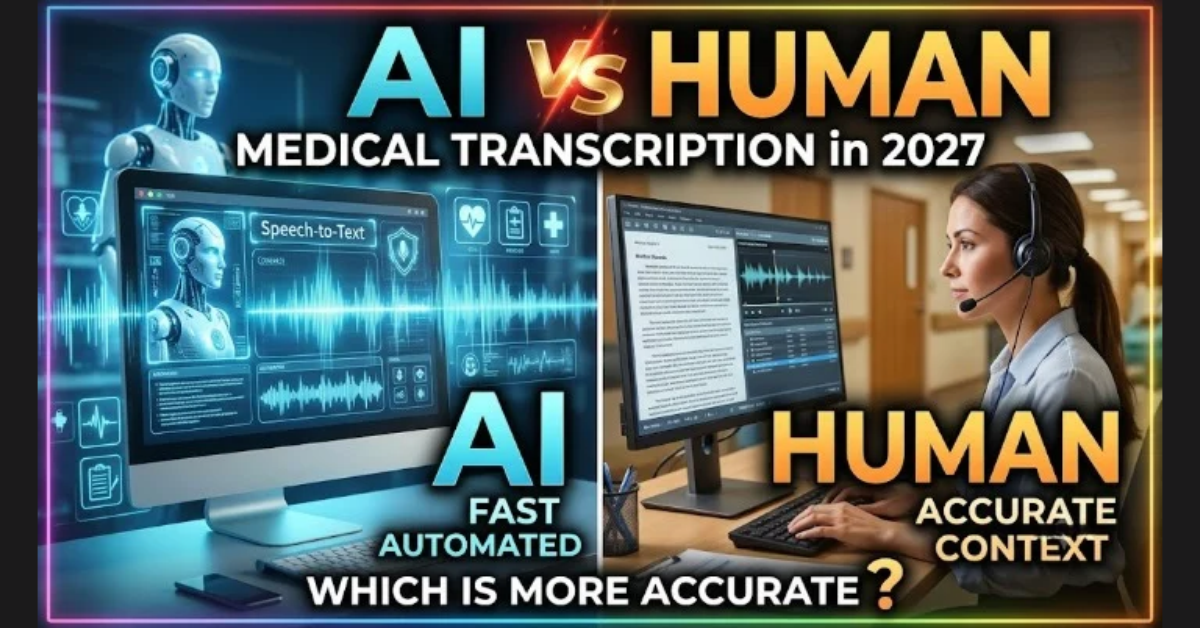
Automated vs. Professional Transcription
Automated transcription tools can convert speech into text quickly and can be useful for clear recordings. However, accuracy may vary depending on the characteristics of the recording.
Factors that can affect automated transcription include:
Regional accents
Background noise
Poor recording quality
Multiple speakers
Overlapping conversations
Unusual names
Technical terminology
Industry-specific vocabulary
Informal or conversational speech
Professional transcription can add human review and contextual understanding to improve the reliability of the final transcript.
For straightforward recordings, automated transcription may provide a useful starting point. For research, legal, healthcare, business, media, or other situations where accuracy is particularly important, professional transcription and quality control can provide additional value.
Who Uses Transcription Services?
Transcription is used across many industries because converting speech into written text makes recorded information easier to search, analyze, document, and share.
Researchers
Researchers commonly transcribe interviews, focus groups, field recordings, and qualitative research sessions for analysis and documentation.
Healthcare Organizations
Healthcare-related organizations may use transcription for appropriate recorded material, dictated content, interviews, research, and documentation, subject to applicable privacy and regulatory requirements.
Legal Professionals
Legal professionals may require transcripts of interviews, depositions, hearings, or other recordings where a written record is needed.
Businesses
Companies can use transcription for meetings, conferences, customer interviews, calls, internal discussions, and recorded presentations.
Media Companies
Media organizations can transcribe interviews, documentaries, podcasts, video recordings, and other spoken content.
Educational Institutions
Schools, colleges, universities, and researchers can use transcription for lectures, interviews, seminars, research recordings, and educational projects.
Market Research Companies
Market researchers can transcribe customer interviews and focus groups to identify themes, opinions, preferences, and other insights.
When Do You Need Professional Transcription?
Professional transcription can be particularly useful when:
A recording contains multiple speakers
Speakers have strong regional accents
The audio contains technical terminology
The recording is important for research or documentation
Background noise makes the recording difficult to understand
Speaker identification is required
Timestamps are required
The transcript needs human quality control
The content will be used for professional or organizational purposes
Accuracy and contextual understanding are important
The right transcription approach depends on the recording, language, industry, desired format, and intended use of the transcript.
How to Choose a Professional Transcription Service
When selecting a transcription service, consider more than just price or turnaround time.
Language Expertise
Choose a provider with experience in the specific language and type of recording you need transcribed.
Accuracy and Quality Control
Find out whether transcripts are reviewed and quality-checked before delivery.
Experience With Accents and Regional Variations
For Telugu, Marathi, Malayalam, Kannada, and other languages, familiarity with regional speech patterns can be valuable.
Industry Knowledge
If your recording contains medical, legal, technical, academic, or business terminology, relevant subject-matter experience can improve transcription quality.
Speaker Identification
For interviews, meetings, and focus groups, ask whether speakers can be clearly identified in the transcript.
Formatting Requirements
Check whether the provider can accommodate timestamps, speaker labels, verbatim requirements, and other formatting preferences.
Confidentiality
If recordings contain confidential, personal, legal, healthcare, or business information, review the provider's confidentiality and data-handling practices before submitting files.
Why Professional Language Transcription Matters?
Language transcription is not simply about replacing sounds with words.
An accurate transcript needs to reflect what the speaker actually said while taking the surrounding context into account. This becomes particularly important when recordings contain accents, informal speech, multiple speakers, specialized terminology, or less-than-perfect audio.
For organizations working with Telugu, Marathi, Malayalam, Kannada, or other languages, professional transcription can turn recorded conversations into useful written information that can be reviewed, searched, analyzed, and preserved.
MyTranscriptionPlace provides professional transcription services designed to help organizations convert audio and video recordings into reliable written content across multiple languages and industries.
Key Takeaways
Transcription means converting spoken language into written text.
Both audio and video recordings can be transcribed.
Telugu, Marathi, Malayalam, and Kannada can each be transcribed into their respective written languages.
Transcription generally preserves the original language, while translation converts content into another language.
Transliteration is different from both transcription and translation because it represents words using another writing system.
Accents, audio quality, background noise, multiple speakers, and technical terminology can affect transcription accuracy.
Automated transcription can be useful, while professional human review can be valuable when accuracy and context are important.
Researchers, healthcare organizations, legal professionals, businesses, media companies, educators, and market researchers commonly use transcription services.
Need Professional Transcription?
Whether you have a Telugu interview, Marathi focus group, Malayalam recording, Kannada meeting, or multilingual business project, accurate transcription can turn spoken information into a useful written record.
MyTranscriptionPlace can help organizations with professional transcription requirements across multiple languages and industries.
Our Best Translation Services
English to Indonesian Translation | English to Spanish Translation | English to Italian Translation | English to Russian Translation | English to Danish Translation | English to Vietnamese Translation | English to Japanese Translation | English to Finnish Translation | English to Dutch Translation | English to Arabic Translation | English to Norwegian Translation | English to Greek Translation.
Frequently Asked Questions About Transcription
1. What is transcription?
Transcription is the process of converting spoken words from an audio or video recording into written text, generally in the same language as the original speech.
2. What does transcription mean in simple words?
In simple terms, transcription means listening to spoken content and turning what was said into written text.
3. What is audio transcription?
Audio transcription is the process of converting speech from an audio recording into written text. Common examples include interviews, meetings, calls, podcasts, lectures, and focus groups.
4. Can video recordings be transcribed?
Yes. Video transcription converts the spoken dialogue in a video recording into written text. The transcript can be used for research, documentation, content analysis, accessibility, or other purposes.
5. What is Telugu transcription?
Telugu transcription converts spoken Telugu from an audio or video recording into written Telugu while preserving the original meaning and context.
6. What is Marathi transcription?
Marathi transcription converts spoken Marathi from an audio or video recording into written Marathi. It can be used for research interviews, meetings, educational content, media, and business recordings.
7. What is Malayalam transcription?
Malayalam transcription converts spoken Malayalam from an audio or video recording into written Malayalam. Accuracy can depend on pronunciation, accents, audio quality, technical terms, and the number of speakers.
8. What is Kannada transcription?
Kannada transcription converts spoken Kannada into written Kannada while preserving the meaning and important details of the original recording.
9. What is the difference between transcription and translation?
Transcription converts spoken language into written text, usually in the same language. Translation converts content from one language into another.
10. Is transcription always done in the same language?
Usually, yes. Transcription generally preserves the language spoken in the original recording. If the content needs to be converted into another language, translation is generally required.
11. What affects transcription accuracy?
Audio quality, background noise, accents, regional pronunciation, multiple speakers, overlapping conversations, technical terminology, and unclear speech can all affect transcription accuracy.
12. Is professional transcription better than automated transcription?
It depends on the recording and the required level of accuracy. Automated tools can work well for clear recordings, while professional human review can be particularly valuable for recordings involving accents, multiple speakers, specialized terminology, or difficult audio.
13. Which industries use transcription services?
Research, healthcare, legal, education, media, market research, technology, and business organizations commonly use transcription services to convert spoken recordings into written content.
14. Can Telugu, Marathi, Malayalam, and Kannada recordings all be transcribed?
Yes. Telugu, Marathi, Malayalam, and Kannada audio or video recordings can be professionally transcribed into their respective written languages, depending on the recording quality, language requirements, and project specifications.

Nishi Singh
(Content Writer & SEO Manager)
She is an SEO Manager with over 8 years of experience in marketing and content creation. She specializes in SEO, content strategy, and paid advertisements, helping website owners across SaaS, B2B businesses, and e-commerce platforms achieve measurable growth. With a strong focus on driving organic traffic and crafting impactful content, Nishi has established herself as a trusted expert in the digital marketing space. When she's not optimizing websites, she channels her energy into marathon running, embracing challenges both on and off the track.