Spanish transcription services convert spoken Spanish from audio or video into accurate, usable written text. The cost typically depends on recording length, audio quality, number of speakers, turnaround time, formatting requirements, and whether human quality review is included.
AI transcription can turn clear recordings into text within minutes, making it useful for straightforward projects. However, Spanish recordings can contain regional accents, dialects, informal expressions, overlapping speech, background noise, and specialized terminology that may affect automated accuracy. For business meetings, interviews, focus groups, market research, academic research, and other accuracy-sensitive projects, human review can help identify and correct these issues.
At MyTranscriptionPlace, we combine transcription technology with human quality review to produce Spanish transcripts that are designed to be accurate, clear, and useful for their intended purpose.
Spanish Transcription Services: Quick Answer
Spanish transcription services convert spoken Spanish from an audio or video recording into written text. Pricing is generally influenced by the length and quality of the recording, number of speakers, turnaround requirements, formatting, and level of review required.
AI transcription is often the fastest option for clear, uncomplicated recordings. Professional human-reviewed transcription can be more appropriate when the recording contains strong accents, multiple speakers, background noise, technical terminology, or information where an incorrect word, name, number, or statement could affect the meaning of the transcript.
When choosing a Spanish transcription provider, consider accuracy, Spanish-language expertise, human quality control, speaker identification, timestamps, confidentiality, turnaround time, and formatting options rather than speed alone.
How Much Do Spanish Transcription Services Cost?
The cost of Spanish transcription depends on the characteristics of each recording and the type of transcript required. Some providers charge based on audio or video duration, while others use project-based pricing.
The most common factors affecting Spanish transcription pricing include:
For this reason, there is no single price that applies to every Spanish transcription project. A clear, single-speaker recording is generally simpler to process than a two-hour focus group with multiple speakers, overlapping speech, background noise, and specialized terminology.
At MyTranscriptionPlace, project requirements can be reviewed to determine the appropriate pricing based on recording length, complexity, turnaround time, and required level of accuracy.
What Should You Look for in a Spanish Transcription Service?
Choosing a transcription provider based only on the lowest price or fastest turnaround can create problems later. When accuracy matters, consider the following factors.
1. Spanish-Language Expertise
Spanish is spoken across many countries and regions, and pronunciation, vocabulary, expressions, and speech patterns can vary. A provider should understand that Spanish transcription is not simply a matter of applying one pronunciation model to every recording.
2. Human Quality Review
AI can produce transcripts quickly, but professional review can identify mistakes involving names, numbers, terminology, speaker changes, accents, and context.
Ask whether a provider offers human review and what aspects of the transcript are checked before delivery.
3. Speaker Identification
Speaker identification is especially important for interviews, meetings, focus groups, research studies, and panel discussions.
A useful transcript should make it clear who said what rather than presenting the entire recording as one block of text.
4. Timestamps
Timestamps can make a transcript easier to use when reviewing a video, locating a particular statement, preparing subtitles, or conducting qualitative research.
Depending on the project, timestamps may be added at regular intervals or around speaker changes and important sections.
5. Turnaround Time
Fast delivery can be valuable, but turnaround time should be considered alongside accuracy.
A transcript delivered quickly but containing incorrect names, numbers, terminology, or statements may require additional editing and ultimately take more time to use.
6. Formatting Options
The transcript should be delivered in a format appropriate for its intended purpose.
Requirements may include:
Speaker labels
Paragraph formatting
Timestamps
Verbatim transcription
Clean-read transcription
Headings
Tables or structured formatting
Custom client templates
7. Confidentiality
Business meetings, research interviews, customer conversations, and internal recordings may contain sensitive information. Before selecting a provider, organizations should understand how recordings and transcripts are handled, stored, accessed, and protected.
8. Quality Assurance
Ask how the provider checks the finished transcript.
A professional quality-control process may include reviewing difficult audio, checking names and numbers, verifying speaker identification, correcting terminology, and reviewing sections where automated transcription may have been uncertain.
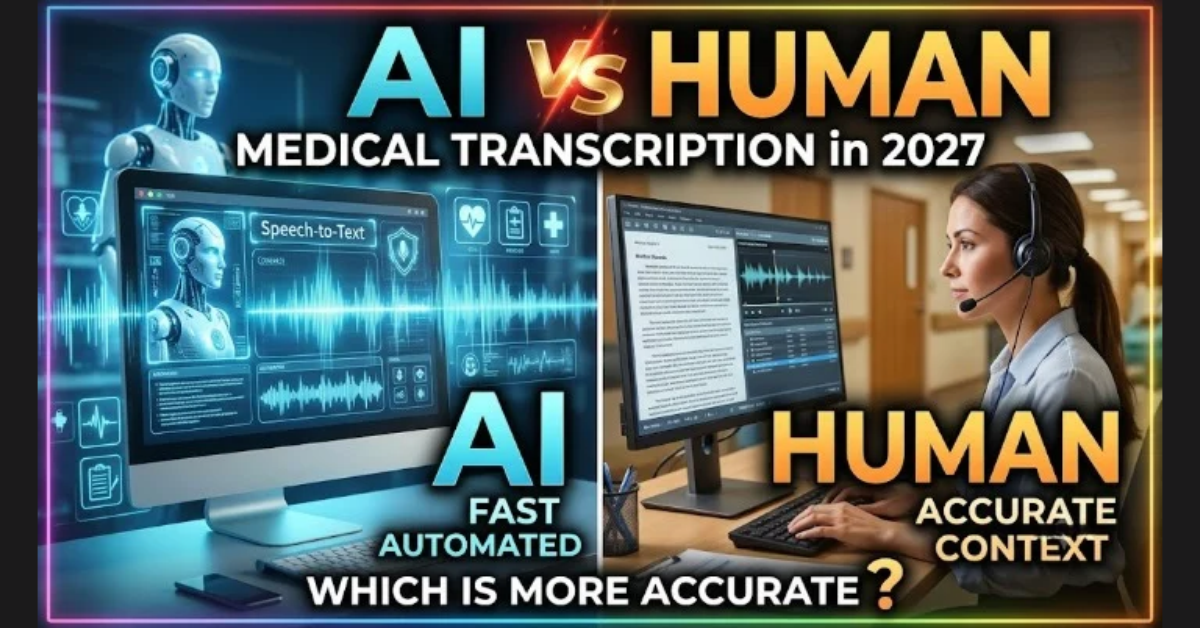
AI vs. Human-Reviewed Spanish Transcription
AI transcription has changed the speed and accessibility of speech-to-text services. For clear recordings, automated transcription can be highly useful.
However, speed does not automatically guarantee accuracy.
The best option depends on the purpose of the transcript. AI may be suitable when speed is the main priority and minor errors are acceptable. Human-reviewed transcription becomes more valuable when the transcript will be used for research, business decisions, documentation, content production, or other purposes where accuracy matters.
Why Human Review Matters in Spanish Transcription?
Professional transcription involves more than converting sounds into words.
A human reviewer can use context to identify difficult statements, distinguish between speakers, recognize names and terminology, and assess sections where the recording quality makes automated transcription uncertain.
For example, an automated system may struggle when:
Two people speak at the same time
A speaker talks quickly
A recording contains background conversations
A microphone produces inconsistent audio
A speaker has a strong regional accent
Several people have similar voices
Names or numbers are mentioned
Industry-specific terminology is used
Informal or regional expressions appear
These issues may be especially important in interviews, focus groups, market research, academic research, and business meetings because a small transcription error can change the interpretation of a statement.
At MyTranscriptionPlace, technology can help accelerate the transcription process, while human review provides an additional layer of quality control for projects where the meaning and accuracy of the recording matter.
Spanish Dialects and Accents in Transcription
Spanish is spoken across Europe, Latin America, and other regions, and differences in pronunciation and vocabulary can affect transcription.
Depending on the recording, a Spanish transcription project may involve:
European Spanish
Mexican Spanish
Central American Spanish
Caribbean Spanish
Colombian Spanish
Argentine Spanish
Chilean Spanish
Peruvian Spanish
Other regional varieties of Spanish
Regional vocabulary and pronunciation do not necessarily make a recording impossible to transcribe, but they can affect automated speech recognition.
Audio quality also matters. A clear recording of a speaker with a regional accent may be easier to transcribe than a low-quality recording with background noise, overlapping speech, and multiple speakers.
Spanish Audio Transcription Services
Spanish audio transcription converts spoken Spanish from recordings such as:
Interviews
Focus groups
Meetings
Podcasts
Research recordings
Customer conversations
Training recordings
Conferences
Telephone recordings
Business discussions
For audio transcription, the quality of the original recording can have a significant effect on the final result.
Clear speech, good microphone placement, limited background noise, and minimal speaker overlap generally make transcription easier. Poor-quality recordings may require additional human review to determine unclear words and statements.
Spanish Video Transcription Services
Spanish video transcription converts spoken content from video into written text. It can be useful for interviews, educational content, webinars, podcasts, social media videos, training materials, and other recorded content.
Video transcription may require more than speech recognition. Depending on the project, the transcript may also need:
Speaker identification
Timestamps
Paragraph formatting
Caption-ready formatting
Verbatim transcription
Identification of unclear speech
Consistent terminology
When multiple people appear in a video, accurate speaker identification can be particularly important.
A professionally reviewed Spanish video transcript should be easy to follow and should preserve the meaning of the original conversation rather than simply reproducing automated speech-recognition output.
Spanish Transcription for Research and Market Research
Spanish transcription is particularly valuable for qualitative research because researchers often need to analyze exactly what participants said.
Common applications include:
Customer interviews
Focus groups
User research
Academic interviews
Consumer research
Market research
Field interviews
Product feedback sessions
In these situations, seemingly small transcription differences can influence how researchers interpret participant responses.
Names, numbers, expressions, pauses, speaker changes, and terminology may all be relevant depending on the research methodology.
For research teams, a clear and accurately structured transcript can make it easier to search, code, compare, and analyze interview or focus-group data.
Spanish Transcription for Businesses
Businesses may use Spanish transcription for:
Internal meetings
Customer interviews
Sales calls
Employee interviews
Training sessions
Market research
Product feedback
Recorded presentations
Customer support analysis
Accurate transcripts can help organizations turn recorded conversations into searchable and reusable business information.
For example, a company conducting customer interviews in Spanish may use transcripts to identify recurring customer concerns, product feedback, or frequently mentioned themes.
Spanish Transcription vs. Spanish Translation
Transcription and translation are different services.
Spanish transcription converts spoken Spanish into written Spanish.
Spanish translation converts content from Spanish into another language, such as English.
For example:
Spanish audio recording → Spanish written transcript → English translation
A customer who needs an English version of a Spanish recording may require both transcription and translation rather than transcription alone.
Understanding this distinction can help organizations select the right service for their project.
Verbatim vs. Clean Spanish Transcription
Not every project requires the same transcription style.
Verbatim Transcription
A verbatim transcript attempts to preserve spoken language more closely, including features such as repetitions, filler words, false starts, and other speech characteristics depending on the requested standard.
This can be useful for certain research, legal, linguistic, or analytical projects.
Clean Transcription
A clean transcript focuses on readability while preserving the speaker's intended meaning. Some filler words, repetitions, or unnecessary verbal patterns may be removed according to the agreed transcription guidelines.
Clean transcription can be useful for business content, articles, internal documentation, and other situations where readability is a priority.
The appropriate style depends on how the transcript will be used.
Common Problems with Automated Spanish Transcription
Automated transcription systems can perform well under favorable recording conditions, but potential issues include:
The importance of these errors depends on the intended use of the transcript.
A transcript used simply as a rough reference may tolerate some errors. A transcript used for research, business documentation, or important decision-making may require a higher level of review.
Why Choose MyTranscriptionPlace for Spanish Transcription?
Every recording has a purpose, and that purpose should influence how the transcription is prepared.
A research interview may contain insights that depend on the exact wording of a participant's response. A business meeting may include names, figures, decisions, or action items that need to be captured correctly. A video may require speaker identification and timestamps so that the transcript can be used alongside the original recording.
MyTranscriptionPlace provides Spanish transcription services for audio and video content, with a focus on producing transcripts that are clear, accurate, and practical for their intended use.
Our approach combines technology with human review so that difficult sections can receive additional attention rather than relying solely on automated speech recognition.
For accuracy-sensitive projects, this combination can provide greater confidence than using an automated transcript without quality control.
How to Get Better Spanish Transcription Results
The quality of the original recording can make a significant difference.
For better transcription results:
Use a good-quality microphone whenever possible.
Minimize background noise.
Avoid having multiple people speak simultaneously.
Identify speakers when submitting the recording if possible.
Provide names, industry terms, or terminology that may appear in the recording.
Specify whether you need verbatim or clean transcription.
Explain whether timestamps are required.
State the desired turnaround time.
Explain how the transcript will be used if special formatting or accuracy requirements apply.
Providing this information upfront can help the transcription provider understand the project requirements and deliver a transcript that better matches the intended use.
Key Takeaways
Spanish transcription services convert spoken Spanish into written text from audio or video recordings.
Pricing depends on factors such as recording length, audio quality, speaker count, turnaround time, formatting, and review requirements.
AI transcription is fast and can work well for clear recordings, but it may struggle with accents, overlapping speech, background noise, names, numbers, and specialized terminology.
Human review can improve quality when accuracy and context are important.
Spanish accents and regional vocabulary can affect automated transcription results.
Spanish video transcription may require speaker identification, timestamps, and additional formatting.
Researchers, businesses, content teams, and market researchers can benefit from professionally prepared Spanish transcripts.
When choosing a provider, evaluate accuracy, quality control, confidentiality, turnaround time, formatting, and Spanish-language expertise—not price alone.
Final Thoughts
AI has made Spanish transcription faster and more accessible, but speed is only one measure of a useful transcript.
The right transcription service should provide a balance of accuracy, turnaround time, Spanish-language expertise, quality control, formatting, and usability. This becomes especially important when recordings contain regional accents, multiple speakers, background noise, technical terminology, or information that will be used for research or business decisions.
For straightforward recordings, automated transcription may be sufficient. For accuracy-sensitive projects, combining technology with professional human review can provide an additional level of confidence.
If you need Spanish transcription services, Spanish audio transcription, or Spanish video transcription, MyTranscriptionPlace can help turn recorded Spanish content into clear, reliable written information suited to your project's requirements.
Our Best Translation Services
English to Indonesian Translation | English to Spanish Translation | English to Italian Translation | English to Russian Translation | English to Danish Translation | English to Vietnamese Translation | English to Japanese Translation | English to Finnish Translation | English to Dutch Translation | English to Arabic Translation | English to Norwegian Translation | English to Greek Translation.
Frequently Asked Questions
1. How much do Spanish transcription services cost?
Spanish transcription services are generally priced according to recording length, audio quality, number of speakers, turnaround time, formatting requirements, and whether human review is included. A clear single-speaker recording may be simpler to process than a recording with multiple speakers, background noise, overlapping speech, or specialized terminology. MyTranscriptionPlace can determine project-specific pricing based on the requirements of the recording.
2. Are Spanish transcription services accurate?
Professional Spanish transcription can provide a high level of accuracy, particularly when recordings are reviewed by experienced transcriptionists. Human review is especially valuable when recordings contain regional accents, multiple speakers, technical terminology, background noise, or other factors that may challenge automated transcription.
3. Can AI transcribe Spanish?
Yes, AI can transcribe Spanish and can produce a transcript very quickly. However, automated systems may make mistakes with regional accents, overlapping speech, background noise, names, numbers, and specialized vocabulary. Human review can help identify and correct these errors when accuracy is important.
4. What Spanish dialects can be transcribed?
Professional Spanish transcription can support recordings from many Spanish-speaking regions, including Spain, Mexico, Central America, the Caribbean, and South America. Regional pronunciation, vocabulary, recording quality, and speaker clarity can affect the difficulty of transcription.
5. How long does Spanish transcription take?
Turnaround depends on recording length, audio quality, number of speakers, transcription style, and required review. A short, clear recording may be completed relatively quickly, while longer or more complex recordings can require additional time for quality control.
6. Can Spanish video be transcribed?
Yes. Spanish video can be transcribed into written Spanish. Depending on the purpose, a video transcription may also include speaker identification, timestamps, formatting, and caption-ready text.
7. What is the difference between Spanish transcription and translation?
Spanish transcription converts spoken Spanish into written Spanish, while translation converts the content from Spanish into another language. For example, a Spanish interview may first be transcribed into Spanish and then translated into English if an English version is required.
8. What is verbatim Spanish transcription?
Verbatim Spanish transcription preserves spoken language more closely, including repetitions, filler words, false starts, and other speech characteristics according to the requested transcription standard. It can be useful for research, linguistic analysis, and projects where the exact form of speech matters.
9. What is certified Spanish transcription?
Certified Spanish transcription generally refers to a transcript that has been prepared or verified according to specific certification requirements. The exact requirements vary by organization, jurisdiction, and intended use, so customers should confirm the requirements of the institution requesting the document.
10. When should I use human-reviewed Spanish transcription instead of AI?
Human-reviewed transcription is particularly useful when accuracy, context, or confidentiality matters. Consider professional review for interviews, focus groups, market research, business meetings, technical recordings, recordings with multiple speakers, or audio containing accents, background noise, and specialized terminology.

Nishi Singh
(Content Writer & SEO Manager)
She is an SEO Manager with over 8 years of experience in marketing and content creation. She specializes in SEO, content strategy, and paid advertisements, helping website owners across SaaS, B2B businesses, and e-commerce platforms achieve measurable growth. With a strong focus on driving organic traffic and crafting impactful content, Nishi has established herself as a trusted expert in the digital marketing space. When she's not optimizing websites, she channels her energy into marathon running, embracing challenges both on and off the track.