The pharmaceutical industry is one of the most highly regulated and globally connected sectors in the world. Every day, pharmaceutical companies collaborate with research institutions, regulatory agencies, healthcare providers, and patients across multiple countries. From clinical trials and regulatory submissions to drug labeling and patient education, every stage of the pharmaceutical product lifecycle depends on clear, accurate, and compliant communication.
This is where pharmaceutical translation services become indispensable.
Unlike general translation, pharmaceutical translation requires specialized knowledge of medical terminology, pharmaceutical regulations, scientific documentation, and local language nuances. Even a minor translation error can delay regulatory approvals, compromise patient safety, or lead to costly legal and financial consequences.
At MyTranscriptionPlace, we provide professional pharmaceutical translation services that combine linguistic expertise with deep industry knowledge. Our certified translators understand the complexities of pharmaceutical terminology and international regulatory standards, helping global pharmaceutical companies communicate accurately and confidently across more than 150 languages.
Whether you're translating clinical trial documents, regulatory dossiers, package inserts, manufacturing manuals, pharmacovigilance reports, or patient information leaflets, our expert linguists ensure every translation meets the highest standards of quality, compliance, and confidentiality.
Quick Answer
What Are Pharmaceutical Translation Services?
Pharmaceutical translation services involve the accurate translation of pharmaceutical, medical, scientific, clinical research, and regulatory documents into multiple languages while preserving scientific accuracy, regulatory compliance, and cultural relevance.
These services enable pharmaceutical companies to:
Conduct multinational clinical trials
Obtain international regulatory approvals
Translate patient information accurately
Launch medicines in global markets
Maintain compliance with FDA, EMA, MHRA, PMDA, CDSCO, and other health authorities
Improve communication between healthcare professionals, researchers, and patients worldwide
Professional pharmaceutical translators possess expertise in both language and life sciences, ensuring that complex medical terminology is translated accurately without altering its intended meaning.
Key Takeaways
Before exploring pharmaceutical translation in greater detail, here are the key facts every pharmaceutical company should know:
Pharmaceutical translation requires specialized medical and scientific expertise.
Accurate translations are critical for patient safety and regulatory compliance.
Clinical trial documents must be translated precisely for multinational studies.
Regulatory agencies require localized documentation before approving medicines.
Pharmaceutical localization improves global product launches and patient engagement.
Professional pharmaceutical translators ensure terminology consistency across every document.
High-quality translations reduce regulatory delays and legal risks.
Human expertise remains essential, even when AI-assisted translation tools are used.
What Are Pharmaceutical Translation Services?
Pharmaceutical translation services refer to the specialized translation of documents, communications, and technical content related to the research, development, manufacturing, testing, marketing, regulation, and safe use of pharmaceutical products.
Unlike general translation services, pharmaceutical translation demands expertise in:
Medical terminology
Pharmacology
Clinical research
Drug development
Regulatory affairs
Pharmaceutical manufacturing
International healthcare regulations
Scientific writing
Medical localization
Every translated document must maintain complete accuracy because healthcare professionals, regulatory authorities, researchers, and patients rely on the information to make critical medical decisions.
For example, translating a dosage instruction incorrectly could lead to medication errors, while mistakes in regulatory submissions could delay product approvals by months.
At MyTranscriptionPlace, every pharmaceutical translation undergoes multiple quality assurance checks to ensure scientific accuracy, linguistic consistency, and compliance with international pharmaceutical standards.
Why Pharmaceutical Translation Services Matter for Global Pharma Companies?
Today's pharmaceutical companies rarely operate within a single country.
Drug manufacturers routinely conduct:
International clinical trials
Cross-border research collaborations
Global regulatory submissions
Worldwide product launches
Multilingual patient education campaigns
Pharmacovigilance reporting
Medical device documentation
International manufacturing partnerships
Each activity requires thousands of pages of multilingual documentation.
Professional pharmaceutical translation services ensure that every stakeholder—from regulatory reviewers and physicians to researchers and patients—receives accurate information in their native language.
Without accurate translation, companies may experience:
Delayed product approvals
Regulatory rejection
Patient safety risks
Product recalls
Legal liabilities
Damaged corporate reputation
Increased development costs
Accurate multilingual communication helps pharmaceutical organizations accelerate global expansion while maintaining compliance with local healthcare regulations.
How Pharmaceutical Translation Supports the Entire Drug Development Lifecycle
Pharmaceutical translation plays a vital role throughout every stage of drug development.
1. Drug Discovery and Research
Research teams from different countries collaborate on scientific studies, requiring accurate translation of:
Research publications
Scientific journals
Laboratory reports
Research protocols
Patent documentation
Accurate translations ensure that scientific findings are understood consistently across global research teams.
2. Clinical Trials
Clinical trials often involve investigators, physicians, hospitals, and patients across multiple countries.
Professional clinical trial translation services are essential for translating:
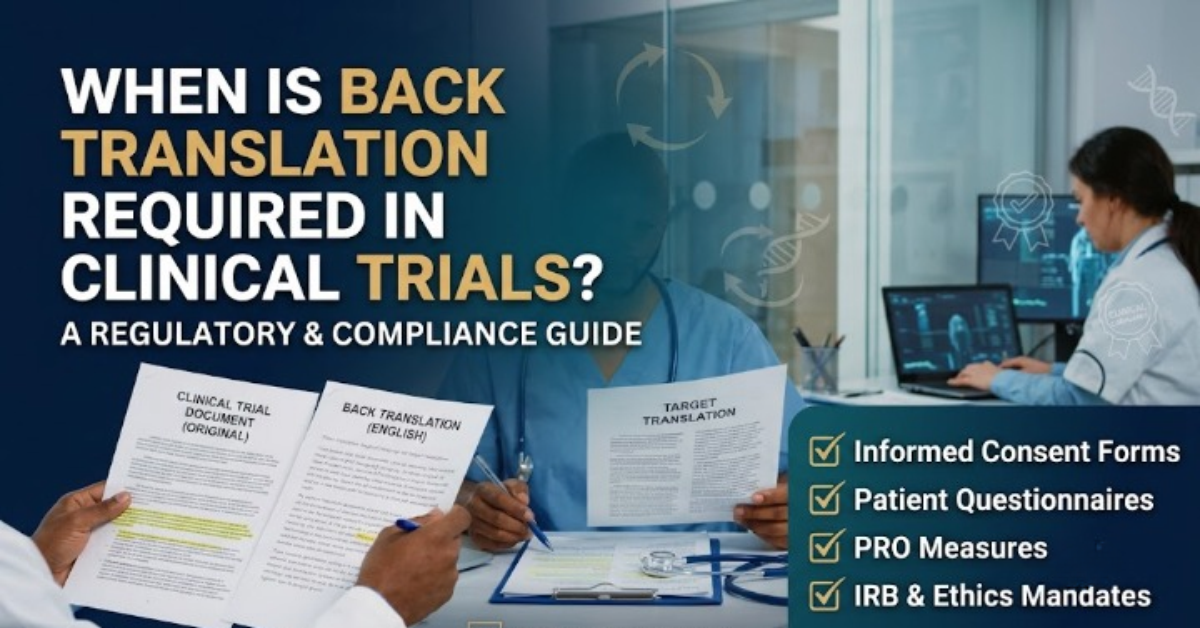
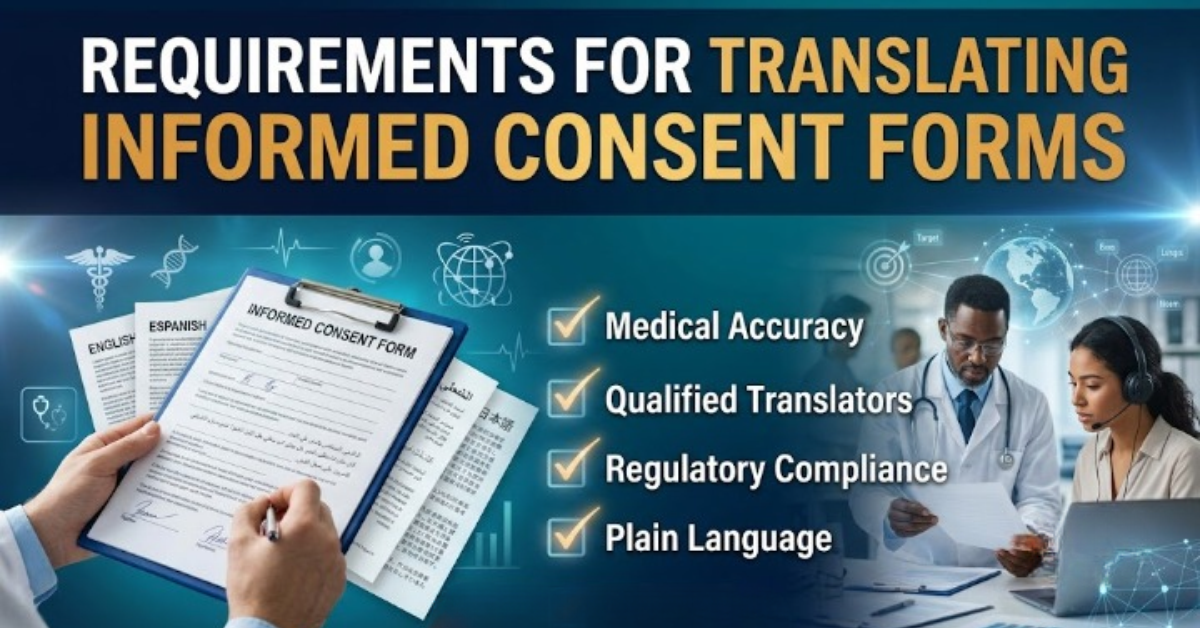
Informed consent forms
Study protocols
Investigator brochures
Case report forms
Patient questionnaires
Recruitment materials
Ethics committee submissions
Accurate translation ensures ethical participation, patient understanding, and regulatory compliance throughout the clinical research process.
3. Regulatory Approval
Before launching a pharmaceutical product internationally, companies must submit extensive documentation to health authorities.
These submissions often require translation into the official language of each country.
Common regulatory documents include:
Common Technical Documents (CTD)
Drug registration dossiers
Product labeling
Manufacturing information
Quality documentation
Safety reports
Professional regulatory translation reduces approval delays and improves submission quality.
4. Manufacturing and Quality Control
Manufacturing facilities operating internationally rely on multilingual documentation.
Examples include:
Standard Operating Procedures (SOPs)
Good Manufacturing Practice (GMP) manuals
Equipment instructions
Validation reports
Batch records
Quality management documentation
Consistent translations help maintain manufacturing quality across global production facilities.
5. Product Commercialization
Once a pharmaceutical product reaches the market, companies must communicate effectively with healthcare professionals and patients.
This requires translation of:
Package inserts
Patient information leaflets
Marketing materials
Training manuals
Product brochures
Digital healthcare content
Educational resources
Localized communication improves patient understanding while ensuring regulatory compliance.
Benefits of Professional Pharmaceutical Translation Services
Choosing an experienced pharmaceutical translation provider delivers significant advantages throughout the pharmaceutical product lifecycle.
Improved Patient Safety
Patients depend on clear medication instructions.
Accurate pharmaceutical translations help patients understand:
Dosage instructions
Contraindications
Side effects
Drug interactions
Storage recommendations
Safety precautions
This reduces medication errors and improves treatment outcomes.
Faster Regulatory Approvals
Regulatory agencies expect precise documentation.
Professional pharmaceutical translation services ensure submissions comply with local regulatory requirements, reducing approval delays and minimizing revision requests.
Consistent Medical Terminology
Medical terminology must remain consistent across thousands of pages of documentation.
Professional translators use:
Translation memories
Pharmaceutical glossaries
Medical terminology databases
Industry-approved style guides
This ensures consistency across all documents, languages, and product portfolios.
Better Global Market Access
Launching pharmaceutical products internationally requires localized documentation that complies with country-specific regulations.
Professional translation enables pharmaceutical companies to expand confidently into new global markets while maintaining regulatory compliance.
Reduced Legal and Financial Risk
Translation errors can result in:
Product recalls
Regulatory penalties
Patient injuries
Litigation
Delayed product launches
Professional pharmaceutical translation minimizes these risks through rigorous quality assurance and subject matter expertise.
Enhanced Brand Reputation
Healthcare providers and patients place enormous trust in pharmaceutical companies.
High-quality multilingual communication demonstrates professionalism, strengthens credibility, and builds long-term confidence among global stakeholders.
Why Human Expertise Matters More Than Ever?
While AI-powered translation tools have improved significantly, pharmaceutical translation remains a high-stakes field where accuracy cannot be compromised. AI can assist with repetitive terminology and provide draft translations, but it often struggles with context, regulatory language, country-specific medical terminology, and nuanced scientific content.
Professional human translators bring subject-matter expertise, cultural understanding, and regulatory knowledge that automated systems alone cannot provide. At MyTranscriptionPlace, we combine advanced translation technologies with experienced pharmaceutical linguists and rigorous quality assurance processes to deliver translations that are accurate, compliant, and ready for global regulatory review.
Pharmaceutical Documents That Require Professional Translation
Pharmaceutical companies generate thousands of technical documents throughout the drug development and commercialization process. Every document must be translated with exceptional accuracy to ensure scientific integrity, regulatory compliance, and patient safety.
Unlike standard business documents, pharmaceutical content contains specialized medical terminology, regulatory language, dosage instructions, and scientific data that require translators with expertise in life sciences and healthcare.
At MyTranscriptionPlace, our pharmaceutical translators combine linguistic skills with subject-matter knowledge to deliver translations that meet international quality standards and local regulatory requirements.
Common Pharmaceutical Documents We Translate
Our pharmaceutical document translation services cover every stage of the pharmaceutical product lifecycle, including:
Clinical Research Documents
Clinical trial protocols
Investigator brochures (IB)
Informed consent forms (ICF)
Case report forms (CRFs)
Patient recruitment materials
Ethics committee submissions
Clinical study reports (CSR)
Trial questionnaires
Patient diaries
Clinical outcome assessments (COAs)
Regulatory Documents
Common Technical Document (CTD)
Electronic Common Technical Document (eCTD)
FDA submissions
EMA dossiers
CDSCO applications
MHRA documentation
PMDA submissions
Health Canada documentation
Regulatory correspondence
Drug approval applications
Drug Safety Documents
Accurate translation plays a vital role in pharmacovigilance by ensuring timely reporting of adverse events and maintaining compliance with international safety regulations.
Examples include:
Adverse Event Reports (AER)
Individual Case Safety Reports (ICSR)
Periodic Safety Update Reports (PSUR)
Risk Management Plans (RMP)
Safety Data Sheets (SDS)
Pharmacovigilance reports
Manufacturing & Quality Documents
Pharmaceutical manufacturing relies on standardized multilingual documentation to maintain quality and consistency across global production facilities.
These documents include:
Standard Operating Procedures (SOPs)
Good Manufacturing Practice (GMP) manuals
Batch manufacturing records
Validation reports
Equipment manuals
Process documentation
Quality assurance manuals
Quality control reports
Internal audits
Training manuals
Patient-Facing Documents
Patients rely on translated healthcare information to use medicines safely and effectively.
Common patient documents include:
Patient Information Leaflets (PIL)
Package inserts
Medication guides
Drug labels
Dosage instructions
Product brochures
Frequently Asked Questions (FAQs)
Healthcare education materials
Marketing & Commercial Documents
Launching pharmaceutical products globally also requires localized marketing materials that comply with regional regulations.
Examples include:
Product brochures
Sales presentations
Product websites
Digital healthcare campaigns
Physician education materials
Medical conference presentations
Product catalogs
Clinical Trial Translation Services
Why Clinical Trial Translation Is Critical?
Clinical trials are increasingly conducted across multiple countries to recruit diverse patient populations, accelerate research, and meet international regulatory requirements.
However, multinational clinical research introduces one significant challenge—effective multilingual communication.
Every participant, physician, investigator, ethics committee, and regulatory authority must clearly understand the study documentation.
This is why clinical trial translation services are among the most critical components of global pharmaceutical research.
Professional clinical translation ensures:
Patient safety
Ethical participation
Regulatory compliance
Scientific consistency
Reliable research outcomes
Even a minor mistranslation in an informed consent form or dosage instruction can compromise the validity of an entire clinical study.
Documents Used in Clinical Trials
Professional clinical trial translators frequently translate:
Study protocols
Investigator brochures
Informed consent forms
Patient recruitment materials
Clinical questionnaires
Electronic Clinical Outcome Assessments (eCOA)
Patient diaries
Medical histories
Adverse event reports
Clinical study reports
Each document must preserve medical accuracy while remaining culturally appropriate for local participants.
Why Clinical Trial Translation Requires Localization?
Translation alone is often not enough.
Clinical research documents must also be localized to reflect:
Cultural expectations
Healthcare systems
Medical terminology
Reading level
Regulatory language
Country-specific legal requirements
Localization improves patient comprehension, increases recruitment success, and supports ethical clinical research.
Pharmaceutical Localization Services
Translation vs. Localization
Many organizations mistakenly assume that translation and localization are the same.
In reality, localization goes much further.
Pharmaceutical localization ensures that translated materials feel natural and legally compliant within each target country.
For example:
A medicine label approved in the United States may require completely different wording, dosage units, warning statements, and formatting before it can be marketed in Japan, Germany, or India.
Supporting Regulatory Compliance Worldwide
One of the primary reasons pharmaceutical companies invest in professional translation services is regulatory compliance.
Every country has its own healthcare authority, documentation standards, and language requirements.
Regulatory submissions containing inaccurate translations may result in:
Delayed approvals
Additional review cycles
Product launch postponements
Compliance violations
Financial losses
Professional regulatory translators understand both pharmaceutical terminology and the documentation standards required by global health authorities.
Major Regulatory Authorities Requiring Pharmaceutical Translation
Professional pharmaceutical translation supports submissions to agencies including:
U.S. Food and Drug Administration (FDA)
The FDA regulates pharmaceutical products marketed within the United States.
Translation may be required for:
Clinical trial documentation
Drug registration materials
Product labeling
Safety reports
Manufacturing documentation
Accurate FDA translation services help pharmaceutical companies prepare compliant submissions and respond effectively during the review process.
European Medicines Agency (EMA)
The EMA oversees medicines across European Union member states.
Companies seeking centralized approval often require multilingual translations covering numerous EU languages.
Medicines and Healthcare Products Regulatory Agency (MHRA)
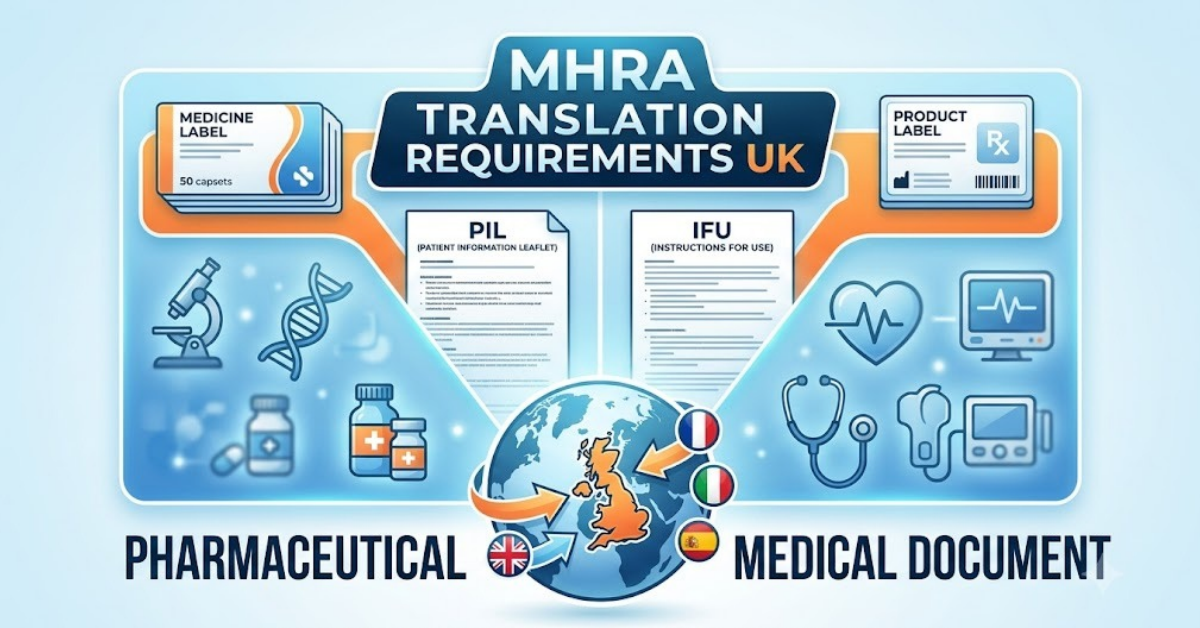
The MHRA regulates medicines and medical devices in the United Kingdom.
Professional translations support:
Licensing applications
Product information
Safety documentation
Pharmacovigilance reporting
Pharmaceuticals and Medical Devices Agency (PMDA)
Japan's PMDA requires highly specialized pharmaceutical translations due to the complexity of Japanese medical terminology and documentation standards.
Central Drugs Standard Control Organization (CDSCO)
Companies entering the Indian pharmaceutical market often require professionally translated documentation to support submissions to the CDSCO and comply with local regulations.
Why Regulatory Translation Requires Specialized Experts?
Regulatory translation involves much more than translating words.
Professional translators must understand:
Pharmaceutical regulations
Drug approval procedures
International guidelines
Medical terminology
Legal documentation
Scientific writing conventions
At MyTranscriptionPlace, every regulatory translation is reviewed by experienced language specialists to ensure consistency, clarity, and compliance with the requirements of the destination market.
Industries That Benefit from Pharmaceutical Translation Services
Although pharmaceutical manufacturers are the primary users of these services, many other organizations rely on accurate pharmaceutical translation to support research, compliance, and patient care.
These include:
Pharmaceutical Manufacturers
Global pharmaceutical companies use multilingual translations for drug development, manufacturing, labeling, and international product launches.
Biotechnology Companies
Biotech firms translate research papers, laboratory documentation, clinical studies, patents, and regulatory submissions to collaborate with international partners and accelerate innovation.
Clinical Research Organizations (CROs)
CROs manage multinational clinical trials and require accurate translation of study protocols, patient-facing materials, ethics committee documentation, and clinical reports.
Medical Device Manufacturers
Medical device companies translate:
Instructions for Use (IFUs)
Technical manuals
Product labeling
Safety documentation
Regulatory submissions
to meet country-specific regulatory requirements.
Healthcare Providers
Hospitals, clinics, and healthcare networks often require multilingual patient education materials, medication guides, discharge instructions, and informed consent documents to support diverse patient populations.
Academic and Research Institutions
Universities and research organizations translate scientific publications, grant proposals, conference presentations, and collaborative research documentation to share knowledge across borders.
Government Health Agencies
Public health authorities use pharmaceutical translation services to communicate essential healthcare information, regulatory updates, vaccination guidelines, and emergency health advisories in multiple languages.
Common Challenges in Pharmaceutical Translation
Pharmaceutical translation is one of the most demanding areas of language services due to its technical complexity and regulatory implications.
Some of the most common challenges include:
Highly Specialized Terminology
Pharmaceutical documents contain complex scientific vocabulary that must be translated consistently and accurately across all languages.
Constantly Changing Regulations
Healthcare regulations evolve frequently. Translators must stay updated on country-specific regulatory requirements to ensure ongoing compliance.
Terminology Consistency
Large pharmaceutical projects may involve thousands of pages translated over several years. Maintaining consistent terminology across every document is essential for accuracy and regulatory acceptance.
Patient Readability
Medical information must remain scientifically accurate while being easy for patients with varying health literacy levels to understand.
Confidentiality
Pharmaceutical documentation often contains proprietary research, intellectual property, and sensitive patient information. Secure translation workflows and confidentiality agreements are essential to protect this data.
Tight Regulatory Deadlines
Global drug launches and clinical trials frequently operate under strict timelines. Translation providers must deliver accurate work quickly without compromising quality or compliance.
Our Pharmaceutical Translation Process
At MyTranscriptionPlace, we follow a structured, quality-driven translation workflow designed specifically for the pharmaceutical and life sciences industries. Every project is managed with precision to ensure scientific accuracy, regulatory compliance, confidentiality, and consistency across all translated materials.
Our end-to-end process minimizes errors, accelerates turnaround times, and helps pharmaceutical companies confidently communicate across global markets.
Step 1: Project Assessment and Requirement Analysis
Every successful pharmaceutical translation begins with a detailed project evaluation.
Our project managers assess:
Type of pharmaceutical document
Target language(s)
Regulatory requirements
Subject matter complexity
Formatting needs
Required turnaround time
Confidentiality requirements
During this stage, we also identify any existing glossaries, translation memories, or style guides provided by the client to maintain consistency across all documentation.
Step 2: Assignment to Specialized Pharmaceutical Translators
Not every translator is qualified to translate pharmaceutical content.
We assign projects only to professional linguists with expertise in:
Pharmacy
Medicine
Biotechnology
Clinical research
Pharmacology
Regulatory affairs
Life sciences
Our translators are native speakers of the target language and possess extensive experience translating complex pharmaceutical documentation.
This subject-matter expertise ensures that scientific terminology, dosage instructions, and regulatory language are translated accurately and naturally.
Step 3: Terminology Research and Glossary Development
Consistency is essential in pharmaceutical translation.
Before translation begins, our language specialists create or update project-specific terminology databases that include:
Drug names
Active pharmaceutical ingredients (APIs)
Medical abbreviations
Scientific terminology
Regulatory terminology
Brand-specific vocabulary
Using approved terminology helps maintain consistency across large multilingual projects and future document updates.
Step 4: Translation and Localization
Once terminology has been established, our translators begin translating the content while adapting it to the linguistic and regulatory expectations of the target market.
This process includes:
Accurate translation of technical terminology
Cultural adaptation
Regulatory localization
Country-specific formatting
Unit and measurement conversion (where applicable)
Healthcare terminology standardization
Localization ensures the translated content is not only linguistically correct but also appropriate for the healthcare system and regulatory environment of the target country.
Step 5: Independent Medical Review
Every pharmaceutical translation undergoes a second review by an experienced medical linguist.
This review verifies:
Scientific accuracy
Terminology consistency
Medical correctness
Regulatory language
Grammar and spelling
Formatting consistency
The reviewer checks every detail to ensure the translation faithfully reflects the source document.
Step 6: Quality Assurance (QA)
Before delivery, each project passes through a comprehensive quality assurance process.
Our QA specialists verify:
Terminology consistency
Numerical accuracy
Dosage values
Tables and figures
Formatting
Cross-references
Regulatory terminology
File integrity
Automated QA tools are used alongside human review to identify inconsistencies and ensure exceptional translation quality.
Step 7: Final Delivery
After successful quality checks, the completed translation is delivered in the client's preferred file format while preserving the original layout whenever possible.
Supported formats include:
Microsoft Word
Excel
PowerPoint
PDF
XML
InDesign
HTML
eCTD-compatible files
Medical publishing formats
Our team also remains available for revisions, updates, and future multilingual projects.
Why Quality Assurance Is Critical in Pharmaceutical Translation?
Unlike general translation projects, pharmaceutical translations directly impact patient health, scientific research, and regulatory compliance.
A single translation error could result in:
Incorrect dosage instructions
Delayed drug approvals
Misinterpretation of clinical data
Regulatory rejection
Patient safety risks
Legal liability
Product recalls
To minimize these risks, every translation should undergo multiple layers of linguistic and scientific review before publication or submission.
At MyTranscriptionPlace, quality assurance is integrated into every stage of the translation process rather than treated as a final proofreading step.
Human Translation vs. AI Translation in the Pharmaceutical Industry
Artificial Intelligence has transformed the translation industry by increasing speed and improving productivity. However, when it comes to pharmaceutical content, AI alone cannot replace the expertise of professional human translators.
Understanding the strengths and limitations of both approaches helps pharmaceutical companies make informed decisions.
Can AI Be Used for Pharmaceutical Translation?
AI-powered translation tools can be useful for internal reference, multilingual content discovery, or generating initial drafts. However, they should not be relied upon for regulatory submissions, clinical trial documentation, patient information, or other high-risk pharmaceutical content without expert human review.
At MyTranscriptionPlace, we leverage advanced translation technologies to improve efficiency while ensuring that every project is reviewed and validated by experienced pharmaceutical linguists. This human-in-the-loop approach combines the speed of technology with the precision required for life sciences.
Why Pharmaceutical Companies Choose MyTranscriptionPlace?
Choosing the right pharmaceutical translation partner is essential for maintaining compliance, protecting patient safety, and supporting successful global expansion.
At MyTranscriptionPlace, we provide end-to-end language solutions tailored to the unique needs of the pharmaceutical industry.
Specialized Life Sciences Expertise
Our translators possess backgrounds in medicine, pharmacy, biotechnology, and clinical research, ensuring accurate interpretation of complex scientific content.
Native-Language Professionals
Translations are completed by native-speaking experts who understand local healthcare terminology, cultural nuances, and regulatory expectations.
Regulatory Compliance
We support documentation for major regulatory authorities, helping clients prepare accurate multilingual submissions for global markets.
Comprehensive Quality Assurance
Every translation undergoes multiple rounds of review to ensure scientific precision, terminology consistency, and formatting accuracy.
Confidentiality and Data Security
We maintain strict confidentiality standards and secure workflows to protect sensitive pharmaceutical research, proprietary information, and patient data.
Scalable Multilingual Solutions
Whether you require a single document translated into one language or a global product launch involving dozens of languages, our team can scale to meet your requirements.
Fast Turnaround Times
We understand the importance of meeting regulatory deadlines and clinical trial milestones. Our streamlined workflows enable us to deliver high-quality translations within agreed timelines.
Pharmaceutical Translation Statistics
The pharmaceutical and life sciences industries continue to expand globally, increasing the demand for specialized language services.
Key trends include:
The global pharmaceutical market generates trillions of dollars in annual revenue, with medicines distributed across virtually every region of the world.
A significant proportion of modern clinical trials are conducted across multiple countries, requiring accurate multilingual communication among sponsors, investigators, and participants.
Regulatory authorities often require product information, labeling, and patient-facing materials to be submitted in the official language(s) of the target market.
Growing demand for personalized medicine, biotechnology, and digital healthcare is increasing the need for specialized pharmaceutical translation and localization services.
Advances in AI and machine translation are improving translation workflows, but expert human review remains essential for regulated pharmaceutical content.
These trends highlight why accurate pharmaceutical translation is no longer optional—it is a strategic requirement for companies operating in global healthcare markets.
Best Practices for Choosing a Pharmaceutical Translation Partner
Not all translation providers have the expertise required for pharmaceutical content. When selecting a translation partner, consider the following best practices:
Evaluate Subject-Matter Expertise
Choose a provider with proven experience in pharmaceutical, medical, and life sciences translation rather than relying on general translation services.
Verify Regulatory Knowledge
Ensure the translation team understands the documentation requirements of international health authorities and can support multilingual regulatory submissions.
Prioritize Quality Assurance
Ask about the provider's review process, terminology management, and quality control measures to ensure consistent, accurate translations.
Assess Language Coverage
Select a partner capable of supporting all target languages required for your global operations while maintaining consistent quality across markets.
Ensure Data Security
Confidentiality is critical in pharmaceutical projects. Confirm that the provider follows secure workflows and protects proprietary information.
Consider Long-Term Collaboration
A long-term translation partner can build custom glossaries, maintain translation memories, and ensure consistency across future projects, saving time and improving quality.
Conclusion
As pharmaceutical companies expand into international markets, the demand for accurate, compliant, and culturally appropriate communication continues to grow. From early-stage drug discovery and multinational clinical trials to regulatory approvals, manufacturing, and patient education, every stage of the pharmaceutical product lifecycle relies on precise multilingual documentation.
Unlike general translation, pharmaceutical translation services require a unique combination of scientific expertise, linguistic precision, regulatory knowledge, and cultural understanding. A single translation error can lead to regulatory delays, patient safety risks, increased costs, or reputational damage. Partnering with an experienced pharmaceutical translation provider helps organizations overcome these challenges while ensuring consistent communication across global markets.
At MyTranscriptionPlace, we specialize in delivering high-quality pharmaceutical translation services, medical translation services for pharmaceutical companies, clinical trial translation, pharmaceutical document translation, and regulatory translation services in more than 150 languages. Our native-speaking translators, life sciences experts, and robust quality assurance processes ensure every document meets the highest standards of accuracy, confidentiality, and regulatory compliance.
Whether you're preparing multilingual clinical trial documentation, submitting regulatory dossiers, translating patient information leaflets, or launching pharmaceutical products worldwide, our team is ready to support your global communication needs.
Ready to Expand Your Pharmaceutical Business Globally?
Partner with MyTranscriptionPlace for accurate, compliant, and confidential pharmaceutical translation services tailored to your business. Contact our team today for a free consultation and discover how we can help you communicate with confidence across international markets.
Our Best Translation Services
English to Indonesian Translation | English to Spanish Translation | English to Italian Translation | English to Russian Translation | English to Danish Translation | English to Vietnamese Translation | English to Japanese Translation | English to Finnish Translation | English to Dutch Translation | English to Arabic Translation | English to Norwegian Translation | English to Greek Translation.
Frequently Asked Questions
1. What are pharmaceutical translation services?
Pharmaceutical translation services involve translating scientific, clinical, regulatory, manufacturing, and patient-facing pharmaceutical documents into multiple languages while maintaining medical accuracy, regulatory compliance, and consistent terminology. These services support international drug development, clinical trials, product approvals, and global healthcare communication.
2. Why are pharmaceutical translation services important?
Professional pharmaceutical translation ensures that healthcare professionals, regulators, researchers, and patients receive accurate information in their native language. This reduces regulatory delays, protects patient safety, supports international product launches, and helps pharmaceutical companies comply with country-specific healthcare regulations.
3. Who needs pharmaceutical translation services?
Organizations that commonly require pharmaceutical translation include:
Pharmaceutical manufacturers
Biotechnology companies
Clinical Research Organizations (CROs)
Medical device manufacturers
Contract Manufacturing Organizations (CMOs)
Healthcare providers
Research institutions
Universities
Government health agencies
Regulatory affairs consultants
4. What documents require pharmaceutical translation?
Common pharmaceutical documents include:
Clinical trial protocols
Informed consent forms
Investigator brochures
Patient information leaflets
Package inserts
Drug labels
Regulatory submissions
Pharmacovigilance reports
Manufacturing SOPs
GMP documentation
Clinical study reports
Product brochures
Marketing materials
Safety reports
5. What is pharmaceutical localization?
Pharmaceutical localization adapts translated content to meet the linguistic, cultural, medical, and regulatory requirements of a specific country or region. It ensures that pharmaceutical information is appropriate for local healthcare systems, patient expectations, and legal standards.
6. What is the difference between medical translation and pharmaceutical translation?
Medical translation covers a broad range of healthcare content, including hospital records, medical reports, and healthcare communication. Pharmaceutical translation specifically focuses on drug development, clinical research, regulatory documentation, manufacturing, pharmacovigilance, and patient information related to pharmaceutical products.
7. What are clinical trial translation services?
Clinical trial translation services involve translating documents used during clinical research, such as informed consent forms, study protocols, investigator brochures, patient questionnaires, and ethics committee submissions. Accurate translations support ethical participation, regulatory compliance, and reliable research outcomes.

Nishi Singh
(Content Writer & SEO Manager)
She is an SEO Manager with over 8 years of experience in marketing and content creation. She specializes in SEO, content strategy, and paid advertisements, helping website owners across SaaS, B2B businesses, and e-commerce platforms achieve measurable growth. With a strong focus on driving organic traffic and crafting impactful content, Nishi has established herself as a trusted expert in the digital marketing space. When she's not optimizing websites, she channels her energy into marathon running, embracing challenges both on and off the track.