Expand Globally with Accurate Market Research Translation Services
Expanding into international markets is no longer just about translating words—it's about understanding people, cultures, buying behaviors, and consumer expectations. Before launching a product or entering a new region, businesses rely on market research to gather insights that shape marketing strategies, product development, pricing, and customer experiences.
However, even the most well-designed research can fail if participants misunderstand survey questions, interview prompts, or discussion guides due to poor translation. Inaccurate translations often lead to biased responses, unreliable data, and costly business decisions.
This is where professional market research translation services become essential.
At MyTranscriptionPlace, we help global brands, research agencies, consulting firms, healthcare organizations, and businesses conduct multilingual research with confidence. Our expert linguists translate and culturally adapt surveys, questionnaires, interviews, focus group discussions, consent forms, and research reports while preserving their original meaning, intent, and research accuracy.
Whether you're conducting consumer research in one country or managing multilingual studies across multiple markets, our translation experts ensure your research delivers reliable insights that support smarter business decisions.
Overview
Market research translation is the professional translation and cultural adaptation of research materials—including surveys, questionnaires, interviews, focus group discussion guides, consent forms, recruitment materials, and research reports—into multiple languages. Unlike general translation, it preserves the intent of every question, minimizes cultural bias, and ensures participants clearly understand the content. This enables businesses to collect accurate data, improve response quality, and make informed decisions when entering global markets.
Key Takeaways
· Market research translation goes beyond literal translation by preserving research intent and cultural relevance.
· Professional survey translation improves participant understanding and response accuracy.
· Cultural adaptation helps eliminate misunderstandings and reduces research bias.
· Accurate multilingual research enables businesses to make confident global expansion decisions.
· Professional linguists translate surveys, questionnaires, interviews, focus groups, consent forms, and research reports with consistency and precision.
· Global brands rely on market research translation services to collect reliable consumer insights across different languages and cultures.
What Is Market Research Translation?
Market research translation is the process of translating and culturally adapting research materials for multilingual audiences while preserving the original meaning, research objectives, and participant understanding.
Unlike general document translation, market research translation focuses on ensuring that every survey question, interview prompt, questionnaire, discussion guide, and response scale communicates the same intent across different languages and cultures.
The objective isn't simply to translate words—it is to ensure every participant interprets each question exactly as intended, regardless of their native language.
Professional market research translation services typically cover:
Surveys
Questionnaires
Focus group discussion guides
Interview questionnaires
Moderator guides
Participant consent forms
Recruitment materials
Research reports
Interview transcripts
Online survey content
Customer feedback forms
Product testing questionnaires
Each document requires careful linguistic adaptation because even a small wording change can influence how respondents interpret a question, ultimately affecting research outcomes.
For example, a phrase that's clear and culturally appropriate in English may carry a different meaning—or no equivalent meaning at all—in another language. Professional translators adapt these nuances while maintaining consistency across every version of the research material.
This process, often called research localization or cross-cultural adaptation, helps ensure every participant receives the same research experience, regardless of language.
Why Is Market Research Translation Important?
Businesses invest significant time and resources in market research to understand customer preferences, purchasing behaviors, brand perception, and emerging market opportunities. However, the value of that investment depends entirely on the quality of the data collected.
If participants misunderstand questions due to inaccurate translations, the responses become unreliable. This can lead to incorrect conclusions, flawed marketing strategies, unsuccessful product launches, and costly business decisions.
Professional market research translation services help organizations overcome these challenges by ensuring research materials are both linguistically accurate and culturally appropriate.
Accurate Translation Leads to Better Research Results
High-quality translation helps participants:
Understand questions exactly as intended
Respond naturally in their native language
Feel more comfortable during interviews and surveys
Provide more accurate and meaningful responses
Reduce misunderstandings caused by cultural differences
As a result, businesses receive higher-quality data that supports better strategic decision-making.
Why Literal Translation Doesn't Work in Market Research?
Literal or word-for-word translation often fails because language is closely connected to culture, emotions, and local expressions.
Consider a customer satisfaction survey that asks:
"How likely are you to recommend this product to a friend?"
While the sentence may translate grammatically into another language, the concept of "recommending to a friend" may not carry the same cultural significance in every country.
Professional translators adapt the wording so respondents interpret the question naturally without changing its research intent.
This careful balance between linguistic accuracy and cultural relevance is what distinguishes market research translation from standard translation services.
Why Cultural Adaptation Matters?
Language alone doesn't determine how people understand information—culture also influences communication styles, purchasing behavior, emotional responses, and decision-making.
Professional market research translators consider:
Regional vocabulary
Local idioms and expressions
Cultural sensitivities
Social norms
Buying behavior
Educational background
Reading comprehension levels
Response scale preferences
This process ensures participants from different countries interpret every question consistently, allowing researchers to compare results across multiple markets with greater confidence.
How Poor Translation Can Impact Research
Inaccurate translations can negatively affect every stage of a research project.
Some of the most common issues include:
Misinterpreted survey questions
Biased participant responses
Low survey completion rates
Confusing interview discussions
Inconsistent multilingual data
Reduced participant engagement
Invalid research findings
Poor international business decisions
Even a single mistranslated question can distort an entire dataset, making professional translation a critical investment for any global research initiative.
Expert Insight
Successful global market research isn't achieved by translating words—it's achieved by translating meaning, context, and culture. Businesses that invest in professional market research translation collect more reliable insights, improve customer understanding, and reduce the risk of making decisions based on inaccurate data.
Types of Documents That Need Market Research Translation
Successful market research extends far beyond translating a survey. Every document that participants, moderators, researchers, and stakeholders interact with must communicate the same meaning across every language. Consistency throughout the research lifecycle helps ensure that findings remain reliable, unbiased, and comparable across international markets.
Professional market research translation services typically include the translation and cultural adaptation of the following materials:
Survey Translation
Surveys are one of the most commonly translated research documents. Every question, answer option, instruction, and rating scale must be adapted so respondents interpret them naturally without changing the research intent.
Professional survey translation services improve response quality by ensuring participants clearly understand every question in their native language.
Questionnaire Translation
Questionnaires often contain technical terminology, product descriptions, and behavioral questions that require more than direct translation. Professional questionnaire translation services preserve meaning while adapting content to regional language preferences and cultural expectations.
Focus Group Discussion Guides
Focus group moderators rely on structured discussion guides to encourage meaningful conversations. Accurate focus group translation ensures moderators ask questions consistently and participants fully understand each discussion topic.
Interview Guides and Moderator Instructions
Interview scripts and moderator guides require precise translation to maintain consistency across multiple researchers and countries. This ensures interviews follow the same methodology regardless of language.
Participant Recruitment Materials
Invitation emails, advertisements, screening questionnaires, and participant instructions should be translated professionally to maximize recruitment and participant engagement.
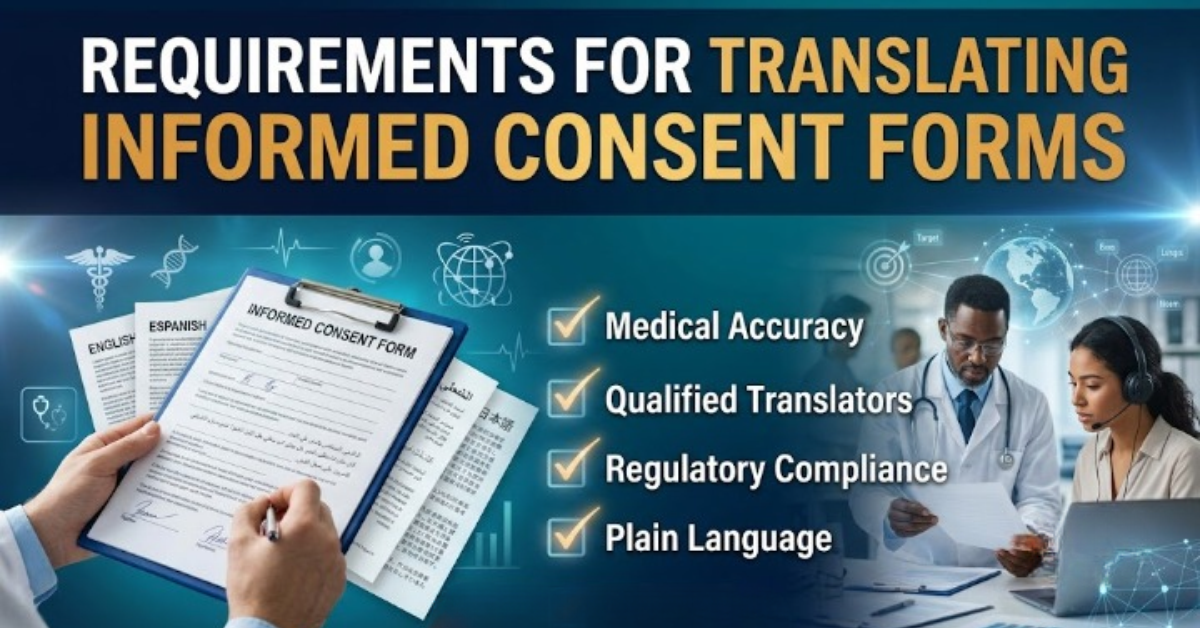
Consent Forms
Consent forms explain participant rights, confidentiality, and research objectives. Accurate translation helps organizations comply with ethical standards while ensuring participants understand what they are agreeing to.
Research Reports
Once data collection is complete, many organizations translate executive summaries, market insights, presentations, and final research reports for international stakeholders and decision-makers.
Interview Transcripts
Qualitative interviews often require transcription followed by translation. Accurate transcript translation preserves participant responses, tone, and context, enabling researchers to conduct reliable multilingual analysis.
Online Research Platforms
Digital surveys, mobile research applications, customer feedback forms, and online questionnaires should also be professionally localized to deliver a seamless participant experience.
How Market Research Translation Works
High-quality market research translation involves much more than converting text from one language to another. It follows a structured process designed to preserve linguistic accuracy, cultural relevance, and research integrity.
Step 1: Project Assessment
The translation team reviews the research objectives, target audience, languages required, industry terminology, and research methodology.
This helps determine the most suitable translators and localization approach.
Step 2: Assignment to Subject Matter Experts
Professional linguists with expertise in market research and the client's industry are assigned to the project.
Industry specialization is particularly important for sectors such as healthcare, pharmaceuticals, finance, automotive, technology, and consumer goods.
Step 3: Translation
Research materials are translated while preserving:
Question intent
Neutral wording
Rating scales
Terminology consistency
Participant comprehension
Rather than translating literally, translators adapt the language so questions sound natural to native speakers.
Step 4: Cultural Adaptation
Localization experts review the content to ensure it reflects local customs, social norms, and cultural expectations.
This step minimizes misunderstandings and improves response accuracy.
Step 5: Linguistic Review
A second professional linguist independently reviews the translation for grammar, consistency, terminology, and completeness.
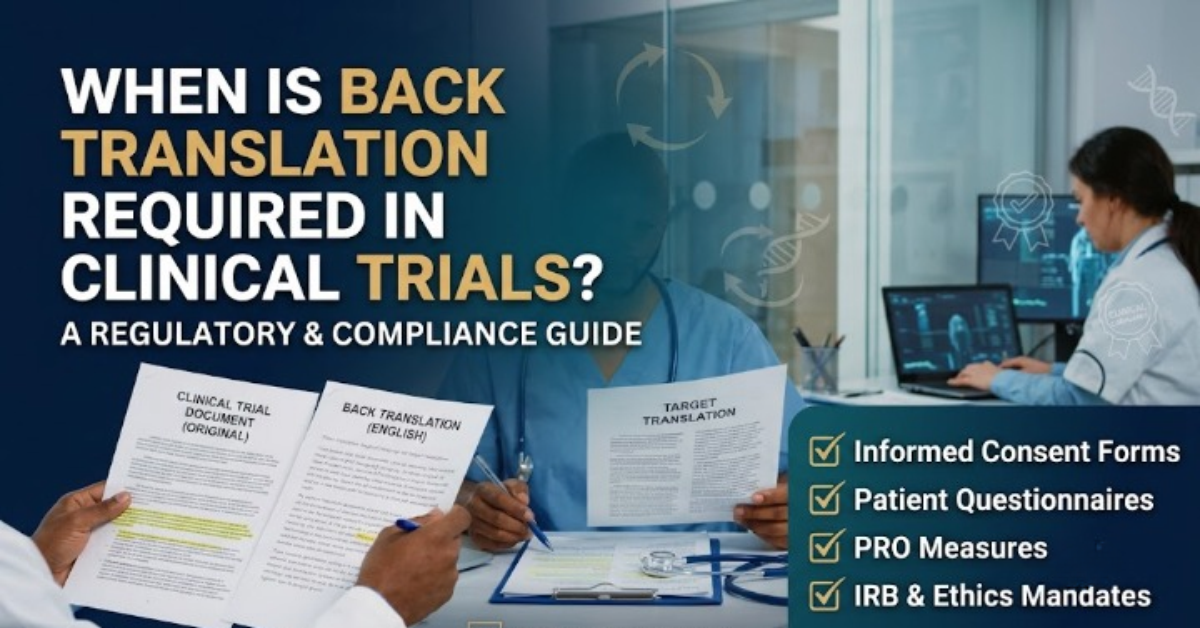
Step 6: Back Translation (When Required)
For highly regulated industries such as healthcare and pharmaceuticals, translated content may be translated back into the original language.
This quality assurance process verifies that the intended meaning has been preserved.
Step 7: Quality Assurance
The final review checks:
Formatting consistency
Terminology accuracy
Survey logic
Response scales
Grammar and punctuation
Localization quality
Step 8: Final Delivery
Clients receive multilingual research materials ready for surveys, interviews, focus groups, online platforms, or international reporting.
Market Research Translation vs General Translation
Although both services involve translating content into another language, their objectives are fundamentally different.
Key Insight:
General translation communicates information, while market research translation communicates insights without influencing participant responses.
Benefits of Professional Market Research Translation
Organizations conducting multilingual research gain significant advantages by working with experienced market research translators.
Improved Data Accuracy
Participants understand every question as intended, resulting in more reliable responses and higher-quality research data.
Higher Survey Completion Rates
Natural, easy-to-understand translations improve participant engagement and reduce survey abandonment.
Better Cross-Cultural Understanding
Professional localization accounts for cultural differences, helping researchers compare findings across countries with greater confidence.
Reduced Research Bias
Carefully translated questions minimize unintended influence on participant responses, preserving the integrity of the research.
Consistent Terminology Across Languages
Professional translators use approved terminology and translation memories to ensure consistency throughout multilingual research projects.
Stronger Business Decisions
Reliable multilingual research provides organizations with accurate consumer insights that support product development, marketing strategies, and international expansion.
Cost Savings
Preventing translation errors during research helps organizations avoid repeating studies, correcting inaccurate findings, or making costly strategic mistakes.
Industries That Use Market Research Translation Services
Many industries depend on multilingual research to understand customer preferences, evaluate products, and enter new markets.
Common sectors include:
Healthcare and Medical Research
Pharmaceuticals
Biotechnology
Consumer Goods (FMCG)
Retail and E-commerce
Technology and Software
Automotive
Banking and Financial Services
Insurance
Telecommunications
Manufacturing
Education
Hospitality and Tourism
Government Organizations
Non-Profit Organizations
Market Research Agencies
Consulting Firms
Advertising and Branding Agencies
Regardless of the industry, accurate translation ensures businesses collect trustworthy insights from diverse audiences.
Benefits at a Glance
Professional market research translation helps organizations:
Improve participant understanding
Increase response quality
Reduce cultural misunderstandings
Eliminate research bias
Improve multilingual data consistency
Enhance participant engagement
Support international product launches
Strengthen decision-making
Increase return on research investments
Build confidence in global business strategies
Market Research Translation Checklist
Before launching an international research project, confirm that you've translated and localized:
· Surveys
· Questionnaires
· Focus Group Discussion Guides
· Interview Guides
· Moderator Instructions
· Recruitment Materials
· Participant Consent Forms
· Interview Transcripts
· Online Surveys
· Customer Feedback Forms
· Research Reports
· Presentation Decks
· Terminology Glossaries
· Back Translation (if required)
· Linguistic Quality Assurance
Completing this checklist helps ensure every stage of your multilingual research project maintains accuracy, consistency, and cultural relevance.
Common Challenges in Market Research Translation
Conducting multilingual market research is more complex than translating documents from one language to another. Every market has unique cultural norms, communication styles, and consumer behaviors that can influence how participants interpret research questions.
Without professional translation and localization, businesses risk collecting inaccurate or misleading data that can affect strategic decision-making.
Below are some of the most common challenges and how professional market research translation services help overcome them.
1. Literal Translation Changes the Meaning
One of the biggest mistakes in multilingual research is translating questions word for word.
Although the translated sentence may be grammatically correct, it may not convey the same intent or emotional meaning to participants in another culture.
For example, an expression commonly used in English may have no equivalent in another language or may be interpreted differently.
Professional Solution:
Experienced market research translators focus on conceptual equivalence rather than literal translation, ensuring every question communicates the same intent across all target languages.
2. Cultural Differences Influence Responses
Consumer behavior varies significantly across regions. A question that feels natural in one country may appear confusing, offensive, or irrelevant in another.
Professional translators adapt language to align with:
Cultural norms
Local buying habits
Regional communication styles
Social expectations
Consumer behavior
This process helps participants respond naturally while maintaining research consistency.
3. Technical and Industry Terminology
Industries such as healthcare, pharmaceuticals, finance, automotive, and technology often use specialized terminology.
Incorrect translation of technical terms can confuse participants and compromise research quality.
Professional translators with subject-matter expertise ensure terminology remains accurate, consistent, and appropriate for the target audience.
4. Maintaining Consistency Across Multiple Languages
Global research projects often involve translating materials into several languages simultaneously.
Without standardized terminology and quality control, inconsistencies can arise between language versions, making it difficult to compare research findings.
Professional translation teams use terminology glossaries, translation memories, and rigorous quality assurance processes to maintain consistency across every language.
5. Avoiding Research Bias
Small wording changes can unintentionally influence participant responses.
Leading questions, emotionally loaded terms, or culturally inappropriate wording may introduce bias into the research.
Professional survey translation services preserve question neutrality while ensuring participants interpret questions consistently across different markets.
6. Regional Language Variations
Many languages have multiple regional variations.
For example:
Spanish differs between Spain and Latin America.
French differs between France and Canada.
Portuguese differs between Portugal and Brazil.
Arabic includes numerous regional dialects.
Professional localization ensures translations match the specific region where the research is being conducted.
Best Practices for Successful Market Research Translation
Organizations can significantly improve the quality of multilingual research by following these proven best practices.
Work with Native Professional Translators
Native-language experts understand local expressions, cultural nuances, and natural communication styles that machine translation often misses.
Provide Context
Sharing research objectives, target audience details, and product information helps translators preserve the intended meaning throughout the project.
Use Translation Memories and Glossaries
Maintaining approved terminology ensures consistency across surveys, interviews, reports, and future research projects.
Perform Linguistic Quality Assurance
Every translated document should undergo independent proofreading and review before being distributed to participants.
Conduct Back Translation When Needed
For regulated industries such as healthcare and pharmaceuticals, back translation helps verify that translated materials accurately reflect the original content.
Pilot-Test Your Research
Before launching a multilingual study, test translated surveys with a small group of native speakers to identify confusing wording or cultural issues.
Expert Tips for Global Brands
If your organization conducts international market research, consider these recommendations to improve data quality and participant engagement:
Translate meaning—not just words.
Adapt examples, measurements, and references to local markets.
Keep survey questions concise and easy to understand.
Avoid idioms, slang, and culturally specific expressions.
Use consistent terminology across all languages.
Collaborate with translators experienced in market research methodologies.
Review translated content with native speakers before launch.
Choose a translation partner that offers both linguistic expertise and quality assurance.
Following these practices helps ensure reliable insights and supports better business decisions across international markets.
Why Choose MyTranscriptionPlace for Market Research Translation Services?
At MyTranscriptionPlace, we understand that the success of international market research depends on accurate communication. Our team of experienced linguists combines language expertise with a deep understanding of research methodologies to deliver translations that preserve meaning, context, and cultural relevance.
Whether you're conducting consumer surveys, product testing, healthcare research, or multinational focus groups, we provide end-to-end language solutions designed to support reliable global research.
Our Market Research Translation Services Include:
Survey Translation Services
Questionnaire Translation
Focus Group Translation
Interview Translation
Moderator Guide Translation
Consent Form Translation
Recruitment Material Translation
Research Report Translation
Interview Transcript Translation
Multilingual Localization
Back Translation
Linguistic Validation
Proofreading and Quality Assurance
Why Businesses Trust MyTranscriptionPlace?
Experienced native-language translators
Expertise across multiple industries
Support for a wide range of global languages
Strict confidentiality and data security
Consistent terminology management
Multi-step quality assurance process
Fast turnaround times
Scalable solutions for global research projects
Dedicated project management
Accurate, culturally adapted translations
From small-scale consumer surveys to complex multinational research studies, we help organizations collect meaningful insights with confidence.
Final Thoughts
As businesses continue expanding into international markets, understanding customers across different languages and cultures has become more important than ever. Reliable market research forms the foundation of successful global strategies—but the quality of that research depends on how accurately participants understand every question.
Professional market research translation services ensure surveys, questionnaires, interviews, focus groups, and research reports maintain their original intent while adapting naturally to local languages and cultures. This minimizes bias, improves participant engagement, and delivers trustworthy insights that organizations can confidently use for strategic decision-making.
Whether you're entering a new market, launching a product, conducting customer satisfaction studies, or performing multinational consumer research, investing in expert translation is an investment in the accuracy and success of your research.
At MyTranscriptionPlace, we help businesses bridge language barriers with professional survey translation services, questionnaire translation, focus group translation, and comprehensive market research translation solutions tailored to global research projects.
Ready to Conduct Accurate Multilingual Market Research?
Partner with MyTranscriptionPlace to ensure your surveys, interviews, questionnaires, and research reports are translated with precision, cultural sensitivity, and industry expertise.
Contact us today to discuss your multilingual market research requirements and discover how our professional translation services can help you gather accurate insights, reduce research bias, and make informed decisions in global markets.
Our Best Translation Services
English to Indonesian Translation | English to Spanish Translation | English to Italian Translation | English to Russian Translation | English to Danish Translation | English to Vietnamese Translation | English to Japanese Translation | English to Finnish Translation | English to Dutch Translation | English to Arabic Translation | English to Norwegian Translation | English to Greek Translation.
FAQs
1. What is market research translation?
Market research translation is the process of translating and culturally adapting research materials such as surveys, questionnaires, interviews, focus group guides, and reports so participants understand them accurately while preserving research intent.
2. Why do companies need market research translation services?
Companies use market research translation services to collect reliable multilingual data, reduce cultural misunderstandings, improve participant engagement, and make informed decisions in international markets.
3. What documents are translated during market research?
Common documents include:
Surveys
Questionnaires
Interview guides
Focus group discussion guides
Moderator instructions
Consent forms
Recruitment materials
Research reports
Interview transcripts
Customer feedback forms
4. What is survey translation?
Survey translation involves professionally translating questionnaires while preserving the meaning of each question, response option, and rating scale to ensure accurate participant responses.
5. What is questionnaire translation?
Questionnaire translation adapts research questionnaires into another language while maintaining research accuracy, neutrality, and cultural relevance.
6. What is focus group translation?
Focus group translation involves translating discussion guides, moderator instructions, and participant conversations to ensure meaningful communication and reliable qualitative research.

Nishi Singh
(Content Writer & SEO Manager)
She is an SEO Manager with over 8 years of experience in marketing and content creation. She specializes in SEO, content strategy, and paid advertisements, helping website owners across SaaS, B2B businesses, and e-commerce platforms achieve measurable growth. With a strong focus on driving organic traffic and crafting impactful content, Nishi has established herself as a trusted expert in the digital marketing space. When she's not optimizing websites, she channels her energy into marathon running, embracing challenges both on and off the track.