Research transcription is the process of converting recorded interviews, focus groups, and research discussions into written text. In qualitative research, accurate transcripts allow researchers to review responses, identify patterns, and analyze insights more efficiently. Professional transcription services ensure accuracy, save time, and provide well-formatted transcripts that support coding, data analysis, and academic reporting.
What is Research Transcription?
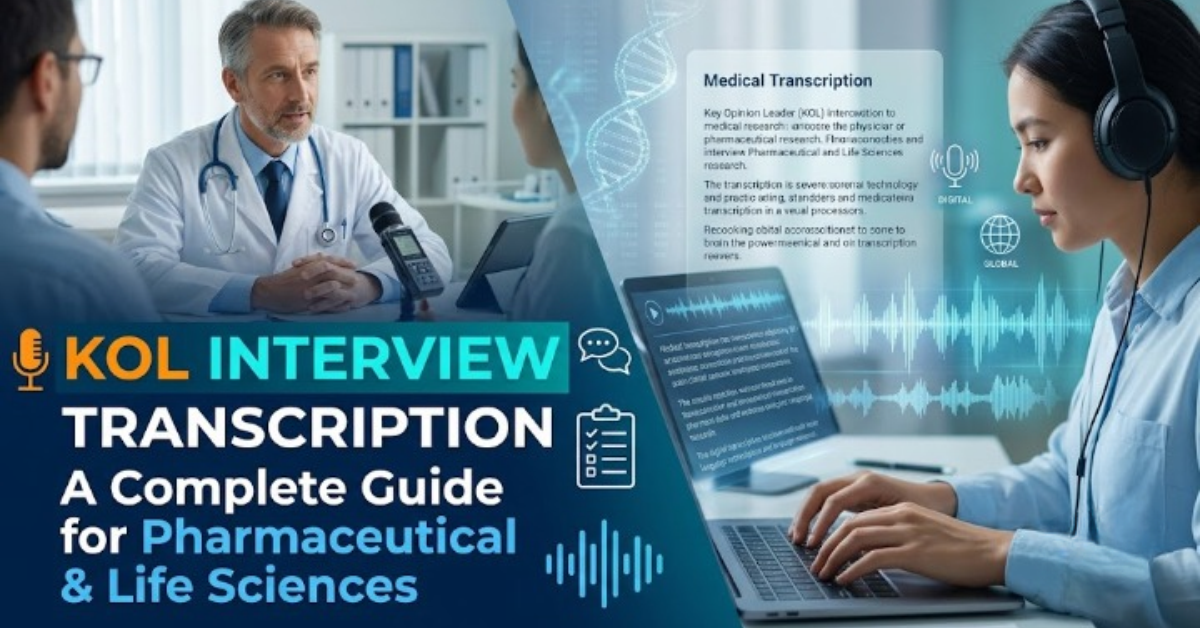
Research transcription refers to the conversion of audio or video recordings from interviews, focus groups, and research discussions into written text. Researchers rely on transcription to transform spoken responses into organized data that can be analyzed and referenced later.
In qualitative research, conversations often contain valuable insights, pauses, emotions, and contextual meaning. Accurate transcripts capture these details, allowing researchers to analyze responses without repeatedly listening to recordings.
Professional research transcription services help ensure that every word, pause, and nuance is documented correctly, preserving the integrity of the research data.
Why Research Transcription is Important in Qualitative Research?
Qualitative research relies heavily on interviews, group discussions, and participant observations. These methods generate large volumes of spoken data that must be carefully analyzed.
Transcription plays a crucial role because it:
Converts spoken data into readable text
Helps researchers organize and review responses
Supports thematic analysis and data coding
Preserves participant insights accurately
Improves collaboration among research teams
Without accurate transcripts, researchers may miss important details or misinterpret participant responses.
Benefits of Accurate Research Transcription
Accurate transcription significantly improves the quality and reliability of qualitative research.
1. Better Data Accuracy
A small transcription mistake can change the meaning of a statement. Accurate transcripts ensure that researchers interpret responses correctly.
2. Faster Research Analysis
Researchers can quickly scan text documents instead of listening to hours of recordings. This speeds up the process of identifying key responses.
3. Improved Coding and Theme Identification
Transcripts make it easier to apply qualitative analysis methods such as:
thematic analysis
discourse analysis
grounded theory
content analysis
These methods require structured text data for accurate coding.
4. Easier Collaboration
Research teams often work together to analyze findings. Written transcripts allow multiple researchers to review the same data simultaneously.
5. Better Documentation for Academic Publishing
Accurate transcripts help researchers prepare:
dissertations
research papers
journal articles
academic reports
conference presentations
How Transcription Improves Qualitative Data Analysis
High-quality transcripts simplify the entire research workflow. Researchers can extract insights and patterns more efficiently when interview data is properly documented.
Step-by-Step Process
Record interviews or focus groups during the research study.
Convert recordings into transcripts using professional transcription services.
Review transcripts for accuracy and completeness.
Code responses to categorize themes and patterns.
Analyze qualitative data using research methods.
Use findings in reports, dissertations, or academic publications.
This structured process ensures that research findings are based on accurate and well-organized data.
Who Uses Research Transcription Services?
Research transcription services are widely used across many industries and academic fields.
Universities and Academic Researchers
Students, professors, and doctoral researchers frequently conduct interviews for:
dissertations
theses
academic studies
social science research
Market Research Companies
Businesses conduct interviews and focus groups to understand:
consumer behavior
customer preferences
product feedback
Social Science Researchers
Researchers studying human behavior often rely on interviews and recorded discussions that must be transcribed accurately.
Healthcare and Medical Researchers
Medical researchers may conduct patient interviews, case discussions, and research panels that require detailed transcription.
Typical Research Transcription Time
The time required to transcribe recordings depends on several factors such as audio clarity, number of speakers, and technical terminology.
Professional transcriptionists help ensure that transcripts are accurate, clearly formatted, and delivered within deadlines.
Why Choose Mytranscriptionplace for Research Transcription?
Mytranscriptionplace provides specialized transcription services designed for academic and professional research projects.
Our experienced transcriptionists understand the importance of precision, confidentiality, and structured formatting in research documentation.
Researchers choose Mytranscriptionplace because we provide:
Accurate research transcription
Support for qualitative research interviews
Proper formatting for academic analysis
Reliable turnaround times
Confidential handling of research data
By outsourcing transcription tasks, researchers can focus on analyzing results rather than spending hours transcribing recordings.
Research Transcription Process
Professional transcription services follow a systematic process to ensure accuracy.
Step 1: Audio or Video Submission
Researchers submit interview recordings, focus group discussions, or research conversations.
Step 2: Professional Transcription
Experienced transcriptionists convert the recordings into detailed written transcripts.
Step 3: Quality Review
Transcripts are reviewed to verify accuracy, speaker identification, and formatting.
Step 4: Final Delivery
Researchers receive formatted transcripts ready for coding, analysis, and documentation.
Conclusion
Research transcription plays a vital role in qualitative research by transforming spoken conversations into structured written data. Accurate transcripts allow researchers to review responses, identify patterns, and conduct deeper analysis without repeatedly listening to recordings.
By using professional research transcription services such as Mytranscriptionplace, researchers can ensure accuracy, save valuable time, and focus on generating meaningful insights from their data.
Best Translation Service
English to Indonesian Translation | English to Spanish Translation | English to Italian Translation | English to Russian Translation | English to Danish Translation | English to Vietnamese Translation | English to Japanese Translation | English to Finnish Translation | English to Dutch Translation | English to Arabic Translation | English to Norwegian Translation | English to Greek Translation.
FAQs About Research Transcription
1. What is research transcription?
Research transcription is the process of converting recorded interviews, focus groups, or discussions into written text for analysis in academic or professional research.2. Why is transcription important in qualitative research?
Transcription allows researchers to review interview responses in text form, making it easier to identify patterns, analyze themes, and document participant insights accurately.3. How does accurate transcription improve qualitative research?
Accurate transcripts provide reliable data for analysis, helping researchers identify themes, compare responses, and present findings clearly in reports or academic publications.4. What types of research require transcription services?
Transcription is commonly used in: qualitative interviews focus groups market research discussions academic research projects social science studies5. How long does research transcription usually take?
On average, one hour of recorded research audio may take four to six hours to transcribe, depending on audio quality, speaker clarity, and subject complexity.
Nishi Singh
(Content Writer & SEO Manager)
She is an SEO Manager with over 8 years of experience in marketing and content creation. She specializes in SEO, content strategy, and paid advertisements, helping website owners across SaaS, B2B businesses, and e-commerce platforms achieve measurable growth. With a strong focus on driving organic traffic and crafting impactful content, Nishi has established herself as a trusted expert in the digital marketing space. When she's not optimizing websites, she channels her energy into marathon running, embracing challenges both on and off the track.