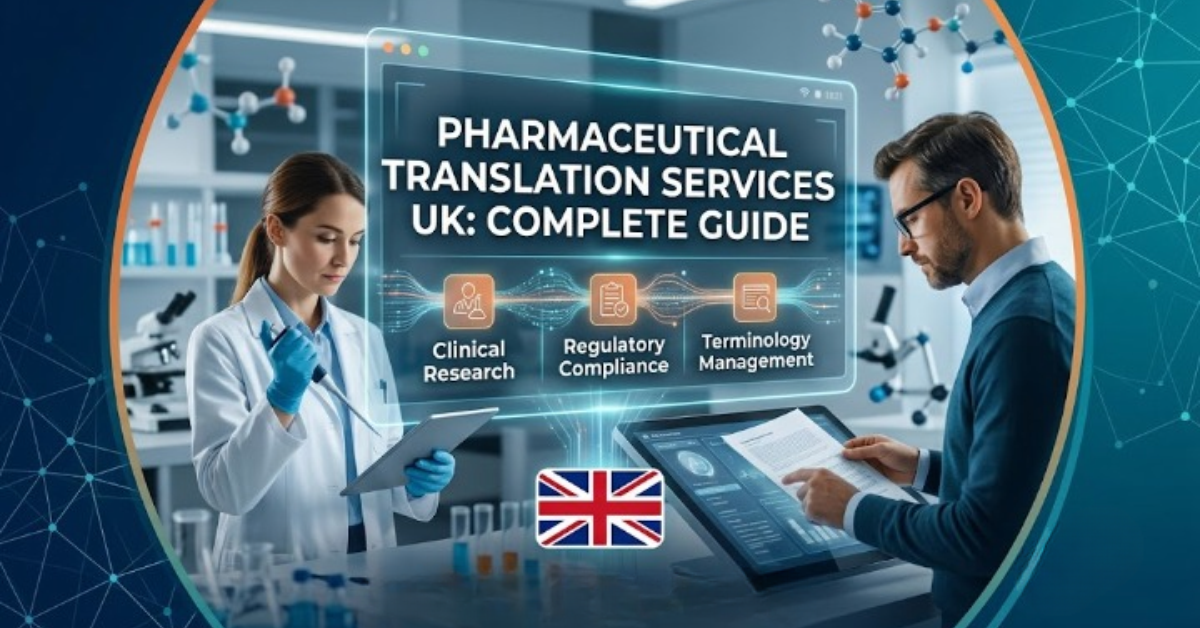
Choosing the right pharmaceutical translation company is essential for communicating clinical, scientific, regulatory, and drug-related information accurately across languages. The right provider should offer relevant pharmaceutical expertise, a documented quality assurance process, appropriate confidentiality safeguards, and experience with your specific document types and target markets.
Whether you need clinical trial translation, pharmaceutical product information, drug safety reports, or regulatory documentation, evaluating a translation provider before starting a project can help reduce terminology errors, avoid preventable delays, and improve multilingual consistency.
Before selecting a pharmaceutical translation agency, ask these 10 questions to assess its expertise, quality processes, security practices, and ability to meet your project requirements.
Below are the 10 Questions to Ask Before Choosing a Pharmaceutical Translation Company
1. Does the Company Have Experience in Pharmaceutical Translation?
A pharmaceutical translation company should demonstrate experience translating documents relevant to your pharmaceutical products, research activities, or regulatory requirements.
Ask prospective providers whether they have worked with your specific document types, such as clinical trial protocols, informed consent forms, patient information leaflets, pharmaceutical labels, regulatory submissions, or pharmacovigilance reports.
You should also ask how they assign translators to projects involving complex medical terminology and whether they have a process for reviewing specialized content.
At myTranscriptionPlace, clients can discuss their pharmaceutical document types, language pairs, and project requirements to determine the appropriate translation support for their needs.
2. Are Its Translators Qualified in Medical and Pharmaceutical Terminology?
Pharmaceutical translation requires more than general language proficiency. Translators must understand the terminology, scientific context, and intended audience of the source material.
Ask whether the assigned linguists have relevant pharmaceutical, medical, clinical, or life sciences translation experience. Find out how the provider evaluates linguistic qualifications, subject knowledge, and familiarity with specialized terminology.
For recurring projects, ask whether the team can maintain an approved glossary and translation memory to help keep terminology consistent across documents and languages.
3. What Quality Assurance Process Does It Follow?
A pharmaceutical translation provider should explain how it checks accuracy, terminology, completeness, and consistency before delivery.
Ask whether its quality assurance process includes:
Translation by an appropriately qualified linguist.
Independent review or revision where required by the project.
Checks for numbers, dosage units, dates, abbreviations, and safety-related terminology.
Consistency checks against approved glossaries and reference documents.
Final formatting and completeness checks.
A documented process for reporting and correcting translation issues.
You should also clarify which quality checks are included in the quotation and whether additional review is available for high-risk or submission-sensitive documents.
4. Can It Translate Clinical Trial and Informed Consent Documents?
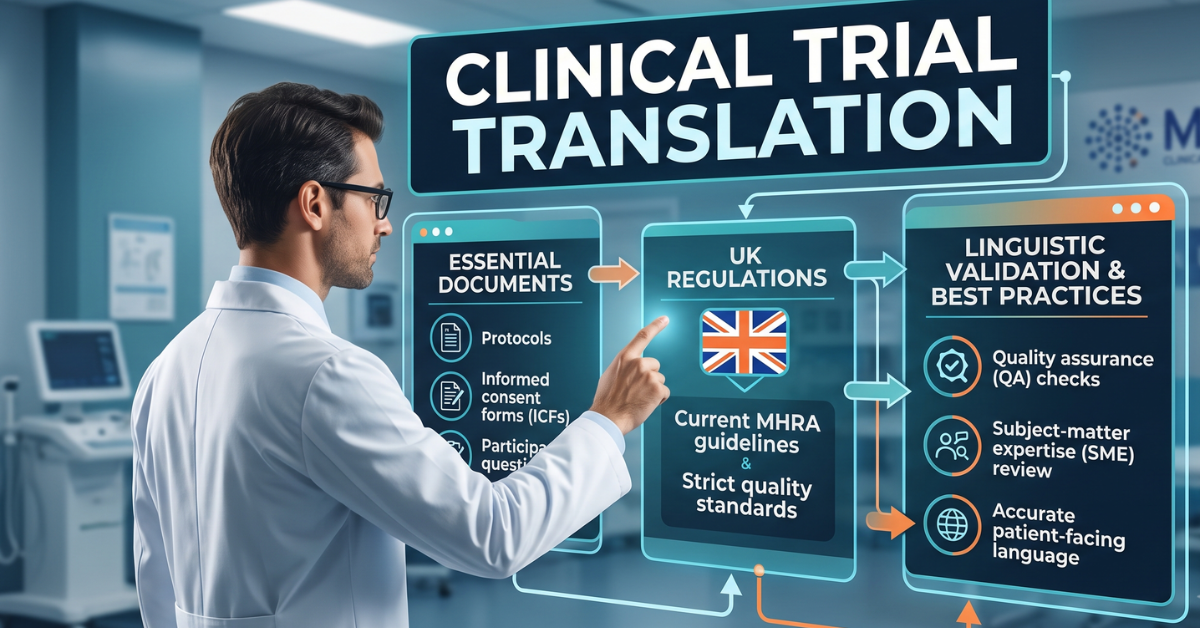
Clinical trial translation may involve protocols, informed consent forms, patient questionnaires, participant information sheets, investigator documentation, and clinical study reports.
Ask whether the provider has experience with your specific document types and can preserve the original meaning, terminology, formatting, and participant-facing clarity.
Informed consent documents require particular attention to language that prospective participants can understand. The US Food and Drug Administration explains that translated consent documents should be accurate when non-English-speaking participants are expected to participate in a clinical investigation.
For that reason, ask how the provider handles linguistic review, document revisions, and any project-specific review requirements. The translation provider should support your workflow without replacing the responsibilities of the study sponsor, investigator, ethics committee, or applicable regulatory authority.
5. How Does It Address Regulatory and Market-Specific Requirements?
Pharmaceutical translation requirements vary according to the document, intended use, destination market, and applicable regulatory procedures.
Ask whether the provider understands the relevant terminology, templates, formatting requirements, and linguistic review expectations for your target market. For example, the European Medicines Agency publishes guidance and templates for the linguistic review of human medicine product information.
Clarify whether your project requires certified translation, a prescribed template, an independent linguistic review, or another form of documented verification. Do not assume that every pharmaceutical document requires the same certification or approval process.
A translation provider should clearly explain the scope of its work and identify any regulatory review or approval that remains the client's responsibility.
6. Which Languages and Local Markets Does It Support?
Choose a pharmaceutical translation provider that supports your required source and target languages and understands the intended audience.
Ask about its experience with the specific language pair, regional terminology, local date and number formats, measurement units, and market-specific language conventions.
For multilingual pharmaceutical projects, also ask how terminology and approved content are kept consistent across languages. This is particularly useful when translating related documents for clinical studies, product launches, or international regulatory activities.
7. How Does It Protect Confidential Pharmaceutical Data?
Pharmaceutical documents may contain unpublished research, proprietary formulations, clinical study information, or sensitive patient data. Before sharing files, ask how the provider protects confidential information throughout the project.
Review its practices for secure file transfer, access controls, encryption, confidentiality agreements, subcontractor access, data retention, and deletion.
If your project involves personal data, ask how the provider's processes support your organization's applicable privacy and data protection obligations. Verify any claimed security certifications or compliance commitments and confirm that the arrangements cover the specific service being purchased.
8. Can It Meet Your Project Deadlines Without Compromising Quality?
Translation timelines can affect clinical study schedules, regulatory submissions, and product launches.
Ask the provider to confirm its estimated turnaround time, project capacity, review stages, and process for managing urgent requests. For large or multilingual projects, request a delivery schedule that identifies dependencies, review milestones, and approval responsibilities.
Also clarify how delays, source-document changes, and urgent revisions will be communicated. A realistic delivery commitment is more useful than a fast estimate that does not account for the required quality checks.
9. How Are Translation Costs, Revisions, and Project Scope Defined?
Pharmaceutical translation costs can depend on word count, language pair, document complexity, formatting, turnaround time, and additional review requirements.
Before approving a project, request a written quotation that specifies the included services, delivery format, deadlines, revision policy, and any additional charges.
Clarify whether the price includes independent review, terminology management, desktop publishing, certification where applicable, or updates to previously translated documents.
A transparent quotation helps you compare providers based on both cost and the quality assurance services included.
10. Which Pharmaceutical Documents and File Formats Can It Handle?
Pharmaceutical companies may require translation for clinical, scientific, regulatory, manufacturing, product information, and drug safety documentation.
Ask whether the provider can handle your specific documents, including:
Clinical trial protocols and informed consent forms.
Clinical study reports and patient questionnaires.
Drug labels and patient information leaflets.
Regulatory submissions and product registration documents.
Pharmacovigilance and adverse event reports.
Standard operating procedures and quality documentation.
Pharmaceutical training materials and scientific publications.
You should also confirm support for your required file formats, tables, tracked changes, document layouts, and terminology references.
Selecting a provider that understands your document requirements can simplify project coordination and help maintain consistency across related materials.
Choose the Right Pharmaceutical Translation Partner
Choosing a pharmaceutical translation company involves more than comparing prices or delivery estimates. Evaluate its relevant experience, translator qualifications, quality assurance workflow, confidentiality measures, language coverage, and familiarity with your intended markets.
Before making a decision, request a detailed quotation and ask the provider to explain how its process will address your document-specific requirements.
myTranscriptionPlace provides pharmaceutical translation support for clinical, regulatory, scientific, and drug-related content. Contact the team to discuss your documents, target languages, and project timeline.
Our Best Translation Services
English to Indonesian Translation | English to Spanish Translation | English to Italian Translation | English to Russian Translation | English to Danish Translation | English to Vietnamese Translation | English to Japanese Translation | English to Finnish Translation | English to Dutch Translation | English to Arabic Translation | English to Norwegian Translation | English to Greek Translation.
Frequently Asked Questions
1. What should I look for in a pharmaceutical translation company?
Look for relevant pharmaceutical translation experience, qualified linguists, appropriate quality checks, secure document handling, target-language coverage, and transparent project terms.
2. Why is specialized pharmaceutical translation important?
Pharmaceutical documents contain scientific terminology, drug information, clinical details, and safety-related content. Specialized translation helps preserve meaning and terminology across languages.
3. What documents require pharmaceutical translation?
Common examples include drug labels, patient information leaflets, clinical trial protocols, informed consent forms, regulatory submissions, pharmacovigilance reports, and scientific documentation.
4. How is pharmaceutical translation accuracy checked?
Depending on the project, checks may include linguistic revision, terminology verification, numerical and unit checks, consistency reviews, and final document validation.
5. Can a pharmaceutical translation company support regulatory submissions?
Yes. Some providers translate regulatory submissions and supporting documents. However, the provider's role, required review process, and any certification or approval requirements should be confirmed for the destination market.
6. How much does pharmaceutical translation cost?
The cost depends on factors such as word count, language pair, technical complexity, turnaround time, formatting, and additional review requirements. Request a project-specific quotation.
7. How can I request a pharmaceutical translation quote?
Provide the source document, source and target languages, document type, word count, deadline, and any formatting or review requirements. The provider can then assess the scope and prepare an estimate.

Nishi Singh
(Content Writer & SEO Manager)
She is an SEO Manager with over 8 years of experience in marketing and content creation. She specializes in SEO, content strategy, and paid advertisements, helping website owners across SaaS, B2B businesses, and e-commerce platforms achieve measurable growth. With a strong focus on driving organic traffic and crafting impactful content, Nishi has established herself as a trusted expert in the digital marketing space. When she's not optimizing websites, she channels her energy into marathon running, embracing challenges both on and off the track.