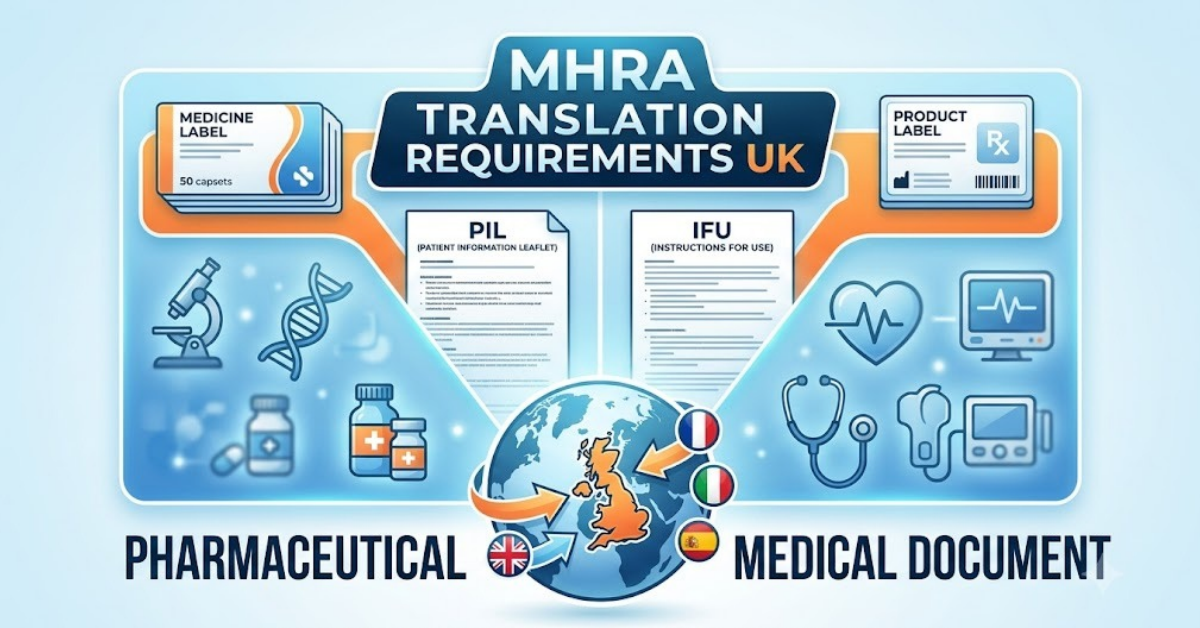
The pharmaceutical industry operates in one of the world's most highly regulated environments, where every document must meet strict scientific, legal, and regulatory standards. Whether launching a new medicine, conducting multinational clinical trials, registering a pharmaceutical product, or distributing patient information across different countries, accurate pharmaceutical translation UK plays a critical role in ensuring compliance, patient safety, and successful market expansion.
Unlike general business translation, pharmaceutical translation demands expertise in medical terminology, regulatory guidelines, life sciences, and country-specific healthcare regulations. Even a minor translation error in dosage instructions, contraindications, manufacturing documentation, or clinical trial protocols can lead to regulatory delays, legal liabilities, financial losses, or serious risks to patient health.
As pharmaceutical companies increasingly expand into international markets, the need for professional pharmaceutical translation services UK has never been greater. Regulatory authorities such as the Medicines and Healthcare products Regulatory Agency (MHRA), the European Medicines Agency (EMA), the Food and Drug Administration (FDA), and the International Council for Harmonisation (ICH) require accurate, consistent, and compliant multilingual documentation throughout every stage of the pharmaceutical product lifecycle.
At MyTranscriptionPlace, we provide specialist life sciences translation UK solutions designed specifically for pharmaceutical companies, biotechnology firms, Contract Research Organizations (CROs), medical device manufacturers, healthcare organizations, and research institutions. Our native-speaking pharmaceutical translators combine linguistic expertise with scientific knowledge to ensure every translated document preserves its original meaning while meeting international regulatory requirements.
Whether you require clinical trial translation, drug label translation, patient information leaflet translation, regulatory submission translation, or pharmacovigilance document translation, our experienced linguists deliver precise, confidential, and industry-compliant translation services that help your organization communicate confidently across global markets.
Pharmaceutical Translation UK at a Glance
What Is Pharmaceutical Translation?
Pharmaceutical translation is the specialized process of translating pharmaceutical, biotechnology, clinical research, and regulatory documents while maintaining scientific accuracy, medical consistency, regulatory compliance, and patient safety.
Unlike standard translation services, pharmaceutical translation requires subject-matter expertise in pharmacology, medicine, chemistry, biotechnology, and international healthcare regulations. Every translated document must accurately reflect complex scientific concepts, standardized medical terminology, dosage information, and legal requirements without altering the original meaning.
Professional pharmaceutical translation covers a wide range of content, including:
Clinical trial protocols
Patient Information Leaflets (PILs)
Drug packaging and labels
Summary of Product Characteristics (SmPC)
Regulatory submissions
Manufacturing documentation
Pharmacovigilance reports
Medical device documentation
Standard Operating Procedures (SOPs)
Good Manufacturing Practice (GMP) documents
Because these documents directly impact patient health and regulatory approvals, pharmaceutical translation must be performed by qualified translators with expertise in both language and life sciences.
Why Pharmaceutical Translation Matters?
The pharmaceutical industry depends on precision. Every translated word may influence regulatory approvals, clinical research outcomes, physician understanding, or patient safety.
A single mistranslation can have significant consequences, including:
Incorrect dosage instructions
Misinterpreted safety warnings
Delayed regulatory approvals
Clinical trial inconsistencies
Product recalls
Legal penalties
Damage to brand reputation
Risks to patient health
For example, if dosage instructions are translated incorrectly during the localization of patient information leaflets, patients may unknowingly misuse medications, potentially resulting in adverse drug reactions or treatment failure.
Similarly, inaccurate translations in regulatory submissions can lead to requests for clarification from authorities such as the MHRA or EMA, delaying product approvals and increasing operational costs.
This is why pharmaceutical organizations rely on experienced pharma translation companies UK rather than general translation providers.
At MyTranscriptionPlace, every project undergoes multiple quality assurance checks to ensure consistency, terminology accuracy, and compliance with international pharmaceutical standards.
Why Pharmaceutical Translation Is Different from Medical Translation?
Many organizations mistakenly assume that pharmaceutical translation and medical translation are the same. While both require medical expertise, they serve different purposes and involve distinct regulatory requirements.
Medical translation primarily focuses on patient care and healthcare communication, whereas pharmaceutical translation emphasizes regulatory compliance, scientific accuracy, product approvals, and commercial distribution.
Because pharmaceutical documents often become legally binding records submitted to regulatory authorities, translation quality standards are significantly higher.
Why Accuracy Is Critical in Pharmaceutical Translation?
Accuracy is not simply a quality benchmark—it is a regulatory requirement.
Regulatory agencies expect pharmaceutical documentation to maintain complete consistency across all languages. Any discrepancy between the source and translated versions may delay approvals or trigger additional regulatory review.
Professional pharmaceutical translation ensures:
Scientific terminology remains consistent.
Drug names are translated correctly.
Medical abbreviations are interpreted accurately.
Dosage instructions remain unchanged.
Regulatory language complies with country-specific guidelines.
Patient safety information is preserved.
Technical documentation remains legally valid.
At MyTranscriptionPlace, our translators work with standardized pharmaceutical glossaries, terminology databases, and quality management procedures to maintain linguistic consistency across every project.
Regulatory Requirements for Pharmaceutical Translation in the UK
The United Kingdom has strict pharmaceutical regulations governing the translation of medicines, medical devices, and healthcare documentation.
Organizations operating in the UK must ensure that multilingual pharmaceutical documentation complies with guidance issued by the Medicines and Healthcare products Regulatory Agency (MHRA) and aligns with internationally recognized standards where applicable.
Accurate pharmaceutical translation supports:
Drug licensing
Product registration
Clinical trial authorization
Medical device approvals
Pharmacovigilance reporting
Manufacturing compliance
Product safety communication
Professional translators must understand:
Pharmaceutical terminology
UK regulatory language
Scientific writing conventions
Healthcare legislation
Medical device regulations
Good Clinical Practice (GCP)
Good Manufacturing Practice (GMP)
Failure to meet these requirements may delay regulatory approvals and increase compliance risks.
Understanding MHRA Compliance in Pharmaceutical Translation
The Medicines and Healthcare products Regulatory Agency (MHRA) oversees the regulation of medicines, vaccines, and medical devices in the United Kingdom.
When pharmaceutical companies submit documentation to the MHRA, translated content must accurately reflect the original scientific meaning while following approved terminology and regulatory formatting.
Common MHRA-related documents include:
Marketing Authorization Applications (MAA)
Product Information
Summary of Product Characteristics (SmPC)
Patient Information Leaflets (PIL)
Risk Management Plans
Clinical Trial Applications
Manufacturing Documentation
Safety Reports
Professional pharmaceutical translators understand the importance of maintaining consistency across all regulatory documents, helping organizations reduce approval delays and maintain compliance.
EMA and International Regulatory Requirements
Although the UK has its own regulatory framework, many pharmaceutical companies operate internationally and must also comply with the European Medicines Agency (EMA) and the International Council for Harmonisation (ICH) guidelines.
Global pharmaceutical companies often require multilingual documentation for submissions across Europe and other international markets.
Professional life sciences translators help maintain consistency between documents submitted to:
European Medicines Agency (EMA)
Medicines and Healthcare products Regulatory Agency (MHRA)
U.S. Food and Drug Administration (FDA)
Health Canada
Therapeutic Goods Administration (TGA)
Swissmedic
PMDA Japan
Maintaining consistent terminology across multiple regulatory jurisdictions significantly improves the efficiency of international product registrations.
Clinical Trial Translation: Supporting Global Research with Accuracy
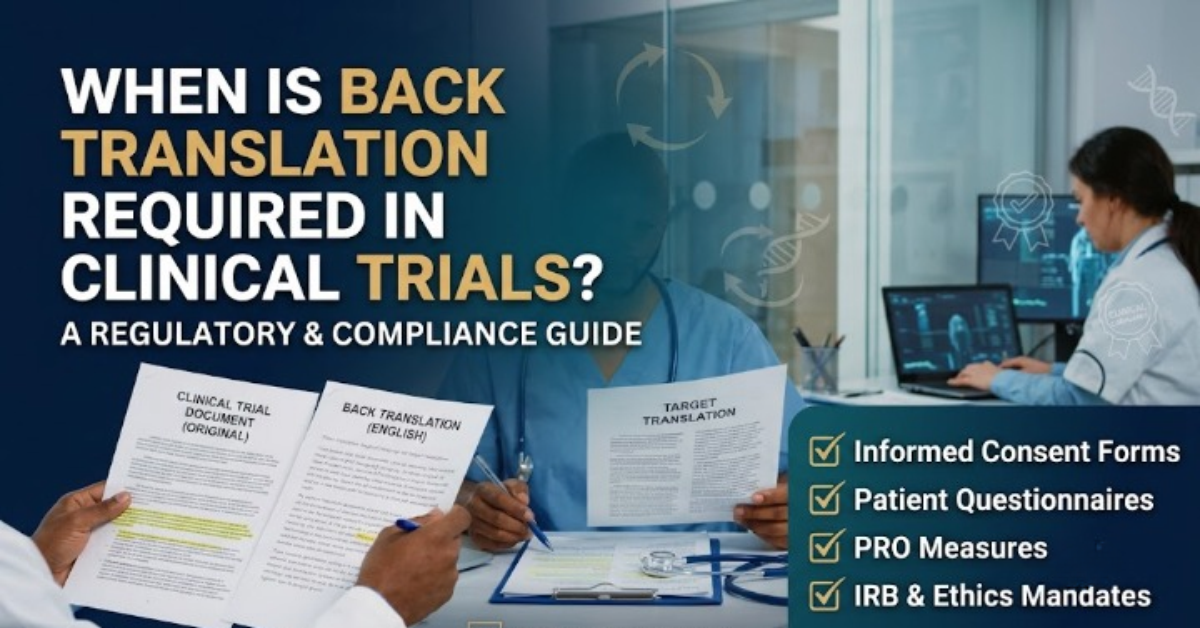
Clinical trials are the foundation of pharmaceutical innovation. As research expands across multiple countries, sponsors, Contract Research Organizations (CROs), and research institutions must communicate consistently with investigators, healthcare professionals, ethics committees, and trial participants in different languages.
Clinical trial translation requires much more than linguistic expertise. Translators must understand clinical research terminology, regulatory requirements, Good Clinical Practice (GCP), and country-specific healthcare regulations. Every translated document must preserve scientific meaning while remaining culturally appropriate and legally compliant.
At MyTranscriptionPlace, our clinical trial translation services support every phase of pharmaceutical research, from patient recruitment to regulatory submission. We help pharmaceutical companies conduct multinational studies while ensuring accurate communication across global research sites.
Clinical Trial Documents We Translate
Our experienced life sciences translators provide accurate translations for:
Clinical Trial Protocols
Investigator Brochures (IB)
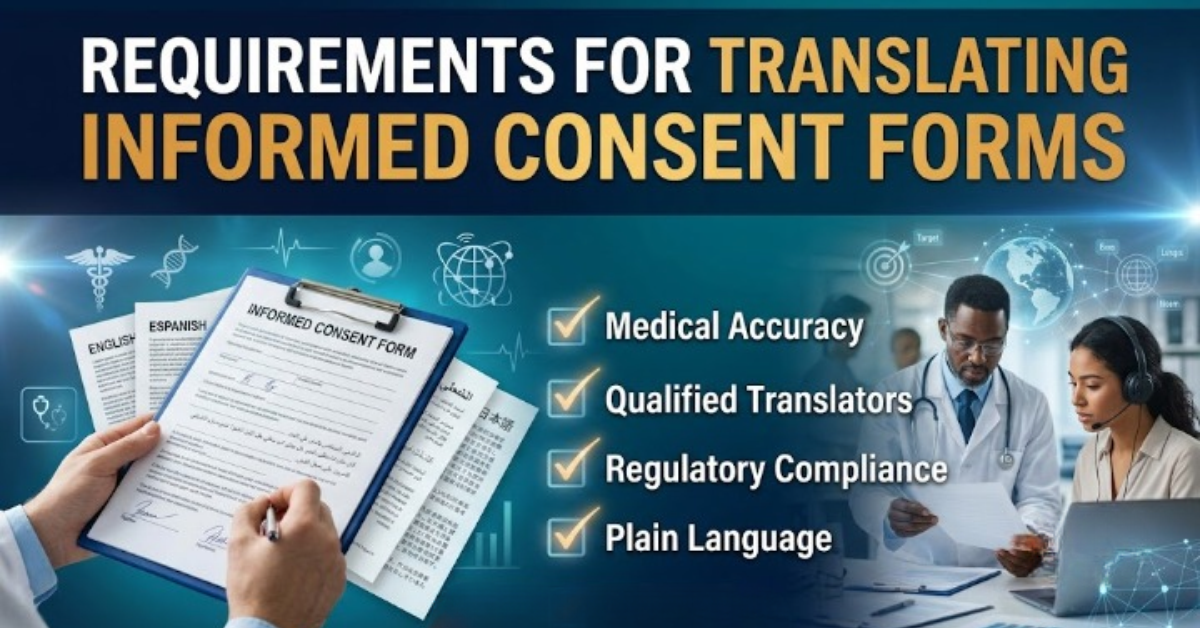
Informed Consent Forms (ICF)
Case Report Forms (CRF)
Patient Recruitment Materials
Patient Diaries
Clinical Study Reports (CSR)
Ethics Committee Submissions
Safety Narratives
Adverse Event Reports
Laboratory Reports
Trial Monitoring Documents
Clinical Outcome Assessments (COA)
Electronic Clinical Outcome Assessments (eCOA)
Every translation undergoes multiple quality checks to ensure terminology consistency and compliance with MHRA, EMA, FDA, and ICH guidelines.
Pharmaceutical Documents We Translate
Pharmaceutical companies generate thousands of highly regulated documents throughout the product lifecycle. Each document requires precise translation to maintain regulatory compliance, scientific integrity, and patient safety.
Pharmaceutical Translation Workflow
Delivering high-quality pharmaceutical translations requires a structured process that combines scientific expertise, linguistic precision, and rigorous quality assurance.
1. Project Assessment
We evaluate the document type, technical complexity, target languages, regulatory requirements, and project timeline to develop a customized translation strategy.
2. Terminology Preparation
Our specialists create or review glossaries, translation memories, and approved pharmaceutical terminology to ensure consistency throughout the project.
3. Translation by Subject Matter Experts
Documents are translated by native-speaking linguists with expertise in pharmaceuticals, biotechnology, medicine, or life sciences.
4. Medical Editing
A second qualified linguist reviews the translation for scientific accuracy, terminology consistency, grammar, and clarity.
5. Quality Assurance
Dedicated QA specialists perform comprehensive checks for formatting, numbers, dosage information, units of measurement, regulatory terminology, and document consistency.
6. Compliance Review
Translations are verified against applicable regulatory standards, including MHRA, EMA, FDA, and ICH requirements where relevant.
7. Final Delivery
The completed translation is securely delivered in the required format, maintaining confidentiality and document integrity.
Why Human Pharmaceutical Translation Still Matters?
Artificial Intelligence has transformed many industries, but pharmaceutical translation remains a field where human expertise is essential.
While AI-powered tools can accelerate preliminary translations, they cannot fully understand scientific context, regulatory intent, or specialized pharmaceutical terminology. Human translators ensure that critical documents remain accurate, compliant, and culturally appropriate.
Human Translation vs AI Translation
Why Human Review Is Essential?
Human translators can:
Interpret complex scientific terminology accurately.
Recognize context-specific medical language.
Apply country-specific regulatory terminology.
Maintain consistency across large documentation sets.
Identify potential ambiguities before submission.
Ensure compliance with pharmaceutical regulations.
For regulated pharmaceutical content, human expertise remains the gold standard.
Benefits of Professional Pharmaceutical Translation Services
Choosing a specialist pharmaceutical translation provider offers significant advantages beyond language accuracy.
1. Regulatory Compliance
Professional translators understand MHRA, EMA, FDA, and ICH terminology, reducing the risk of regulatory delays.
2. Improved Patient Safety
Accurate translation of dosage instructions, warnings, and contraindications helps prevent medication errors and improves patient understanding.
3. Faster Global Product Launches
Consistent multilingual documentation supports quicker regulatory approvals and international market expansion.
4. Scientific Accuracy
Subject matter experts preserve the original scientific meaning, ensuring research integrity across languages.
5. Brand Reputation
High-quality translations demonstrate professionalism and build trust with healthcare professionals, regulators, and patients.
6. Reduced Business Risk
Accurate translations help minimize legal exposure, product recalls, and costly regulatory corrections.
Industries We Serve
Our pharmaceutical translation solutions support organizations across the life sciences sector.
Pharmaceutical Companies
From drug discovery to commercialization, we help pharmaceutical manufacturers communicate accurately across international markets.
Biotechnology Companies
Biotech organizations rely on our expertise to translate research documentation, regulatory submissions, and scientific publications.
Contract Research Organizations (CROs)
We support CROs conducting multinational clinical trials with accurate translation of protocols, consent forms, and study reports.
Medical Device Manufacturers
Our translators localize technical documentation, instructions for use (IFUs), product labels, and regulatory documentation.
Healthcare Organizations
Hospitals, healthcare providers, and research institutions depend on clear multilingual communication for patient care and scientific collaboration.
Academic Research Institutions
Universities and research centers trust us to translate research papers, grant applications, ethics submissions, and scientific publications.
Regulatory Consultants
Regulatory professionals rely on consistent multilingual documentation to support pharmaceutical approvals worldwide.
Pharmaceutical Translation by the Numbers
The global pharmaceutical industry continues to expand, increasing the demand for accurate multilingual communication.
Key industry insights include:
Pharmaceutical companies routinely conduct clinical trials across multiple countries, requiring multilingual documentation throughout the research lifecycle.
Regulatory authorities expect consistent terminology across every translated submission, making quality assurance essential.
Patient information leaflets and safety documentation must be translated accurately to support safe medication use in diverse populations.
As global product launches increase, pharmaceutical translation has become a strategic investment rather than a simple language service.
Organizations that standardize terminology and translation workflows often experience smoother regulatory reviews and improved communication across international teams.
Common Challenges in Pharmaceutical Translation
Pharmaceutical translation projects often involve complex technical and regulatory requirements.
Some of the most common challenges include:
Complex Scientific Terminology
Medical, pharmaceutical, and biochemical terminology requires specialized subject knowledge to translate accurately.
Regulatory Variations
Different countries have unique regulatory expectations, document formats, and terminology standards.
Terminology Consistency
Large pharmaceutical projects may contain thousands of technical terms that must remain consistent across every document and language.
Confidentiality
Sensitive research data, proprietary formulations, and intellectual property require secure handling throughout the translation process.
Tight Deadlines
Clinical trials and regulatory submissions often operate under strict timelines, making efficient project management essential.
At MyTranscriptionPlace, we address these challenges through experienced linguists, terminology management, secure workflows, and rigorous quality assurance processes.
Why Pharmaceutical Companies Choose MyTranscriptionPlace?
Pharmaceutical organizations trust MyTranscriptionPlace because we combine scientific expertise with professional linguistic excellence.
Our strengths include:
Native-speaking pharmaceutical translators
Experienced life sciences specialists
Subject matter expertise across pharmaceutical and biotechnology sectors
Comprehensive quality assurance process
Terminology management for consistency
Confidential and secure file handling
Support for more than 200 languages
Fast turnaround times
Dedicated project management
Customized translation solutions for regulated industries
Whether you require a single patient information leaflet or a large-scale multilingual regulatory submission, our team is committed to delivering translations that meet the highest standards of accuracy, compliance, and quality.
The Future of Pharmaceutical Translation: AI, Human Expertise & Global Compliance
The pharmaceutical industry is becoming increasingly global, digital, and data-driven. As companies expand into new markets, the demand for multilingual regulatory documentation, clinical trial materials, and patient communications continues to grow.
Emerging technologies such as Artificial Intelligence (AI), Machine Translation (MT), Translation Memory (TM), and terminology management systems are improving translation efficiency. However, these technologies are best used to support—not replace—qualified pharmaceutical translators.
For regulated pharmaceutical content, human expertise remains essential. Scientific accuracy, regulatory compliance, and patient safety require experienced linguists who understand life sciences, medical terminology, and international regulations.
The future of pharmaceutical translation lies in combining advanced translation technology with expert human review to deliver faster turnaround times without compromising quality.
Why Pharmaceutical Localization Matters?
Translation converts text from one language to another, while localization adapts content to meet the linguistic, cultural, and regulatory expectations of a specific market.
For pharmaceutical companies, localization ensures that medicines, medical devices, and healthcare information are understood correctly by regulators, healthcare professionals, and patients in different countries.
Effective pharmaceutical localization includes:
Country-specific medical terminology
Local regulatory requirements
Approved pharmaceutical nomenclature
Date, time, and measurement formats
Packaging and labeling requirements
Cultural adaptation of patient-facing materials
Region-specific healthcare terminology
Proper localization improves patient understanding, strengthens regulatory compliance, and supports successful international product launches.
Best Practices for Pharmaceutical Translation
To achieve accurate and compliant translations, pharmaceutical organizations should follow these best practices:
1. Work with Subject Matter Experts
Choose translators with expertise in pharmaceuticals, biotechnology, medicine, or life sciences rather than general language translators.
2. Maintain Terminology Consistency
Use approved glossaries, terminology databases, and translation memories to ensure consistent language across all documentation.
3. Implement Multi-Level Quality Assurance
Every translation should undergo translation, editing, proofreading, and quality assurance before submission.
4. Prioritize Regulatory Compliance
Ensure translators understand MHRA, EMA, FDA, and ICH terminology and documentation requirements.
5. Protect Confidential Information
Work with providers that use secure workflows, confidentiality agreements (NDAs), and encrypted file-sharing systems.
6. Plan for Localization Early
Preparing multilingual content during product development reduces delays during international regulatory submissions and product launches.
Why Choose MyTranscriptionPlace for Pharmaceutical Translation UK?
At MyTranscriptionPlace, we understand that pharmaceutical translation is about more than converting words—it is about protecting patient safety, supporting regulatory approvals, and enabling global healthcare communication.
Our pharmaceutical translation services are designed to meet the highest standards of quality, confidentiality, and compliance.
What Sets Us Apart?
Native-speaking pharmaceutical translators
Life sciences subject matter experts
MHRA, EMA, FDA, and ICH terminology expertise
Translation in 200+ languages
Human translation with rigorous quality assurance
Confidential and secure document handling
Fast turnaround times
Dedicated project management
Scalable solutions for global pharmaceutical organizations
Support for clinical trials, regulatory submissions, medical devices, biotechnology, and pharmacovigilance
Whether your organization is preparing a clinical trial, registering a new medicine, translating patient information leaflets, or expanding into international markets, our team delivers accurate, reliable, and compliant translation solutions tailored to your business needs.
Pharmaceutical Translation Checklist
Before submitting multilingual pharmaceutical documents, ensure that:
· Medical terminology is accurate and consistent.
· Drug names and dosage instructions match the original document.
· Scientific meaning has been preserved.
· Regulatory terminology aligns with MHRA, EMA, or other relevant authorities.
· Patient-facing content is clear and culturally appropriate.
· Quality assurance and proofreading have been completed.
· Formatting, units of measurement, and numerical data have been verified.
· Confidentiality and document security requirements have been maintained.
Following this checklist helps reduce regulatory risks and supports successful international submissions.
Conclusion
In today's highly regulated pharmaceutical landscape, accurate translation is a strategic necessity rather than an optional service. Every document—from clinical trial protocols and regulatory submissions to patient information leaflets and pharmacovigilance reports—must communicate the original scientific meaning with precision while meeting strict regulatory requirements.
Professional pharmaceutical translation UK services help organizations navigate complex international regulations, improve patient safety, reduce approval delays, and confidently expand into global markets.
By partnering with MyTranscriptionPlace, pharmaceutical companies gain access to experienced life sciences translators, robust quality assurance processes, and secure, confidential workflows that support every stage of the pharmaceutical product lifecycle.
Whether you require multilingual clinical trial documentation, medical device localization, biotechnology translations, or regulatory submission support, our expert team is ready to deliver accurate, compliant, and industry-focused translation solutions tailored to your global business needs.
Our Best Translation Services
English to Indonesian Translation | English to Spanish Translation | English to Italian Translation | English to Russian Translation | English to Danish Translation | English to Vietnamese Translation | English to Japanese Translation | English to Finnish Translation | English to Dutch Translation | English to Arabic Translation | English to Norwegian Translation | English to Greek Translation.
Frequently Asked Questions
1. What is pharmaceutical translation?
Pharmaceutical translation is the process of translating pharmaceutical, biotechnology, and healthcare documents while preserving scientific accuracy, regulatory compliance, and patient safety. It includes translating clinical trial documents, drug labels, patient information leaflets, and regulatory submissions.
2. Why is pharmaceutical translation important?
Accurate pharmaceutical translation helps pharmaceutical companies comply with regulations, protect patient safety, reduce approval delays, and communicate effectively across international markets.
3. Who needs pharmaceutical translation services?
Pharmaceutical manufacturers, biotechnology companies, Contract Research Organizations (CROs), medical device manufacturers, healthcare organizations, universities, research institutions, and regulatory consultants all benefit from specialist pharmaceutical translation services.
4. What documents require pharmaceutical translation?
Common documents include clinical trial protocols, informed consent forms, investigator brochures, patient information leaflets, Summary of Product Characteristics (SmPC), regulatory submissions, pharmacovigilance reports, manufacturing SOPs, drug labels, and medical device documentation.
5. What is the difference between pharmaceutical and medical translation?
Medical translation focuses on healthcare communication, patient records, and clinical documentation, while pharmaceutical translation involves regulated documents related to medicines, biotechnology, manufacturing, clinical research, and regulatory approvals.
6. Why is accuracy so important in pharmaceutical translation?
Even a minor translation error can lead to incorrect dosage instructions, patient safety risks, regulatory delays, legal issues, or product recalls. Accuracy ensures scientific integrity and compliance.

Nishi Singh
(Content Writer & SEO Manager)
She is an SEO Manager with over 8 years of experience in marketing and content creation. She specializes in SEO, content strategy, and paid advertisements, helping website owners across SaaS, B2B businesses, and e-commerce platforms achieve measurable growth. With a strong focus on driving organic traffic and crafting impactful content, Nishi has established herself as a trusted expert in the digital marketing space. When she's not optimizing websites, she channels her energy into marathon running, embracing challenges both on and off the track.