Linguistic validation in clinical trials ensures that translated study materials are accurate, clear, and culturally appropriate for participants across different languages and regions. It is particularly important for patient-reported outcome (PRO) questionnaires and clinical outcome assessment (COA) tools, where differences in wording can affect how participants understand questions and report their symptoms, experiences, or quality of life.
The linguistic validation process may include forward translation, reconciliation, back translation where appropriate, expert review, cognitive debriefing, and final documentation. The exact workflow depends on the assessment instrument, study protocol, sponsor requirements, and applicable guidance.
For multinational clinical research, a structured translation and review process helps research teams improve participant comprehension, maintain consistent terminology, and support comparable data collection across language versions.
What Is Linguistic Validation in Clinical Trials?
Linguistic validation in clinical trials is the process of evaluating whether translated clinical research materials preserve the intended meaning of the original text and can be understood appropriately by the target-language population.
Unlike translation alone, linguistic validation considers not only linguistic accuracy but also conceptual equivalence, readability, cultural relevance, and participant comprehension. This is particularly important when clinical trial participants complete questionnaires or assessments used to measure symptoms, treatment effects, daily functioning, and health-related quality of life.
For example, a question about difficulty performing a daily activity may be translated correctly at the word level but still be confusing in a different cultural context. Linguistic review and, where appropriate, cognitive debriefing can help identify such issues before the translated material is finalized.
Linguistic validation is commonly relevant to patient-reported outcome measures and other clinical outcome assessment instruments. The specific validation methodology should be selected according to the instrument's purpose and the requirements of the study.
Why Is Linguistic Validation Important in Clinical Trials?
Clinical trials often involve participants from different linguistic and cultural backgrounds. If study materials are difficult to understand or interpreted differently across languages, participants may struggle to answer questions as intended.
Linguistic validation helps address these challenges by focusing on clarity, conceptual consistency, and suitability for the intended population.
1. Improves Participant Understanding
Clear, natural language helps participants understand questionnaire items, instructions, and response options. This is especially important when participants report symptoms, treatment experiences, or changes in quality of life.
2. Supports Consistent Data Collection
When assessment questions communicate equivalent concepts across languages, researchers are better positioned to interpret responses consistently across participating countries and populations.
3. Addresses Cultural and Linguistic Differences
Expressions, everyday activities, and descriptions of symptoms may not have direct equivalents in every language. Cultural adaptation and linguistic review help identify wording that may be unfamiliar, ambiguous, or inappropriate for the target population.
4. Helps Protect the Meaning of Clinical Assessments
Inconsistent terminology or unclear wording may affect how participants interpret assessment items. A structured review process helps preserve the intended concepts and response options.
5. Supports Study Quality and Documentation
Documented translation decisions, reviewer feedback, and quality checks help research teams maintain version control and demonstrate how translation-related issues were addressed, in line with applicable project requirements.
Steps in the Linguistic Validation Process
The linguistic validation process for clinical trials follows a structured methodology tailored to the document, assessment instrument, and study requirements. The following stages describe a common framework; not every project will require every step in precisely the same form.
Step 1: Forward Translation
Forward translation involves translating the original clinical research document into the target language.
Qualified translators with relevant medical, clinical research, or patient-facing translation experience should preserve the intended meaning while producing language that is natural and understandable for the target population.
Where the selected methodology calls for independent translations, multiple translators may prepare separate versions for comparison.
Objective: Produce an accurate and readable initial target-language version.
Step 2: Reconciliation and Review
Reconciliation involves comparing independent forward translations, where available, and resolving differences in wording, terminology, tone, and conceptual meaning.
The reviewers select or develop the most appropriate wording while considering the source text, intended concepts, and language conventions of the target population.
This stage helps identify inconsistencies before the document moves to further review.
Objective: Establish an agreed target-language draft.
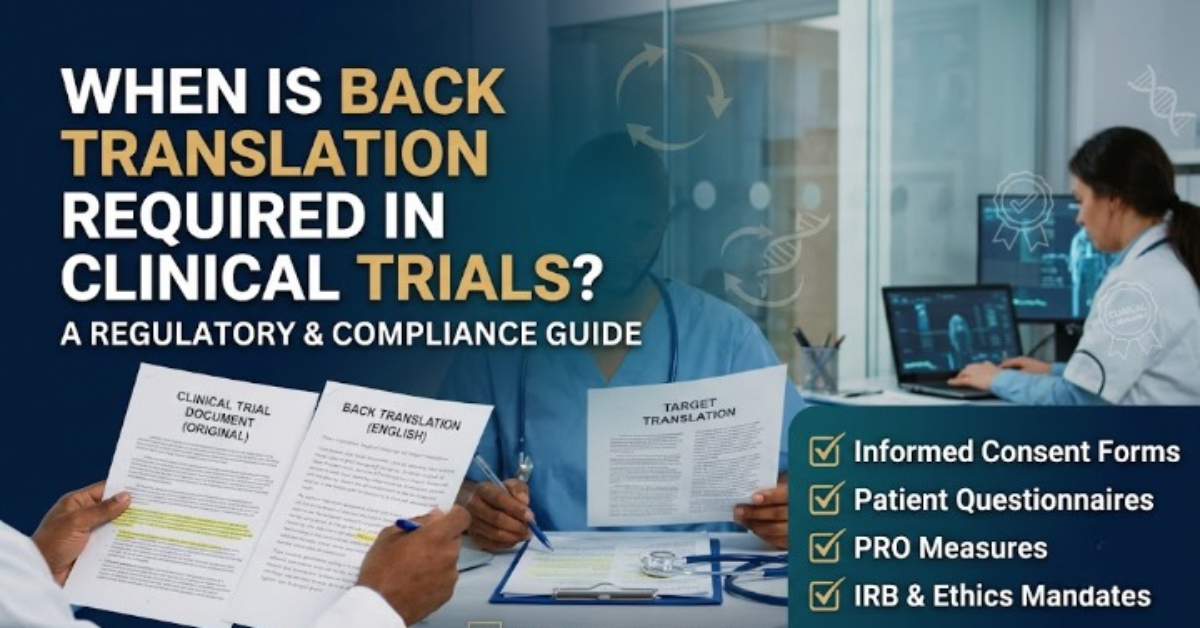
Step 3: Back Translation, Where Appropriate
Back translation involves translating the target-language version back into the original source language, typically by a translator who has not seen the source document.
The back-translated version can be compared with the original to identify potential differences in meaning. Any discrepancies should be investigated rather than treated automatically as proof of an error.
Back translation can be a useful quality-control method, but it does not independently establish that a translation is understandable or culturally appropriate for participants. Its use should follow the chosen methodology and applicable requirements.
Objective: Identify potential discrepancies for further investigation when back translation is included in the workflow.
Step 4: Expert Review
Expert review evaluates the translation for linguistic accuracy, conceptual equivalence, terminology, readability, and cultural suitability.
Depending on the project, reviewers may include language specialists, clinical experts, instrument owners, or other appropriately qualified professionals.
The review should pay particular attention to medical terminology, response scales, instructions, and wording that could influence how participants interpret an assessment item.
Objective: Refine the translation and address outstanding linguistic or conceptual issues.
Step 5: Cognitive Debriefing
Cognitive debriefing involves asking members of the intended target population to review translated questionnaire items or other relevant assessment materials and explain how they understand them.
Through interviews or structured questions, researchers can identify confusing phrases, unfamiliar expressions, ambiguous response options, or unintended interpretations.
Feedback is reviewed systematically, and wording may be revised where necessary. The need for cognitive debriefing and the number of participants involved depend on the instrument and the study methodology.
Objective: Evaluate whether the intended users understand the translated material as intended.
Step 6: Final Review and Documentation
The final review checks the revised translation for accuracy, consistency, formatting, spelling, and completeness. Outstanding issues should be resolved according to the project's review and approval procedures.
Appropriate documentation may include translation versions, reviewer comments, reconciliation decisions, cognitive debriefing findings, approved changes, and final sign-off records, depending on the study requirements.
Objective: Deliver an approved translation with supporting quality documentation appropriate to the project.
Linguistic Validation vs. Translation vs. Back Translation
Although these terms are related, they describe different activities within clinical research translation.
Back translation is one possible quality-control step, not a replacement for the broader linguistic validation process. A back-translated document may closely resemble the original while the target-language version still contains wording that is difficult for participants to understand.
The appropriate process should reflect the intended use of the document, the assessment instrument's requirements, and the study's applicable guidance.
Which Clinical Trial Documents May Require Linguistic Validation?
The need for linguistic validation depends on the purpose of the document, the intended audience, and the requirements of the study. Examples of materials that may require careful translation and review include the following.
Patient-Reported Outcome (PRO) Questionnaires
PRO questionnaires collect information directly from participants about symptoms, functioning, treatment experiences, or quality of life. Linguistic accuracy is important because participants need to understand each question and response option consistently.
Clinical Outcome Assessment (COA) Tools
Clinical outcome assessment tools may include patient-reported, clinician-reported, observer-reported, or performance-based measures. Translation requirements vary according to the type of instrument and its intended use.
Quality-of-Life Surveys
These surveys assess how a condition or treatment affects everyday functioning and well-being. Cultural and linguistic differences can influence how participants interpret questions about daily activities, emotions, or social experiences.
Symptom Diaries and Daily Assessments
Participants may use diaries or electronic assessments to record symptoms, experiences, or treatment-related information. Clear instructions and consistent terminology can help reduce confusion during repeated assessments.
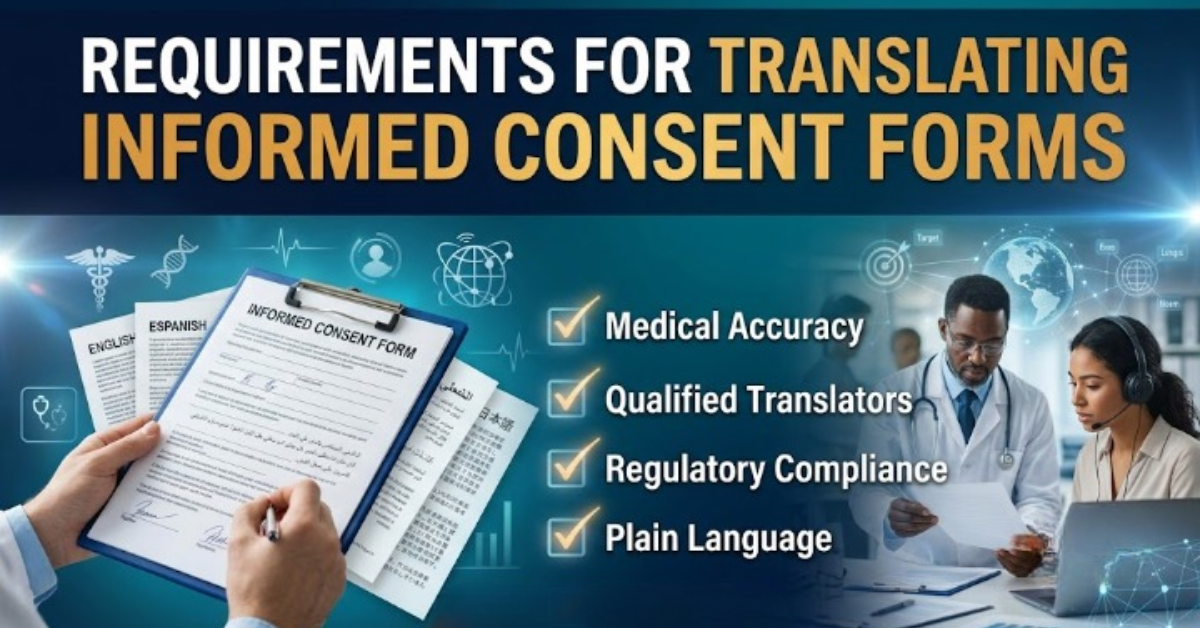
Informed Consent Forms and Participant Information Materials
Informed consent documents and participant information sheets need to communicate study information in language that prospective participants can understand. Translation requirements should be determined according to applicable ethics, regulatory, and study-specific requirements.
Patient Instructions and Other Study Documents
Instructions for study visits, assessments, or participant activities may also require translation and careful review to ensure clarity and suitability for the intended users.
Not all these documents necessarily require the same linguistic validation procedure. Research teams should establish the appropriate translation and review requirements for each document in consultation with relevant study stakeholders.
Best Practices for Linguistic Validation in Clinical Trials
A structured quality-assurance approach helps research teams manage language-related risks and maintain consistency across translated materials.
1. Work With Qualified Medical Translators
Select translators who have relevant experience with clinical research documents, medical terminology, and patient-facing language. Specialized experience can help them recognize wording that requires additional clinical or linguistic review.
2. Prioritize Conceptual Equivalence
The objective is to preserve the concept being measured, not simply to translate individual words literally. Reviewers should investigate phrases that may have different meanings or implications in the target language.
3. Adapt Content for the Target Population
Consider local expressions, literacy levels, cultural practices, and everyday activities where relevant. Wording should be understandable without changing the underlying concept or intent of the original assessment.
4. Assess Participant Comprehension
When required by the selected methodology, cognitive debriefing can help determine whether participants understand translated items and response options as intended. Findings should be evaluated and documented before the final version is approved.
5. Maintain Consistent Terminology
Use consistent medical terminology, instructions, and response options across related documents and language versions. Approved glossaries and terminology references can help support consistency.
6. Document Translation Decisions
Maintain suitable records of translation versions, review comments, resolved discrepancies, changes, and approvals. Documentation requirements should follow the study protocol, sponsor procedures, and applicable guidance.
7. Protect Confidentiality
Clinical research materials may contain confidential study information or sensitive participant data. Apply appropriate access controls, secure transfer methods, and data-handling procedures throughout the translation workflow.
8. Follow Applicable Guidance and Instrument Requirements
Determine whether the study, sponsor, instrument owner, ethics committee, or relevant regulatory authority specifies a particular translation or linguistic validation procedure. Do not assume that one workflow applies to every instrument or jurisdiction.
Regulatory and Quality Considerations for Clinical Trial Linguistic Validation
Clinical trial translation requirements depend on the document type, jurisdiction, study design, and intended use of the translated material.
Research teams should distinguish general good practices from mandatory requirements. A process recommended for a particular patient-reported outcome instrument may not automatically apply to every clinical document.
For patient-reported outcome measures, the International Society for Pharmacoeconomics and Outcomes Research (ISPOR) has published good-practice recommendations on translation and cultural adaptation. The U.S. Food and Drug Administration (FDA) also provides guidance relevant to clinical outcome assessments and patient-reported outcomes.
Before beginning a translation project, teams should establish the applicable methodology, review responsibilities, approval requirements, documentation expectations, and version-control procedures.
Relevant resources include:
ISPOR good-practice recommendations for translation and cultural adaptation of patient-reported outcome measures.
FDA guidance on patient-reported outcome measures and clinical outcome assessment instruments.
Consult the guidance relevant to the specific instrument and study rather than treating general recommendations as universal regulatory requirements.
How MyTranscriptionPlace Supports Clinical Research
MyTranscriptionPlace supports multilingual communication needs through professional translation services for clinical research and related documentation. Accurate terminology, clear language, confidentiality, and consistent quality review are important considerations when preparing materials for participants across different languages.
Depending on the project scope, clinical research translation may involve patient questionnaires, assessment materials, participant instructions, and other study-related documents.
A suitable translation workflow should account for the intended audience, document complexity, target languages, review requirements, and delivery schedule. Where formal linguistic validation is needed, the scope should clearly identify the required stages, review responsibilities, participant feedback activities, and documentation.
Planning a multilingual clinical trial?
Contact MyTranscriptionPlace to discuss your clinical research translation requirements, target languages, document types, and project timeline. Our team can help you understand the available translation support and determine the appropriate next steps for your project.
Conclusion
Linguistic validation in clinical trials is an important part of preparing translated research materials for multilingual populations. By evaluating linguistic accuracy, conceptual equivalence, cultural suitability, and participant comprehension, research teams can address potential language-related issues before using translated materials in a study.
A structured approach may involve forward translation, reconciliation, back translation where appropriate, expert review, cognitive debriefing, and final documentation. The exact process should be tailored to the assessment instrument, study requirements, and applicable guidance.
For organizations conducting multinational research, working with experienced clinical research translation professionals can help establish a suitable translation and quality-assurance workflow. MyTranscriptionPlace can help research teams explore translation support for their multilingual clinical research requirements.
Our Best Translation Services
English to Indonesian Translation | English to Spanish Translation | English to Italian Translation | English to Russian Translation | English to Danish Translation | English to Vietnamese Translation | English to Japanese Translation | English to Finnish Translation | English to Dutch Translation | English to Arabic Translation | English to Norwegian Translation | English to Greek Translation.
Frequently Asked Questions About Linguistic Validation in Clinical Trials
1. What is linguistic validation in clinical trials?
Linguistic validation evaluates whether translated clinical research materials preserve the intended meaning of the original text and are clear and culturally appropriate for the target population. It is particularly relevant to patient-reported outcome questionnaires and other clinical outcome assessment tools.
2. Why is linguistic validation important in clinical trials?
Linguistic validation helps participants understand study questions and instructions as intended. It also helps research teams address linguistic and cultural differences that may affect responses, supporting more consistent data collection across languages and countries.
3. What is cognitive debriefing in linguistic validation?
Cognitive debriefing involves asking members of the target population to review translated questions and explain how they interpret them. Their feedback helps researchers identify confusing wording, unfamiliar expressions, or unintended meanings and make appropriate revisions.
4. Which clinical trial materials may require linguistic validation?
Materials may include patient-reported outcome questionnaires, clinical outcome assessment tools, quality-of-life surveys, symptom diaries, and participant information documents. Requirements depend on the document's purpose, study protocol, instrument requirements, and applicable guidance.
5. How does linguistic validation support multinational clinical trials?
Linguistic validation helps ensure that translated assessment materials communicate equivalent concepts across languages. By addressing differences in wording and interpretation, it supports consistent participant understanding and helps researchers compare data collected across different populations.
6. What is the difference between linguistic validation and back translation?
Back translation involves translating a target-language document back into the source language to identify potential differences. Linguistic validation is broader and may include translation review, reconciliation, cultural adaptation, cognitive debriefing, and final documentation. Back translation alone cannot establish participant comprehension.
7. Is back translation mandatory for every clinical trial document?
No single back-translation requirement applies universally to every clinical trial document. Whether it is required or appropriate depends on the assessment instrument, sponsor procedures, study protocol, and applicable guidance.
8. How long does linguistic validation take?
The timeline depends on the number of target languages, document length, instrument complexity, review stages, cognitive debriefing requirements, and the number of revisions. A project-specific timeline should be established after the scope and methodology have been agreed upon.
9. Does every translated patient-reported outcome questionnaire require cognitive debriefing?
The need for cognitive debriefing depends on the instrument, its intended use, the selected methodology, and applicable requirements. When conducted, it helps assess whether participants in the target population understand translated items as intended.
10. How much do clinical trial linguistic validation services cost?
Costs depend on the number of languages, document volume, complexity, reviewer requirements, cognitive debriefing activities, documentation needs, and project timeline. Request a project-specific quotation based on the scope of work.

Nishi Singh
(Content Writer & SEO Manager)
She is an SEO Manager with over 8 years of experience in marketing and content creation. She specializes in SEO, content strategy, and paid advertisements, helping website owners across SaaS, B2B businesses, and e-commerce platforms achieve measurable growth. With a strong focus on driving organic traffic and crafting impactful content, Nishi has established herself as a trusted expert in the digital marketing space. When she's not optimizing websites, she channels her energy into marathon running, embracing challenges both on and off the track.