Key Opinion Leaders (KOLs) play an important role in pharmaceutical and life sciences research by sharing their expertise on clinical practice, treatment approaches, healthcare challenges, and emerging medical developments. Interviews with physicians, clinical researchers, healthcare professionals, and other subject-matter experts help research teams understand clinical perspectives and gather valuable qualitative insights.
However, these interviews often contain complex medical terminology, drug names, clinical abbreviations, and context-specific discussions that must be documented accurately. KOL interview transcription converts recorded expert conversations into written transcripts that researchers can review, search, compare, and analyze.
Professional KOL transcription services help pharmaceutical companies, healthcare organizations, and market research teams organize interview data, identify recurring themes, and maintain consistent research documentation. Choosing the right transcription workflow can also help teams manage large volumes of interviews while maintaining appropriate quality and confidentiality standards.
In this guide, we explore what KOL interview transcription involves, why it matters for pharmaceutical research, how human and AI transcription compare, and how to select a suitable transcription provider.
What Is KOL Interview Transcription?
KOL interview transcription is the process of converting recorded interviews with Key Opinion Leaders, such as physicians, clinical researchers, medical specialists, and healthcare experts, into written text for research, analysis, and documentation.
These interviews may explore treatment preferences, clinical experiences, unmet medical needs, pharmaceutical products, medical technologies, or healthcare market trends. A written transcript allows research teams to review expert responses without repeatedly listening to the original recording.
Depending on the project requirements, KOL interview transcription may include speaker identification, timestamps, verbatim transcription, clean verbatim formatting, and terminology verification.
For pharmaceutical and life sciences organizations, accurate transcripts provide a searchable record of expert discussions that can support qualitative research, market research, medical affairs activities, and other approved research workflows.
Why Is KOL Interview Transcription Important for Pharmaceutical Research?
KOL interview transcription helps pharmaceutical and life sciences research teams preserve expert insights in a structured, accessible format. Because these discussions often involve specialized terminology and context-sensitive statements, transcription quality can influence how effectively researchers interpret and organize their findings.
Here are the main benefits of pharmaceutical research transcription.
1. Preserves Expert Insights Accurately
KOL interviews may contain detailed explanations of clinical practice, treatment experiences, prescribing considerations, and challenges in patient care. Accurate transcription helps preserve these discussions in written form so researchers can revisit relevant statements during analysis.
Medical terminology, drug names, and clinical abbreviations should receive particular attention because transcription errors can change the intended meaning of an expert's response.
2. Supports Qualitative Data Analysis
Written transcripts make it easier to code interview responses, compare expert perspectives, identify recurring themes, and organize research findings. Instead of reviewing entire recordings repeatedly, researchers can search transcripts for relevant terminology and statements.
3. Improves Research Team Collaboration
Pharmaceutical market research, medical affairs, and other authorized research teams may need to review different aspects of the same interviews. Well-organized transcripts provide a consistent reference for discussions, research summaries, and internal reporting.
Access should be managed according to the project's confidentiality requirements and permissions.
4. Creates Searchable Research Documentation
A searchable transcript allows researchers to locate relevant statements, compare responses across interviews, and trace analytical findings back to the original conversation.
When transcripts include consistent speaker labels and timestamps, locating specific sections of a recording can become more straightforward.
5. Helps Manage Multiple Interviews
Research projects involving numerous KOL interviews can generate substantial volumes of audio data. A consistent transcription workflow helps teams organize files, standardize transcript formats, and prepare recordings for systematic analysis.
The overall benefit depends on recording quality, project complexity, review procedures, and the transcription method used.
What Types of KOL Interviews Require Transcription?
KOL interviews serve different research purposes across pharmaceutical, biotechnology, healthcare, and medical device industries. The transcription approach should reflect the objectives, terminology, and documentation requirements of each project.
1. Pharmaceutical Market Research Interviews
Pharmaceutical companies may interview KOLs to understand treatment preferences, clinical experiences, perceptions of therapies, unmet medical needs, and changes in healthcare practices.
Transcripts help market researchers compare responses, identify recurring observations, and organize expert feedback for further analysis.
2. Clinical Research and Treatment Discussions
Interviews involving clinical researchers and healthcare professionals may explore clinical trial experiences, treatment approaches, research challenges, or observations about patient care.
Accurate transcription helps preserve the context of these discussions for appropriate research review. Transcripts should not be treated as substitutes for official clinical records or source documentation where formal records are required.
3. Advisory Board Meetings and Expert Consultations
Advisory boards and expert consultations bring together specialists to discuss medical, scientific, or healthcare-related topics.
Transcription can help document individual contributions, summarize discussion themes, and support the preparation of meeting records. The required format depends on whether the project needs a verbatim transcript, a cleaned transcript, or a separate summary.
4. Medical Device and Healthcare Technology Interviews
Medical device companies may conduct interviews with physicians, clinicians, and other healthcare professionals to understand product usability, workflow challenges, and clinical needs.
Transcripts allow researchers to compare feedback across participants and organize observations for further investigation.
5. Biotechnology and Life Sciences Research Interviews
Biotechnology and life sciences interviews may cover scientific developments, research methods, emerging therapies, laboratory workflows, or industry perspectives.
Specialized life sciences transcription services can help document technical discussions in a consistent format that supports research review and collaboration.
Human vs. AI Transcription for KOL Interviews
Human and AI transcription each have advantages, but the appropriate choice depends on audio quality, terminology complexity, project requirements, confidentiality considerations, and the level of verification needed.
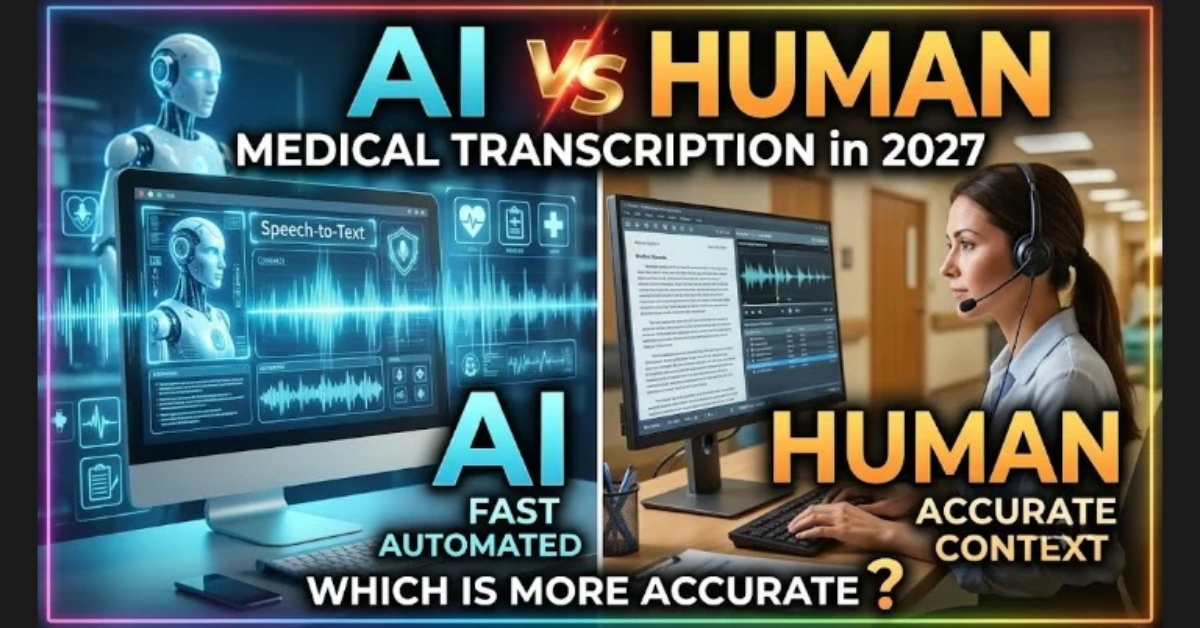
AI transcription tools can generate written drafts quickly. Human transcription and human-reviewed AI workflows can provide additional opportunities to identify errors involving medical terminology, accents, speaker changes, or context-sensitive statements.
When Is AI Transcription Suitable?
AI transcription may be useful when recordings are clear, speakers are easy to distinguish, and the terminology is sufficiently well recognized by the selected system.
However, automatically generated transcripts should be checked when accuracy is important. Researchers should also assess the provider's data-handling practices before uploading confidential recordings to an AI tool.
When Should Human Transcription or Review Be Considered?
Human transcription or human review can be particularly useful when interviews contain complex medical terminology, specialized drug names, multiple speakers, unclear passages, or nuanced clinical discussions.
For many pharmaceutical research projects, an AI-assisted workflow with appropriate human verification may offer a practical balance between processing efficiency and transcript quality.
The key consideration is not simply whether transcription is performed by a person or an AI system, but whether the complete workflow meets the project's accuracy, confidentiality, and documentation requirements.
How to Ensure Accuracy in KOL Research Transcription
Accurate KOL research transcription begins with good recording practices and continues through terminology preparation, transcription, review, and secure delivery.
Research teams can improve transcript quality by following these practices.
1. Provide Clear Audio Recordings
Use suitable recording equipment, minimize background noise, and check microphone placement before the interview begins. Where possible, test the recording and confirm that all speakers can be heard clearly.
Poor audio quality can make medical terminology and speaker identification more difficult, regardless of the transcription method.
2. Share a Medical Terminology Glossary
Provide the transcription team with relevant drug names, medical terms, clinical abbreviations, product names, and scientific terminology before work begins.
A glossary can help improve consistency and reduce avoidable errors involving unfamiliar terms.
3. Identify Speakers Clearly
Supply speaker names, roles, or labels when appropriate and permitted. Consistent speaker identification helps researchers understand who made a particular statement.
If a speaker cannot be identified confidently from the recording, the transcript should use an agreed neutral label rather than an unsupported guess.
4. Choose the Appropriate Transcript Format
The required level of detail depends on the research objective.
Full verbatim transcription: Preserves spoken words, including fillers, repetitions, and other speech details according to the agreed transcription conventions.
Clean verbatim transcription: Removes unnecessary fillers or repetitions while preserving the intended meaning.
Timestamped transcription: Includes time markers at agreed intervals or relevant points to help locate statements in the original recording.
Research teams should establish the expected format before transcription begins.
5. Review Technical Terms and Unclear Passages
Quality checks should focus on terminology, speaker attribution, missing or repeated text, unclear audio, and consistency across transcripts.
Unintelligible passages should be marked according to the agreed style guide rather than completed through guesswork. Relevant sections can then be checked against the recording.
6. Maintain Consistent File Management
Use clear file names, agreed formatting conventions, appropriate access permissions, and documented delivery requirements.
A standardized workflow helps teams organize multiple interviews and reduces confusion during review and analysis.
How Is Confidentiality Maintained in KOL Interview Transcription?
KOL interviews may contain confidential research information, unpublished findings, professional opinions, or commercially sensitive discussions. Research teams should therefore evaluate confidentiality and data-handling practices before sharing recordings with a transcription provider.
Important considerations include:
Secure file transfer: Use appropriate methods for transferring recordings and completed transcripts.
Access controls: Restrict access to authorized personnel according to project requirements.
Confidentiality agreements: Establish applicable contractual and confidentiality obligations before work begins.
Data retention and deletion: Agree how long files will be retained and how they will be securely deleted when no longer required.
Participant consent and de-identification: Follow the consent arrangements and applicable requirements governing the use and disclosure of interview information.
Applicable data protection rules: Determine which legal, contractual, and organizational requirements apply to the specific project.
Pharmaceutical and life sciences organizations should assess providers against their own research governance and security requirements. Any claims about certifications or regulatory compliance should be verified rather than assumed.
How to Choose a KOL Interview Transcription Service
Selecting a suitable KOL interview transcription service can help research teams manage complex recordings and prepare transcripts for reliable review.
Before choosing a provider, evaluate the following factors.
1. Medical and Life Sciences Terminology Expertise
Look for a provider capable of handling specialized medical terminology, pharmaceutical names, scientific abbreviations, and complex expert discussions. Ask how terminology is checked and whether project-specific glossaries can be supplied.
2. Quality Assurance Procedures
Understand how the provider reviews transcripts, handles unclear audio, checks speaker identification, and maintains consistency. Ask whether human review is included and how corrections are managed.
3. Confidentiality and Data Handling
Review file-transfer arrangements, access controls, retention policies, deletion procedures, and confidentiality commitments. Ensure these practices meet the needs of your project.
4. Transcript Formats and Customization
Confirm whether the provider supports the required format, including verbatim or clean verbatim transcripts, speaker labels, timestamps, and project-specific formatting instructions.
5. Turnaround Time and Scalability
Discuss the number and duration of recordings, audio quality, required languages, review requirements, and delivery schedule. Providers should give timelines appropriate to the actual project scope.
6. Transparent Pricing
Ask how pricing is calculated and whether additional costs apply for difficult audio, specialized terminology, timestamps, multiple speakers, or expedited delivery.
The right provider is one whose capabilities, quality controls, delivery arrangements, and confidentiality practices align with the research project's requirements.
How MyTranscriptionPlace Supports KOL Interview Transcription
MyTranscriptionPlace provides transcription services for recorded conversations and research-related documentation. For teams working with KOL interviews, a suitable transcription workflow can help turn recorded expert discussions into written material that is easier to review, search, and organize.
KOL interview transcription can support pharmaceutical and life sciences research teams by helping prepare interview records for qualitative analysis, expert opinion review, and research documentation.
When planning a transcription project, research teams should communicate their recording volume, terminology requirements, preferred transcript format, deadlines, and confidentiality expectations. Clear project instructions help establish the appropriate workflow and deliverables.
Organizations with broader documentation requirements may also explore relevant transcription or translation services offered by MyTranscriptionPlace, depending on their project needs.
Need KOL interview transcription for your next research project?
Contact MyTranscriptionPlace to discuss your transcription requirements, preferred transcript format, recording volume, and project timeline.
How Researchers Use KOL Transcripts for Qualitative Data Analysis
Once interviews have been transcribed, researchers can use the written records to examine expert perspectives, compare responses, and identify recurring themes across conversations.
KOL research transcription supports several stages of qualitative analysis.
1. Coding Interview Responses
Researchers can assign codes to statements associated with relevant research questions, such as treatment preferences, clinical challenges, unmet needs, or product usability.
2. Identifying Recurring Themes
Comparing coded responses helps researchers identify patterns, common concerns, and differences across interviews.
3. Comparing Expert Perspectives
Transcripts allow researchers to examine how opinions vary by specialty, professional experience, research context, or other relevant study characteristics.
4. Supporting Research Reports
Written transcripts help researchers trace findings back to source statements and verify whether summaries accurately reflect the original discussion.
5. Improving Research Collaboration
Searchable transcripts make it easier for authorized team members to locate relevant passages, discuss findings, and collaborate on research outputs.
The quality of these insights depends on the accuracy of the transcripts, the suitability of the analysis method, and careful interpretation of the original conversations. Expert opinions should be analyzed in context rather than treated as proof of a clinical or scientific conclusion.
Conclusion
KOL interview transcription plays an important role in organizing expert insights for pharmaceutical and life sciences research. By converting recorded conversations into accurate, searchable written records, research teams can review expert opinions, compare responses, identify themes, and support qualitative data analysis.
Choosing an appropriate transcription workflow involves more than processing audio. Medical terminology expertise, quality assurance, transcript formatting, confidentiality, and consistent file management all contribute to the usefulness of the final transcript.
MyTranscriptionPlace can be considered for transcription requirements based on the services and project support it offers. By clearly defining research objectives, terminology requirements, deliverables, and confidentiality expectations, organizations can make better-informed decisions when planning KOL interview transcription projects.
Our Best Translation Services
English to Indonesian Translation | English to Spanish Translation | English to Italian Translation | English to Russian Translation | English to Danish Translation | English to Vietnamese Translation | English to Japanese Translation | English to Finnish Translation | English to Dutch Translation | English to Arabic Translation | English to Norwegian Translation | English to Greek Translation.
Frequently Asked Questions About KOL Interview Transcription
1. What is KOL interview transcription?
KOL interview transcription converts recorded interviews with Key Opinion Leaders, such as physicians and clinical researchers, into written text for pharmaceutical research, documentation, and qualitative analysis.
2. Why is KOL transcription important for pharmaceutical research?
It helps research teams preserve expert insights, compare clinical perspectives, identify recurring themes, and maintain searchable records of pharmaceutical market research interviews.
3. How do I choose a KOL transcription service?
Evaluate medical terminology expertise, quality assurance procedures, confidentiality practices, available transcript formats, turnaround times, and pricing transparency.
4. Is human transcription better than AI transcription for KOL interviews?
Human transcription or human-reviewed AI transcription can be useful for complex medical terminology, unclear audio, and context-sensitive discussions. The best approach depends on project requirements and the level of verification needed.
5. Should KOL interviews be transcribed verbatim?
It depends on the research objective. Full verbatim preserves spoken details, while clean verbatim removes unnecessary fillers or repetitions without changing the intended meaning.
6. What types of KOL interviews can be transcribed?
Common examples include pharmaceutical market research interviews, clinical research discussions, advisory board meetings, medical device feedback interviews, expert consultations, and treatment-related discussions.
7. How can researchers improve KOL interview transcription accuracy?
Use clear recordings, provide medical terminology glossaries and speaker information, establish transcript formatting requirements, and review technical terms and unclear passages against the original audio.
8. How is confidentiality maintained in KOL interview transcription?
Appropriate safeguards may include secure file transfer, access restrictions, confidentiality agreements, retention and deletion policies, and compliance with applicable data protection requirements.
9. Can KOL transcripts be used for qualitative data analysis?
Yes. Researchers can code responses, identify recurring themes, compare expert perspectives, and organize findings across multiple interviews.
10. How long does KOL interview transcription take?
Turnaround time depends on recording length, audio quality, terminology complexity, language requirements, and the level of review required. A provider can estimate the timeline after assessing the project scope.

Nishi Singh
(Content Writer & SEO Manager)
She is an SEO Manager with over 8 years of experience in marketing and content creation. She specializes in SEO, content strategy, and paid advertisements, helping website owners across SaaS, B2B businesses, and e-commerce platforms achieve measurable growth. With a strong focus on driving organic traffic and crafting impactful content, Nishi has established herself as a trusted expert in the digital marketing space. When she's not optimizing websites, she channels her energy into marathon running, embracing challenges both on and off the track.