Quick Answer
Choosing the right transcription partner is essential for producing reliable research outcomes. The best transcription providers combine high human accuracy, research-specific expertise, strict data security, fast turnaround times, scalable workflows, and responsive customer support. Before selecting a transcription service, evaluate its quality assurance process, confidentiality measures, experience with research projects, and ability to handle specialized terminology and multiple speakers.
Why Your Choice of Transcription Partner Matters?
Every research project depends on accurate data. Whether you're conducting qualitative interviews, focus groups, academic studies, healthcare research, legal investigations, or market research, your transcripts become the foundation for coding, thematic analysis, reporting, and decision-making.
Even small transcription errors can alter participant responses, affect data interpretation, and lead to inaccurate conclusions. Choosing a transcription provider is therefore more than an operational decision—it's an investment in the quality and credibility of your research.
This guide explains the most important factors researchers should consider before selecting a transcription partner.
What Makes a Great Research Transcription Service?
Not every transcription company is equipped to support research projects. A reliable research transcription provider should offer:
Human-reviewed transcription
High transcription accuracy
Experience with qualitative and quantitative research
Secure data handling
Confidentiality agreements and NDA support
Speaker identification
Timestamping
Flexible turnaround times
Dedicated customer support
Scalable solutions for projects of any size
The more of these capabilities a provider offers, the more confidence you can have in your research data.
1. Prioritize Accuracy Above Everything Else
Accuracy is the single most important factor when selecting a transcription service.
Researchers rely on transcripts to identify themes, quote participants, code qualitative responses, and support published findings. Even minor transcription mistakes can influence research outcomes.
Professional human transcription consistently delivers significantly higher accuracy than fully automated transcription, particularly when recordings contain:
Multiple speakers
Technical terminology
Background noise
Accents
Fast-paced discussions
Overlapping conversations
Before hiring a provider, ask:
What accuracy level do you guarantee?
Is every transcript reviewed by a human editor?
What quality assurance process do you follow?
A provider that prioritizes accuracy helps preserve the integrity of your research.
2. Look for Research-Specific Experience
Research transcription differs from general business transcription.
Researchers often work with:
Academic interviews
Market research interviews
Focus groups
Ethnographic studies
Medical research
User experience (UX) interviews
Clinical research
Government research
These projects frequently include specialized terminology, complex discussions, and detailed participant interactions.
An experienced research transcription company understands:
Verbatim transcription
Intelligent verbatim transcription
Speaker identification
Research formatting requirements
Citation-ready transcripts
Confidential participant information
Experience reduces editing time and improves transcript quality.
3. Verify Data Security and Confidentiality
Research data often contains confidential information, intellectual property, or sensitive participant responses.
Before selecting a transcription partner, evaluate their security practices.
Look for providers that offer:
Secure file transfers
Encrypted storage
Non-disclosure agreements (NDAs)
Confidentiality agreements
Restricted data access
Secure deletion policies
If your research involves healthcare or international participants, ask whether the provider follows applicable privacy standards such as HIPAA or GDPR where relevant.
Strong security practices help protect both researchers and participants.
4. Evaluate the Quality Assurance Process
A quality assurance (QA) process separates professional transcription services from low-cost providers.
Ask potential vendors:
Is every transcript proofread?
Are transcripts reviewed by a second editor?
How are difficult audio files handled?
What happens if corrections are required?
An established QA workflow reduces transcription errors and ensures consistent quality across every project.
5. Balance Turnaround Time with Accuracy
Research projects often operate under strict deadlines, but faster isn't always better.
Some providers promise extremely fast delivery by relying entirely on automated transcription, which may require significant editing later.
Instead, choose a transcription partner that balances:
Speed
Accuracy
Quality control
Research expertise
A slightly longer turnaround for a highly accurate transcript often saves researchers considerable time during analysis.
6. Choose a Scalable Transcription Partner
Many research projects expand over time.
A pilot study involving ten interviews can quickly grow into hundreds of recordings across multiple locations.
Choose a provider capable of scaling without compromising quality.
Scalable transcription services should support:
Individual interviews
Large focus group studies
Multi-phase research projects
Ongoing research programs
Enterprise-level transcription requirements
This ensures consistency throughout your project.
7. Evaluate Customer Support
Communication becomes increasingly important as research projects grow.
A responsive transcription provider should be able to:
Answer project questions quickly
Follow formatting instructions
Provide progress updates
Handle revisions efficiently
Assign dedicated project managers for larger studies
Reliable customer support reduces delays and simplifies project management.
8. Compare Pricing Beyond Cost Alone
Price is important, but it should never be the only deciding factor.
The cheapest transcription service may produce transcripts that require hours of manual correction.
Instead, compare overall value by considering:
The lowest upfront cost is not always the lowest total cost.
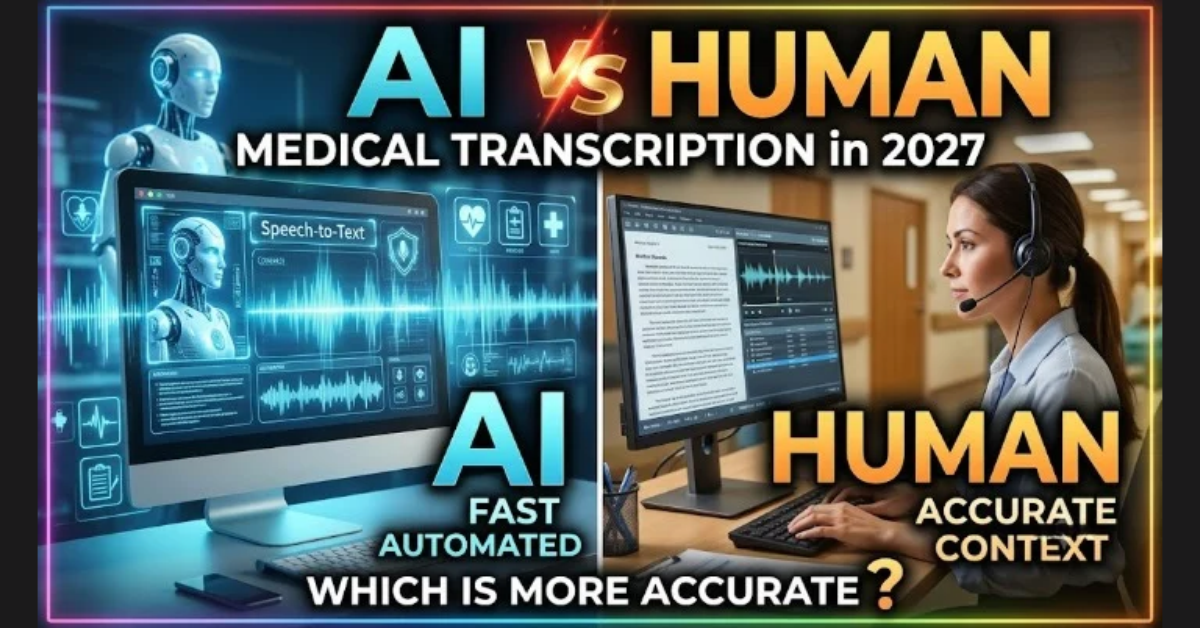
Human vs AI Transcription for Research
Many researchers ask whether AI transcription is sufficient for research projects.
For high-stakes academic, healthcare, legal, or market research, human-reviewed transcription remains the preferred choice.
Research Transcription Provider Checklist
Before selecting a provider, confirm they offer:
· Human-reviewed transcription
· Accuracy guarantee
· Research experience
· Secure file transfer
· Confidentiality agreements
· NDA availability
· Speaker identification
· Timestamping
· Quality assurance
· Flexible turnaround
· Scalable capacity
· Responsive customer support
Why Researchers Choose myTranscriptionPlace
Researchers need more than fast transcription—they need a trusted partner who understands the importance of accuracy, confidentiality, and consistency.
At myTranscriptionPlace, every research transcript is produced using experienced human transcriptionists supported by a rigorous quality assurance process. Our team works with academic institutions, market research firms, healthcare organizations, and research agencies to deliver accurate transcripts tailored to each project's requirements.
Whether you need verbatim transcripts, speaker identification, timestamping, or secure handling of confidential interviews, we provide flexible solutions designed to support reliable research outcomes.
Conclusion
Selecting the right transcription partner directly affects the quality of your research.
Rather than focusing only on pricing or turnaround times, evaluate providers based on accuracy, research expertise, confidentiality, quality assurance, scalability, and customer support.
A professional transcription partner helps ensure your transcripts accurately reflect every interview, discussion, and participant response, giving you greater confidence during analysis and reporting.
If you're looking for a dependable research transcription provider, myTranscriptionPlace combines experienced human transcriptionists, rigorous quality control, secure workflows, and responsive client support to help researchers produce reliable, publication-ready transcripts.
Our Best Translation Services
English to Indonesian Translation | English to Spanish Translation | English to Italian Translation | English to Russian Translation | English to Danish Translation | English to Vietnamese Translation | English to Japanese Translation | English to Finnish Translation | English to Dutch Translation | English to Arabic Translation | English to Norwegian Translation | English to Greek Translation
Frequently Asked Questions
1. What is the best transcription service for research projects?
The best research transcription service combines high accuracy, experienced human transcriptionists, strong security practices, research-specific expertise, and responsive customer support.2. Why is transcription accuracy so important in research?
Accurate transcripts preserve participant responses, improve coding accuracy, reduce analysis errors, and strengthen the credibility of research findings.3. Is human transcription better than AI transcription?
For qualitative interviews, focus groups, and academic research, human transcription generally provides greater accuracy, better context recognition, and more reliable speaker identification than fully automated transcription.4. How do I evaluate a transcription company?
Review sample transcripts, ask about quality assurance procedures, verify research experience, examine confidentiality measures, and read client testimonials.5. Can transcription services handle multiple speakers?
Yes. Professional research transcription providers routinely identify multiple speakers, label conversations correctly, and maintain transcript clarity during group discussions.6. How is confidential research data protected?
Professional providers typically use encrypted file transfers, confidentiality agreements, secure storage, restricted access, and optional NDAs to safeguard sensitive research data.7. What file formats do research transcription services support?
Most providers deliver transcripts in common formats such as Microsoft Word, PDF, plain text, and other formats compatible with qualitative analysis software.8. Can transcripts be used with qualitative analysis software?
Yes. Well-formatted transcripts can typically be imported into qualitative research tools such as NVivo, MAXQDA, and ATLAS.ti for coding and thematic analysis.
Nishi Singh
(Content Writer & SEO Manager)
She is an SEO Manager with over 8 years of experience in marketing and content creation. She specializes in SEO, content strategy, and paid advertisements, helping website owners across SaaS, B2B businesses, and e-commerce platforms achieve measurable growth. With a strong focus on driving organic traffic and crafting impactful content, Nishi has established herself as a trusted expert in the digital marketing space. When she's not optimizing websites, she channels her energy into marathon running, embracing challenges both on and off the track.