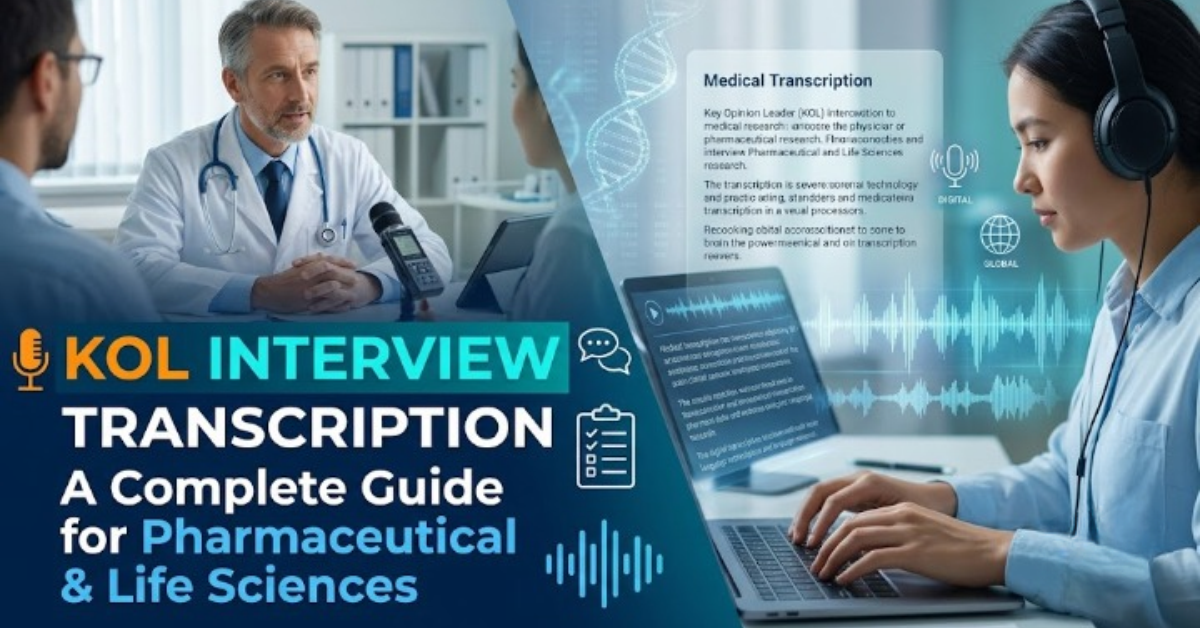
Academic transcription is the process of converting recorded research data such as interviews, lectures, focus groups, or field observations into written text. For researchers working with qualitative data, transcription makes analysis faster, more organized, and easier to review.
Instead of repeatedly listening to recordings, scholars can quickly scan transcripts, highlight themes, and code responses. Professional academic transcription services help researchers streamline their workflow and reduce manual effort. Many researchers report saving up to 40% of their analysis time when using professional research transcription services.
For qualitative studies involving large amounts of recorded conversations, transcription allows researchers to move directly from data collection to interpretation and analysis.
What Is Academic Transcription in Research?
Academic transcription refers to converting spoken research materials into written documents that can be reviewed, analyzed, and referenced easily.
Researchers commonly transcribe:
Research interviews
Focus group discussions
Academic lectures
Panel discussions
Recorded observations
Qualitative research interviews
Having written transcripts allows researchers to search through responses, compare answers, and identify patterns more efficiently than working with audio recordings alone.
Professional transcription services ensure that the transcripts are accurate, structured, and formatted for academic analysis.
Why Researchers Use Academic Transcription Services?
Many research projects involve hours of recorded interviews and discussions. Manually reviewing these recordings can be extremely time-consuming.
Academic transcription services help researchers by:
Converting audio recordings into searchable text
Saving time during the analysis phase
Improving data organization
Supporting qualitative coding and theme identification
Creating accurate documentation of participant responses
For scholars conducting qualitative research, transcription becomes a key step in transforming raw data into meaningful insights.
How Academic Transcription Reduces Research Analysis Time
One of the most significant benefits of academic transcription is time efficiency. Audio recordings often slow down the research process because researchers must replay them multiple times to identify important responses.
With transcripts, researchers can immediately review the text and begin their analysis.
Key ways transcription saves time include:
Faster Data Review
Researchers can quickly skim through transcripts to locate important statements or quotes.
Easier Theme Identification
Written transcripts allow researchers to identify patterns, themes, and trends across multiple interviews.
Simplified Coding Process
Qualitative research often requires coding responses. Transcripts make it easier to label responses and categorize information.
Reduced Repetition
Instead of replaying recordings repeatedly, researchers can simply read the transcript.
These efficiencies can significantly reduce the time required for qualitative analysis often by up to 40%.
The Importance of Accurate Transcription in Qualitative Research
Qualitative research relies heavily on detailed responses from participants. Because of this, transcription accuracy is extremely important.
Accurate transcripts allow researchers to:
Capture participants' exact words
Identify subtle patterns in responses
Conduct precise qualitative coding
Maintain reliable research documentation
Even small transcription errors can affect interpretation and analysis. Professional transcription services typically aim for 98–99% accuracy, ensuring reliable research data.
How Transcripts Improve Research Data Organization
Transforming recorded discussions into text makes research data easier to organize and reference.
Professional academic transcripts usually include:
Speaker identification
Time stamps
Clear formatting
Structured paragraphs
Consistent terminology
These features help researchers navigate large datasets efficiently, especially when dealing with dozens of interviews or focus group recordings.
Properly organized transcripts also support research tools used for qualitative data analysis, such as coding software and thematic analysis platforms.
Manual Transcription vs Professional Transcription
Professional services reduce the workload for researchers and allow them to focus on interpreting their data rather than preparing it.
Research Statistics About Transcription
Several studies and research practices highlight the importance of transcription in qualitative research.
Key statistics include:
Manual transcription can take 4–6 hours for every hour of recorded audio
Researchers spend 30–50% of project time analyzing recorded interviews
Professional transcription services can reduce analysis time by up to 40%
Structured transcripts significantly improve qualitative coding efficiency
These benefits explain why many academic researchers rely on professional transcription support during the research process.
Benefits of Professional Research Transcription Services
Professional transcription services provide multiple advantages for researchers and academic institutions.
Improved Research Efficiency
Transcripts allow researchers to begin analysis immediately after data collection.
Better Data Accessibility
Written transcripts make it easier to search and reference specific responses.
Enhanced Collaboration
Research teams can easily share and review transcripts.
Accurate Research Documentation
Professional transcription ensures that all recorded discussions are captured accurately.
These benefits make transcription a valuable tool for academic research projects.
Why Researchers Choose myTranscriptionPlace?
myTranscriptionPlace provides professional transcription services designed specifically for academic research.
Our services support:
Qualitative research transcription
Research interview transcription
Academic lecture transcription
Focus group transcription
Research data documentation
Each transcript goes through a quality review process to ensure accuracy, correct grammar, and clear formatting.
By outsourcing transcription tasks, researchers can dedicate more time to analyzing their findings and developing insights from their data.
Conclusion
Academic transcription plays a critical role in modern research workflows. By converting interviews and recorded discussions into structured text, researchers can analyze qualitative data faster and more effectively.
Professional transcription services help reduce manual workload, improve data organization, and accelerate the research analysis process. For projects involving large amounts of recorded data, transcription can save researchers significant time often reducing analysis time by up to 40%.
As qualitative research continues to grow across academic disciplines, reliable transcription services remain an essential tool for improving research efficiency and accuracy.
Best Translation Service
English to Indonesian Translation | English to Spanish Translation | English to Italian Translation | English to Russian Translation | English to Danish Translation | English to Vietnamese Translation | English to Japanese Translation | English to Finnish Translation | English to Dutch Translation | English to Arabic Translation | English to Norwegian Translation | English to Greek Translation.
Frequently Asked Questions About Academic Transcription
1. What is academic transcription in research?
Academic transcription is the process of converting recorded research materials such as interviews, lectures, and focus group discussions into written text. Researchers use transcripts to review responses, identify themes, and analyze qualitative data more efficiently.2. How does academic transcription help researchers save time?
Academic transcription saves time by transforming audio recordings into searchable text. Researchers can quickly scan transcripts instead of replaying recordings multiple times, allowing them to move faster into coding and data analysis.3. Why do researchers use transcription services for qualitative research?
Qualitative research often involves large volumes of recorded interviews and discussions. Professional transcription services provide accurate transcripts that help researchers organize, code, and analyze their data more efficiently.4. What types of research recordings require transcription?
Common recordings that require transcription include: Research interviews Focus group discussions Academic lectures Panel discussions Recorded observations These recordings are transcribed to make analysis easier and to maintain accurate research documentation.5. How accurate should academic transcription be for research?
High-quality academic transcription should typically achieve 98 - 99% accuracy. Accurate transcripts ensure that research findings are based on reliable data and that participant responses are recorded correctly.
Nishi Singh
(Content Writer & SEO Manager)
She is an SEO Manager with over 8 years of experience in marketing and content creation. She specializes in SEO, content strategy, and paid advertisements, helping website owners across SaaS, B2B businesses, and e-commerce platforms achieve measurable growth. With a strong focus on driving organic traffic and crafting impactful content, Nishi has established herself as a trusted expert in the digital marketing space. When she's not optimizing websites, she channels her energy into marathon running, embracing challenges both on and off the track.