Selecting a transcription service provider is about much more than finding the lowest price or the fastest turnaround time. Whether you're a healthcare organization documenting patient records, a legal firm preparing court transcripts, a university conducting qualitative research, or a business recording important meetings, the quality of your transcripts directly impacts the accuracy of your information and the decisions based on it.
A poorly transcribed document can result in misunderstandings, compliance issues, costly revisions, delayed projects, and damaged credibility. On the other hand, an experienced transcription partner delivers accurate, secure, and reliable transcripts that save time and improve productivity.
If you're wondering how to choose the right transcription company, this comprehensive checklist covers everything you need to evaluate before making your decision.
Quick Hiring Checklist
Before choosing any transcription company, make sure they offer:
- Human transcription with high accuracy
- Industry-specific expertise
- Secure file transfer and encrypted storage
- Confidentiality agreements (NDAs)
- Multiple quality assurance checks
- Flexible turnaround times
- Transparent pricing
- Positive customer reviews
- Responsive customer support
- Scalable transcription solutions
If a provider falls short in several of these areas, it's worth exploring other options.
Why Choosing the Right Transcription Provider Matters?
Transcription is often viewed as an administrative task, but its impact extends far beyond converting speech into text.
Accurate transcripts support better decision-making, improve compliance, preserve valuable information, and enhance collaboration across industries.
Organizations commonly rely on transcription for:
- Medical documentation
- Legal proceedings
- Academic research
- Market research interviews
- Focus groups
- Business meetings
- Podcasts and webinars
- Corporate training
- Insurance documentation
- Media production
When transcripts contain errors, organizations often spend additional hours reviewing, editing, and correcting information that should have been accurate from the beginning.
Choosing a qualified transcription provider eliminates these unnecessary costs.
1. Accuracy Should Be Your Highest Priority
Accuracy is the foundation of every professional transcription service.
Even a small transcription error can completely change the meaning of a legal statement, medical diagnosis, research interview, or executive discussion.
Professional transcription providers typically achieve significantly higher accuracy by combining experienced human transcriptionists with structured quality assurance processes.
When evaluating providers, ask:
- What accuracy rate do you guarantee?
- Are transcripts reviewed before delivery?
- How are difficult audio files handled?
- Are revisions included if corrections are needed?
Reliable providers invest heavily in proofreading, editing, and quality control because accuracy is their reputation.
2. Look for Industry-Specific Experience
Every industry has unique terminology, abbreviations, and language patterns.
A company that excels at transcribing business meetings may not be equipped to accurately transcribe medical consultations or legal depositions.
Choose a provider with proven expertise in your industry.
Healthcare
- Medical reports
- Clinical documentation
- Patient interviews
- Medical research
Legal
- Court hearings
- Depositions
- Arbitrations
- Witness statements
Academic Research
- Qualitative interviews
- Focus groups
- Dissertations
- Research projects
Market Research
- Consumer interviews
- IDIs
- Focus groups
- Customer insights
Corporate
- Board meetings
- Investor calls
- Sales meetings
- Training sessions
Industry knowledge improves both speed and accuracy.
3. Data Security Is Non-Negotiable
Transcription projects often contain confidential business information, personal data, legal documents, or protected health information.
Your provider should maintain strict security standards throughout the transcription process.
Important security measures include:
- Encrypted file transfers
- Secure cloud storage
- Confidentiality agreements
- Restricted employee access
- Password-protected systems
- Secure deletion policies
- Data backup procedures
If your organization operates within regulated industries, verify that the provider follows applicable compliance standards.
4. Review Their Quality Assurance Process
The best transcription companies never rely on a single person to complete a transcript.
Instead, they implement multiple quality control stages.
An effective workflow often includes:
- Initial transcription
- Editing
- Proofreading
- Quality review
- Final formatting
This process significantly reduces errors while ensuring consistency throughout every transcript.
5. Balance Turnaround Time with Quality
Fast delivery is valuable—but not when it compromises accuracy.
Ask prospective providers:
- What turnaround options are available?
- Can urgent requests be accommodated?
- How are large projects managed?
- Are deadlines guaranteed?
Professional companies build efficient workflows that maintain quality regardless of project size.
6. Understand Exactly What You're Paying For
Low pricing can be appealing, but hidden fees often increase the final cost.
Before hiring, understand:
- Pricing per audio minute
- Rush service charges
- Speaker identification fees
- Timestamping costs
- Formatting charges
- Revision policies
- Bulk discounts
Transparent pricing demonstrates professionalism and helps avoid unexpected invoices.
7. Evaluate Customer Reviews
Customer testimonials provide valuable insight into a company's reliability.
Look beyond overall ratings and focus on recurring themes such as:
- Accuracy
- Communication
- Deadline reliability
- Customer support
- Professionalism
- Long-term client relationships
Consistent positive feedback is usually a strong indicator of dependable service.
8. Assess Customer Support
Transcription projects sometimes require revisions, clarifications, or urgent updates.
Reliable providers offer responsive support throughout the project.
Look for companies that provide:
- Dedicated account managers
- Email support
- Phone assistance
- Fast response times
- Clear communication
- Project tracking
Excellent customer service often distinguishes exceptional providers from average ones.
9. Human vs AI Transcription
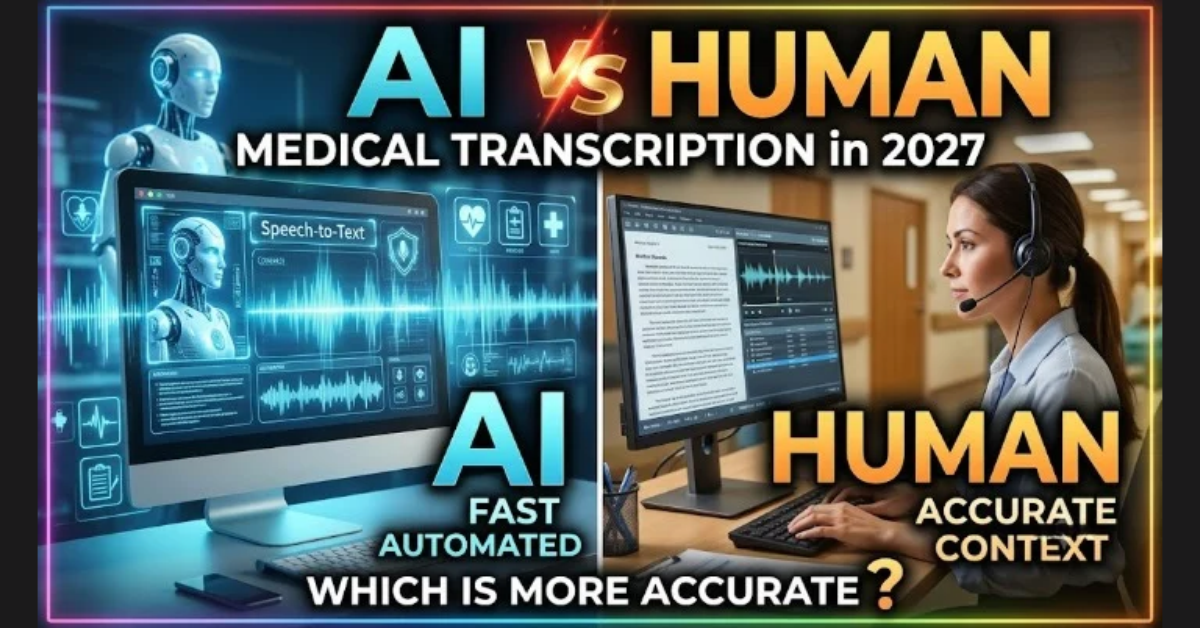
Artificial intelligence has made transcription faster and more affordable, but it still has limitations.
Human Transcription
Advantages:
- Superior accuracy
- Better understanding of context
- Excellent speaker identification
- Handles accents and background noise
- Accurate punctuation and formatting
Best suited for:
- Legal transcripts
- Medical documentation
- Research interviews
- Board meetings
- Academic projects
AI Transcription
Advantages:
- Faster turnaround
- Lower cost
- Suitable for simple recordings
Best suited for:
- Internal meeting notes
- Draft transcripts
- Basic recordings with clear audio
For important business documents, human transcription remains the preferred choice.
Common Mistakes to Avoid
Many organizations unknowingly choose the wrong provider by making decisions based solely on price.
Avoid these common mistakes:
- Choosing the cheapest option
- Ignoring security standards
- Not asking about quality assurance
- Overlooking industry expertise
- Assuming AI transcription is always accurate
- Failing to read customer reviews
- Not requesting sample transcripts
A little research upfront can prevent expensive problems later.
Questions to Ask Before Hiring
Before signing any agreement, ask:
- What accuracy rate do you guarantee?
- Who performs the transcription?
- How is quality verified?
- What industries do you specialize in?
- How do you protect confidential data?
- What turnaround options are available?
- Can you handle large-volume projects?
- What happens if revisions are needed?
- Do you provide dedicated support?
- Can you share client references or case studies?
These questions help you compare providers objectively rather than relying on marketing claims.
Why Businesses Choose MyTranscriptionPlace?
At MyTranscriptionPlace, we understand that transcription is more than converting speech into text—it's about preserving meaning, accuracy, and trust.
Our services are built around:
- Experienced human transcriptionists
- Industry-specific expertise
- Multiple quality assurance checks
- Fast and flexible turnaround options
- Secure data handling
- Transparent pricing
- Responsive customer support
From healthcare organizations and legal professionals to researchers and global businesses, we deliver transcription solutions designed for accuracy, confidentiality, and reliability.
Final Thoughts
Hiring the right transcription service provider is an investment in the quality of your information.
Instead of focusing only on pricing or delivery speed, evaluate providers based on their accuracy, industry knowledge, security practices, quality assurance processes, and commitment to customer service.
The right transcription partner becomes an extension of your team—helping you save time, reduce errors, protect confidential information, and confidently manage critical documentation.
By following this checklist, you'll be well equipped to select a transcription provider that delivers lasting value for your organization.
Our Best Translation Services
English to Indonesian Translation | English to Spanish Translation | English to Italian Translation | English to Russian Translation | English to Danish Translation | English to Vietnamese Translation | English to Japanese Translation | English to Finnish Translation | English to Dutch Translation | English to Arabic Translation | English to Norwegian Translation | English to Greek Translation
Frequently Asked Questions
1. What should I look for before hiring a transcription service provider?
Prioritize accuracy, industry expertise, security, quality assurance, turnaround time, pricing transparency, and customer reviews.
2. Why is human transcription more accurate than AI?
Human transcriptionists understand context, accents, technical terminology, and speaker intent, resulting in significantly higher accuracy for complex recordings.
3. How do transcription companies ensure data security?
Professional providers use encrypted file transfers, secure storage systems, confidentiality agreements, restricted access controls, and established data protection policies.
4. How important is turnaround time?
Turnaround time matters, but it should never compromise transcript quality. A reliable provider balances speed with accuracy.
5. Can one transcription company handle different industries?
Many providers serve multiple industries, but it's essential to verify they have experience with the terminology and documentation standards relevant to your field.
6. Is the cheapest transcription service the best choice?
Not necessarily. Lower-cost services may lack quality assurance, experienced transcriptionists, or strong security practices. Evaluating overall value is often more beneficial than focusing on price alone.

Nishi Singh
(Content Writer & SEO Manager)
She is an SEO Manager with over 8 years of experience in marketing and content creation. She specializes in SEO, content strategy, and paid advertisements, helping website owners across SaaS, B2B businesses, and e-commerce platforms achieve measurable growth. With a strong focus on driving organic traffic and crafting impactful content, Nishi has established herself as a trusted expert in the digital marketing space. When she's not optimizing websites, she channels her energy into marathon running, embracing challenges both on and off the track.