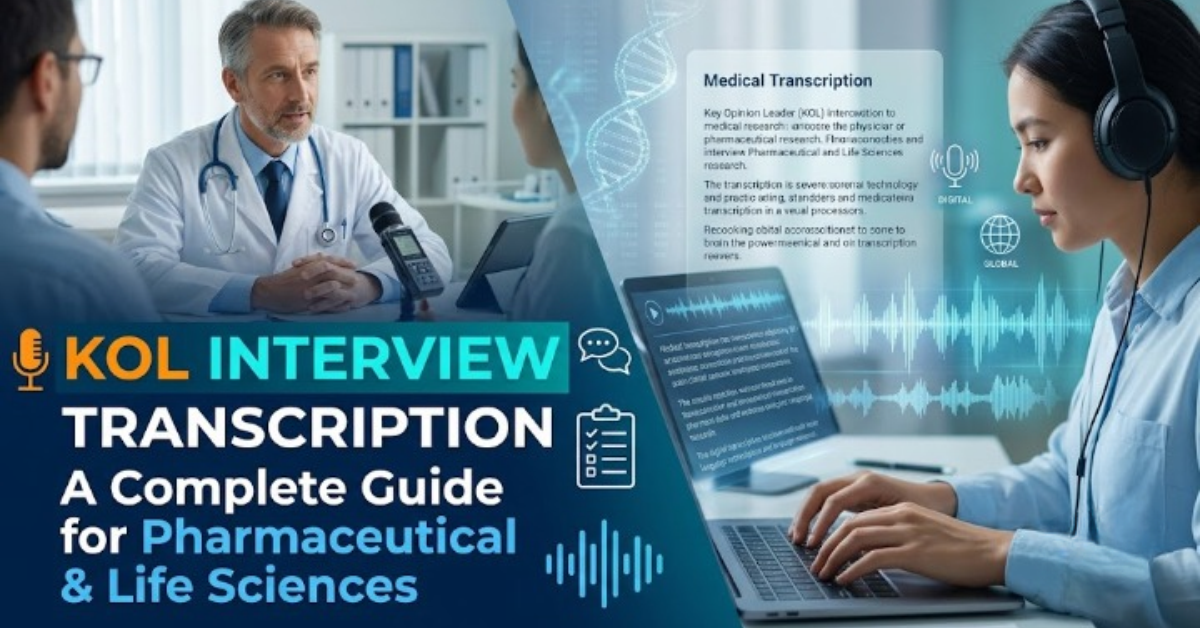
Transcription plays a vital role in education and research by converting spoken information into clear written text. Universities, research institutions, students, and scholars rely on transcription to document lectures, interviews, discussions, and research data.
While the terms academic transcription and research transcription are often used interchangeably, they serve different purposes. Academic transcription mainly focuses on educational material such as lectures and seminars, while research transcription is used for analyzing research recordings like interviews and focus groups.
Understanding the difference between academic transcription and research transcription helps students, educators, and researchers choose the right transcription service for their needs.
What Is Academic Transcription?
Academic transcription is the process of converting recorded educational content into written text. This includes lectures, seminars, webinars, presentations, and academic discussions.
The purpose of academic transcription is to help students and educators review learning materials, improve accessibility, and maintain accurate records of academic sessions.
Academic transcription services are widely used by:
University students
Professors and lecturers
Educational institutions
Online course creators
Academic researchers
For example, a university lecture recorded during a class can be transcribed into a readable document so that students can easily review key concepts and study more effectively.
Academic transcripts are typically cleaned and edited for readability, meaning filler words, repeated phrases, or unnecessary pauses may be removed to make the content easier to read.
What Is Research Transcription?
Research transcription refers to converting audio or video recordings collected during research into written transcripts. These recordings may include interviews, focus groups, field recordings, or group discussions.
Research transcription is commonly used in qualitative and quantitative research where accurate documentation of participant responses is essential for analysis.
Researchers rely on transcription to:
Analyze participant responses
Conduct thematic coding
Identify patterns and insights
Interpret research findings
Unlike academic transcription, research transcription requires highly detailed documentation. Elements such as pauses, tone, laughter, or emotional expressions may be included because they can influence the interpretation of research data.
For instance, a social science researcher conducting interviews for a study will need accurate transcripts to analyze participants' opinions, behaviors, and responses.
Academic Transcription vs Research Transcription: Key Differences
Although both services convert spoken recordings into written text, there are several important differences between academic transcription and research transcription.
The main difference lies in how the transcript will be used. Academic transcription supports learning and teaching, while research transcription supports research analysis and interpretation.
Why Accurate Transcription Matters in Academia and Research?
Accurate transcription plays a crucial role in both academic learning and research projects.
Benefits for Academic Use
Students and educators benefit from academic transcription because it:
Helps students review lectures more effectively
Improves accessibility for learners
Provides permanent academic records
Makes educational content easier to search and reference
For example, recorded lectures can be converted into transcripts that students can revisit while studying or preparing for exams.
Benefits for Research Use
In research projects, transcription is essential because it:
Preserves participant responses accurately
Supports qualitative research analysis
Helps researchers identify patterns and themes
Improves the reliability of research findings
Researchers often analyze transcripts using coding methods, making accuracy extremely important for producing trustworthy results.
Who Uses Academic and Research Transcription?
Academic and research transcription services are widely used across the education and research sectors.
Academic Transcription Users
Students
Professors and lecturers
Universities and colleges
Online learning platforms
Educational institutions
These users typically need transcripts of lectures, presentations, webinars, or classroom discussions.
Research Transcription Users
Academic researchers
Research organizations
Market research companies
Social science researchers
Data analysts
These professionals often require transcription for interviews, focus groups, field recordings, and research discussions.
How Professional Transcription Supports Academic and Research Work
Professional transcription services ensure accuracy, consistency, and proper formatting for different academic and research needs.
For educational institutions, transcription makes academic content easier to review, archive, and share. For researchers, accurate transcripts allow for better data interpretation and more reliable conclusions.
Professional transcription services can also provide:
High accuracy levels
Confidential data handling
Proper formatting for academic use
Time-efficient documentation of recordings
By using professional transcription services, universities and research institutions can improve productivity while maintaining reliable documentation.
Quick Summary: Academic Transcription vs Research Transcription
The main difference between academic transcription and research transcription is their purpose.
Academic transcription converts lectures, seminars, and educational discussions into readable text to support learning and teaching. Research transcription converts interviews, focus groups, and research recordings into detailed transcripts that researchers use for data analysis and interpretation.
Both services play an important role in education and research by ensuring that spoken information is accurately documented and accessible.
Best Translation Service
English to Indonesian Translation | English to Spanish Translation | English to Italian Translation | English to Russian Translation | English to Danish Translation | English to Vietnamese Translation | English to Japanese Translation | English to Finnish Translation | English to Dutch Translation | English to Arabic Translation | English to Norwegian Translation | English to Greek Translation.
FAQs
1. What is academic transcription?
Academic transcription is the process of converting recorded educational content such as lectures, seminars, and presentations into written text. It helps students and educators review academic materials, improve accessibility, and maintain clear documentation of academic discussions.2. What is research transcription?
Research transcription involves converting audio or video recordings from research activities such as interviews, focus groups, and field recordings—into written transcripts. These transcripts are used for analyzing research data, identifying patterns, and interpreting study findings.3. What is the difference between academic transcription and research transcription?
Academic transcription focuses on educational recordings like lectures and seminars, usually edited for readability. Research transcription focuses on interviews and research recordings and often includes detailed elements like pauses, tone, and emotional expressions for accurate analysis.4. Who uses academic transcription services?
Academic transcription services are commonly used by students, professors, universities, colleges, and online learning platforms to document lectures, seminars, and educational presentations.5. Who needs research transcription services?
Research transcription services are used by researchers, universities, research organizations, market research companies, and analysts who need accurate transcripts of interviews, focus groups, and research discussions.6. Why is transcription important for qualitative research?
Transcription is important for qualitative research because it allows researchers to analyze participant responses accurately. Written transcripts help researchers identify themes, patterns, and insights that are essential for interpreting research findings.
Nishi Singh
(Content Writer & SEO Manager)
She is an SEO Manager with over 8 years of experience in marketing and content creation. She specializes in SEO, content strategy, and paid advertisements, helping website owners across SaaS, B2B businesses, and e-commerce platforms achieve measurable growth. With a strong focus on driving organic traffic and crafting impactful content, Nishi has established herself as a trusted expert in the digital marketing space. When she's not optimizing websites, she channels her energy into marathon running, embracing challenges both on and off the track.