Research interviews are one of the most important methods for collecting qualitative data in academic, medical, market, and policy research. However, analyzing recorded interviews can be difficult without accurate transcripts.
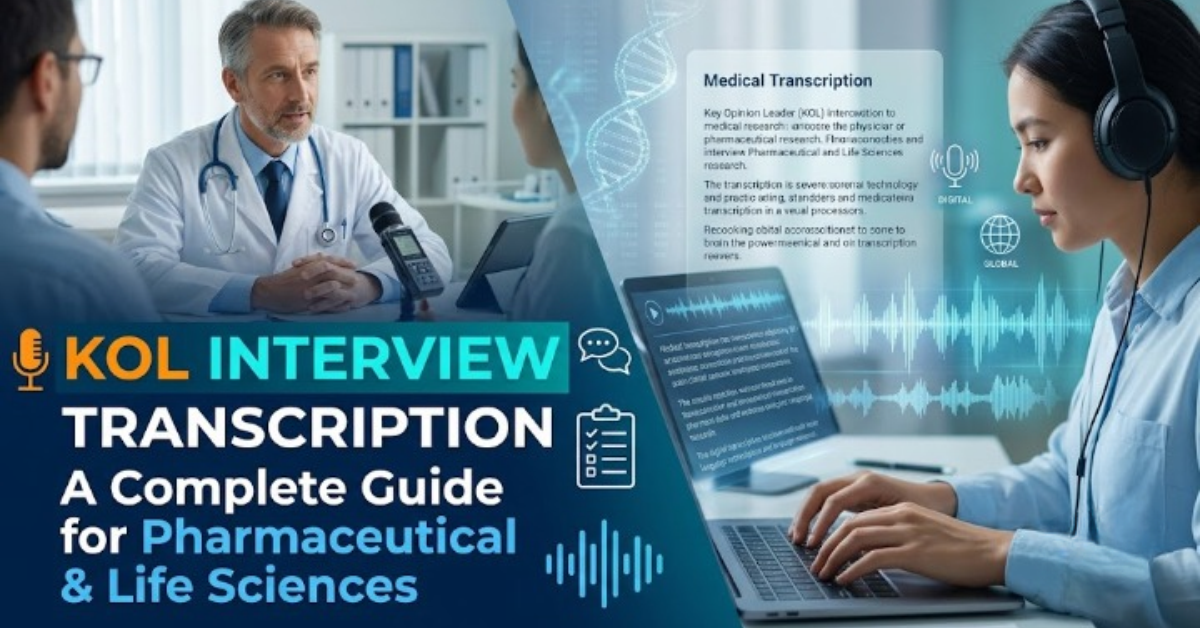
Research interview transcription converts audio or video interviews into structured written text, allowing researchers to review responses, identify themes, and conduct detailed qualitative analysis.
Professional transcription services ensure high accuracy, speaker identification, proper formatting, and confidentiality, which are essential for reliable research findings.
In this guide, we explore 7 types of research interviews that require professional transcription and explain why accurate transcripts are critical for effective research analysis.
What Is Research Interview Transcription?
Research interview transcription is the process of converting recorded interviews into written text for research analysis. Researchers use transcripts to review responses, code qualitative data, identify patterns, and document insights.
Accurate transcripts allow researchers to:
analyze participant responses more effectively
identify themes and trends
quote interview participants correctly
maintain organized research documentation
support qualitative research analysis
Professional transcription services typically deliver transcripts with up to 99% accuracy, ensuring research findings are reliable and well documented.
Why Professional Transcription Is Important for Research Interviews?
Research interviews often involve complex discussions, multiple speakers, technical terminology, and sensitive topics. Manual transcription can be time-consuming and prone to errors.
Professional research transcription services provide several benefits:
High accuracy transcription (up to 99%)
Faster research workflow
Clear speaker identification
Structured and well-formatted transcripts
Confidential handling of sensitive research data
Improved qualitative analysis
By outsourcing transcription, researchers can focus on data analysis and interpretation rather than manual transcription work.
7 Types of Research Interviews That Need Professional Transcription
1. Academic Research Interviews
Academic researchers frequently conduct interviews for theses, dissertations, and research studies. These interviews often involve detailed discussions, expert insights, and complex academic terminology.
Professional academic interview transcription ensures that every response is accurately captured, allowing researchers to analyze qualitative data efficiently.
Transcripts help students and academics:
review interview responses easily
identify themes for research analysis
quote participants correctly in research papers
maintain organized documentation
At Mytranscriptionplace, we provide reliable transcription services for universities, colleges, and academic researchers.
2. Market Research Interviews
Market research interviews help businesses understand consumer behavior, product feedback, and purchasing trends.
Companies often conduct interviews with:
customers
product users
retailers
industry experts
Accurate market research interview transcription ensures every customer insight and response is recorded clearly.
Professional transcripts enable businesses to:
analyze customer feedback
identify market trends
improve products and services
make data-driven decisions
Market research projects often involve large volumes of interview recordings, making professional transcription services essential.
3. Healthcare and Medical Research Interviews
Healthcare and medical researchers frequently conduct interviews with:
patients
doctors
nurses
healthcare professionals
These interviews often contain medical terminology, sensitive information, and personal experiences.
Accurate medical research transcription ensures that important clinical insights are documented without errors.
Professional transcription helps healthcare researchers:
analyze patient experiences
study healthcare outcomes
identify patterns in medical data
support medical research studies
Confidentiality is critical in medical research, which is why professional transcription providers maintain strict data security and privacy standards.
4. Social Science Research Interviews
Social science research often focuses on human behavior, social trends, cultural patterns, and societal issues.
Researchers in fields such as sociology, psychology, and anthropology rely heavily on qualitative interviews.
These interviews may be lengthy and emotionally complex, making accurate transcription essential.
Professional social science interview transcription allows researchers to:
analyze participant perspectives
identify recurring themes
conduct thematic analysis
document cultural and behavioral insights
Accurate transcripts ensure the context and meaning of responses are preserved for reliable research outcomes.
5. Corporate and Business Research Interviews
Organizations often conduct internal interviews with:
employees
clients
managers
industry experts
These interviews help businesses gather feedback and improve management strategies, workplace culture, and operational processes.
Professional business research transcription helps organizations analyze discussions efficiently.
Transcripts allow companies to:
identify employee feedback trends
evaluate business strategies
improve decision-making processes
document research findings
Accurate transcription helps transform recorded interviews into actionable business insights.
6. Journalism and Investigative Research Interviews
Journalists and investigative reporters rely heavily on interviews with:
eyewitnesses
experts
public figures
sources
Accurate transcription ensures that all statements are properly documented for reporting and storytelling.
Professional journalism interview transcription helps reporters:
verify quotes
organize interview material
ensure accurate reporting
support investigative research
Reliable transcripts are essential for maintaining credibility and journalistic accuracy.
7. Policy and Government Research Interviews
Government agencies and policy analysts frequently conduct interviews to gather public opinions, expert insights, and community feedback.
These interviews support research related to:
policy development
social programs
public services
economic planning
Professional policy research transcription helps analysts review discussions and identify key insights that influence policy decisions.
Accurate transcripts allow policymakers to evaluate perspectives and develop evidence-based policies.
Benefits of Professional Research Interview Transcription
Using professional transcription services provides several advantages for research projects.
1. Improved Research Accuracy
Professional transcriptionists ensure interviews are transcribed with high accuracy, reducing the risk of misinterpretation.
2. Faster Research Workflow
Researchers save significant time by outsourcing transcription tasks.
3. Easier Qualitative Analysis
Written transcripts make it easier to code data, identify themes, and analyze participant responses.
4. Organized Research Documentation
Structured transcripts allow researchers to review interviews quickly and maintain organized records.
5. Confidential Handling of Data
Professional transcription providers follow strict data privacy and confidentiality standards.
Challenges of Transcribing Research Interviews
Transcribing research interviews can be complex due to several factors:
multiple speakers in discussions
technical or industry-specific terminology
background noise in recordings
long interview durations
emotionally sensitive conversations
Professional transcription services use experienced transcriptionists and advanced workflows to overcome these challenges.
Why Choose Mytranscriptionplace for Research Interview Transcription?
Research transcription is our area of expertise at Mytranscriptionplace.
We provide reliable transcription services for a wide range of research projects, including:
academic research transcription
market research transcription
medical research transcription
investigative research transcription
qualitative interview transcription
Our experienced transcriptionists convert your audio recordings into well-organized, ready-to-analyze transcripts using advanced transcription workflows.
With our services, researchers can focus on analyzing insights and drawing conclusions, while we handle the transcription process with precision and confidentiality.
Best Translation Service
English to Indonesian Translation | English to Spanish Translation | English to Italian Translation | English to Russian Translation | English to Danish Translation | English to Vietnamese Translation | English to Japanese Translation | English to Finnish Translation | English to Dutch Translation | English to Arabic Translation | English to Norwegian Translation | English to Greek Translation.
Frequently Asked Questions
1. What is research interview transcription?
Research interview transcription is the process of converting recorded interviews into written text. Researchers use transcripts to review responses, analyze qualitative data, identify themes, and document insights accurately.2. Why do research interviews need professional transcription?
Professional transcription ensures interviews are converted into accurate and well-formatted transcripts. This helps researchers analyze qualitative data efficiently and reduces the risk of errors during research analysis.3. What types of research interviews require transcription?
Common research interviews that require transcription include: academic research interviews market research interviews healthcare research interviews social science interviews corporate research interviews journalism interviews policy research interviews Any research involving recorded conversations can benefit from professional transcription.4. How does transcription help qualitative research?
Transcription allows researchers to review interview responses easily and identify patterns or themes. Written transcripts make it easier to conduct coding, thematic analysis, and detailed qualitative research.5. How accurate should research interview transcription be?
Research interview transcripts should typically achieve 99% accuracy or higher. Even small transcription errors can affect the interpretation of research data.6. How long does it take to transcribe a research interview?
On average, one hour of recorded interview audio requires four to six hours of transcription, depending on audio clarity, speaker accents, and the number of participants.
Nishi Singh
(Content Writer & SEO Manager)
She is an SEO Manager with over 8 years of experience in marketing and content creation. She specializes in SEO, content strategy, and paid advertisements, helping website owners across SaaS, B2B businesses, and e-commerce platforms achieve measurable growth. With a strong focus on driving organic traffic and crafting impactful content, Nishi has established herself as a trusted expert in the digital marketing space. When she's not optimizing websites, she channels her energy into marathon running, embracing challenges both on and off the track.