Poor audio quality is one of the biggest obstacles researchers face during interview transcription. Whether you're conducting qualitative research, academic interviews, healthcare studies, market research, or user interviews, poor recordings can make it difficult to produce accurate transcripts.
Background noise, overlapping conversations, low microphone volume, internet disruptions, and heavy accents often reduce transcription accuracy. While AI transcription software has improved significantly, it still struggles when recordings are unclear.
Fortunately, poor audio doesn't have to compromise your research. With the right combination of audio enhancement technology and experienced human transcriptionists, even challenging recordings can be transformed into accurate, research-ready transcripts.
Quick Answer
If your research interview has poor audio quality, the most reliable solution is professional human transcription supported by audio enhancement technology. Human transcriptionists can interpret unclear speech, identify speakers, understand context, and accurately capture technical terminology that automated transcription software frequently misses.
Why Research Interviews Often Have Poor Audio Quality?
Poor-quality recordings are extremely common in research. Interviews rarely take place in perfect recording environments, and researchers are usually focused on collecting valuable insights rather than monitoring audio conditions.
Common causes include:
- Background conversations
- Office noise
- Hospital environments
- Outdoor recordings
- Traffic noise
- Air conditioning systems
- Poor microphone placement
- Low recording volume
- Internet instability during virtual interviews
- Participants speaking over one another
- Echo and room acoustics
Virtual interviews conducted through Zoom, Microsoft Teams, or Google Meet introduce additional challenges such as lag, compression artifacts, and dropped audio.
Even experienced researchers regularly encounter recordings that require specialist transcription.
How Poor Audio Quality Affects Transcription Accuracy
Poor recordings affect far more than readability.
Low-quality audio can make it difficult to:
- Identify individual speakers
- Distinguish similar-sounding words
- Capture technical terminology
- Recognize names and locations
- Understand accents
- Interpret emotional tone
- Preserve the complete context of responses
Small transcription errors can have significant consequences during qualitative analysis, coding, thematic analysis, and reporting.
Incomplete transcripts may ultimately affect the reliability of research findings.
Why AI Transcription Struggles with Poor Audio?
Artificial intelligence has transformed transcription over the past few years. However, speech recognition systems still depend heavily on clean, high-quality audio.
AI transcription often struggles with:
- Background noise
- Multiple speakers
- Heavy accents
- Industry-specific terminology
- Fast speech
- Interrupted conversations
- Poor internet recordings
- Low microphone quality
- Audio distortion
Instead of recognising context, AI predicts words based on probability. When recordings become unclear, these predictions become increasingly inaccurate.
The result is often missing sentences, incorrect terminology, and speaker attribution errors.
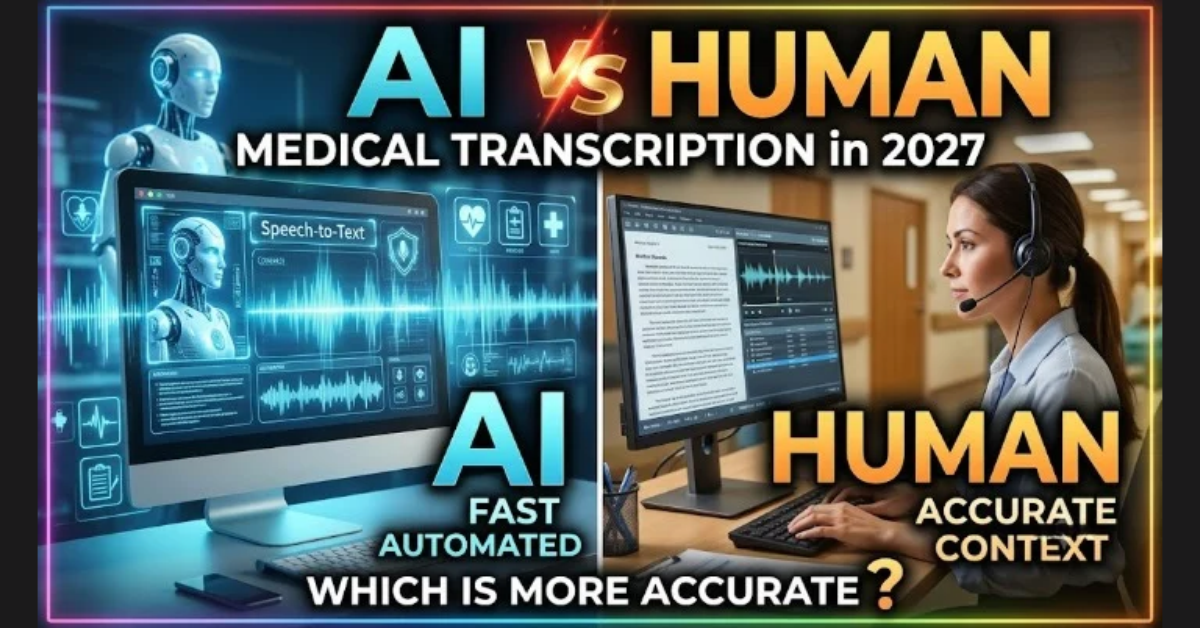
AI vs Human Transcription for Difficult Recordings
| Feature | AI Transcription | Professional Human Transcription |
|---|---|---|
| Background noise | Moderate | Excellent |
| Multiple speakers | Fair | Excellent |
| Heavy accents | Fair | Excellent |
| Technical terminology | Moderate | Excellent |
| Context understanding | Limited | Excellent |
| Speaker identification | Moderate | Excellent |
| Research interviews | Moderate | Excellent |
| Quality assurance | Minimal | Multiple review stages |
For research projects where accuracy matters, human transcription continues to outperform AI when audio quality is poor.
The Importance of Human Expertise
Professional transcription involves much more than typing what is heard.
Experienced transcriptionists use:
- Contextual understanding
- Subject-matter familiarity
- Speaker recognition
- Language expertise
- Pattern recognition
- Multiple listening passes
- Audio enhancement tools
When speech is partially obscured, experienced transcriptionists can often determine intended words by analysing the surrounding conversation rather than relying solely on what is immediately audible.
This contextual interpretation is something automated systems still struggle to replicate.
Best Practices Before Sending Audio for Transcription
Although professional transcriptionists can work with difficult recordings, improving audio beforehand increases accuracy.
Consider these steps:
1. Reduce Background Noise
Use audio editing software to remove constant environmental sounds where possible.
2. Increase Speech Volume
Normalising audio levels makes quiet speakers easier to understand.
3. Export High-Quality Files
Whenever possible, provide WAV files instead of highly compressed MP3 recordings.
4. Separate Audio Channels
If participants were recorded on different microphones, keep separate channels available.
5. Include Research Notes
Providing interview guides, participant names, technical terminology, and acronyms helps transcriptionists interpret difficult sections correctly.
How MyTranscriptionPlace Handles Poor Audio Recordings
At MyTranscriptionPlace, difficult recordings are part of our everyday work.
Our transcription process combines advanced audio enhancement with experienced human transcriptionists to recover as much information as possible from challenging recordings.
Our quality assurance process includes:
- Audio enhancement
- Multiple listening passes
- Manual verification
- Speaker identification
- Technical terminology checks
- Proofreading
- Final quality review
This approach helps researchers receive transcripts they can confidently use for qualitative analysis, coding, publication, and reporting.
Benefits of Professional Transcription for Research
Professional transcription offers several advantages over automated tools, particularly for academic and qualitative research.
Benefits include:
- Higher transcription accuracy
- Better speaker identification
- Accurate technical terminology
- Context-aware interpretation
- Consistent formatting
- Confidential handling of sensitive interviews
- Reduced researcher workload
- Reliable qualitative data
For projects where every participant response matters, investing in professional transcription helps preserve valuable research insights.
Final Thoughts
Poor audio quality is a common challenge in research, but it doesn't have to limit the value of your data. While automated transcription tools continue to improve, they still struggle with noisy, complex, and low-quality recordings.
Professional human transcription provides the contextual understanding, speaker recognition, and quality assurance needed to produce reliable transcripts for academic, healthcare, legal, and business research.
At MyTranscriptionPlace, we specialise in transforming difficult recordings into accurate, dependable transcripts—helping researchers preserve every important insight, regardless of recording quality.
Our Best Translation Services
English to Indonesian Translation | English to Spanish Translation | English to Italian Translation | English to Russian Translation | English to Danish Translation | English to Vietnamese Translation | English to Japanese Translation | English to Finnish Translation | English to Dutch Translation | English to Arabic Translation | English to Norwegian Translation | English to Greek Translation
Frequently Asked Questions
1. What causes poor audio quality during research interviews?
Poor audio quality is commonly caused by background noise, poor microphones, unstable internet connections, low recording volume, overlapping speakers, echo, and recording device limitations.
2. Can AI accurately transcribe poor-quality recordings?
AI transcription performs well with clean audio but often struggles with noisy recordings, multiple speakers, accents, and technical vocabulary. Human transcription remains more reliable for difficult recordings.
3. How accurate is human transcription?
Professional human transcription can achieve very high levels of accuracy, even when recordings contain background noise or unclear speech, provided the audio remains reasonably intelligible.
4. What audio format is best for transcription?
WAV is generally the preferred format because it preserves maximum audio quality. MP3, M4A, MP4, and other common formats can also be transcribed successfully.
5. Can Zoom or Microsoft Teams interviews be transcribed?
Yes. Virtual interviews recorded through Zoom, Microsoft Teams, Google Meet, and similar platforms can be professionally transcribed, even when internet quality affects the recording.
6. Should I improve the audio before transcription?
If possible, yes. Basic noise reduction and volume adjustments can improve transcription accuracy. However, professional transcriptionists can often work effectively even when recordings cannot be enhanced significantly.

Nishi Singh
(Content Writer & SEO Manager)
She is an SEO Manager with over 8 years of experience in marketing and content creation. She specializes in SEO, content strategy, and paid advertisements, helping website owners across SaaS, B2B businesses, and e-commerce platforms achieve measurable growth. With a strong focus on driving organic traffic and crafting impactful content, Nishi has established herself as a trusted expert in the digital marketing space. When she's not optimizing websites, she channels her energy into marathon running, embracing challenges both on and off the track.