Qualitative research depends on accurate, timely transcripts to support coding, thematic analysis, reporting, and informed decision-making. Whether you're conducting in-depth interviews, focus groups, usability studies, or market research, delays in transcription can slow your entire research timeline.
Fortunately, most transcription delays are preventable. By understanding the common causes and following proven best practices, researchers can improve turnaround times while maintaining transcript accuracy.
At MyTranscriptionPlace, we've supported universities, research organizations, healthcare institutions, and market research firms worldwide. Based on our experience, the majority of transcription delays stem from planning, workflow, or audio quality—not the transcription process itself.
Quick Answer
The most common reasons for qualitative research transcription delays include poor audio quality, late file submissions, multilingual interviews, unclear project instructions, unrealistic deadlines, and choosing an inexperienced transcription provider. Researchers can reduce delays by recording clear audio, uploading interviews as they are completed, organizing files properly, and partnering with an experienced transcription service.
Key Takeaways
- Poor-quality audio is the leading cause of transcription delays.
- Upload recordings throughout the project instead of waiting until the end.
- Multilingual interviews require specialized expertise and additional quality review.
- Clear instructions and organized files reduce revisions and processing time.
- Realistic turnaround expectations improve both speed and transcript accuracy.
- Choosing an experienced transcription partner helps keep research projects on schedule.
Why Does Qualitative Research Transcription Get Delayed?
Transcription involves much more than converting speech into text. Professional transcriptionists verify speakers, interpret accents, research technical terminology, format documents consistently, and perform multiple rounds of quality assurance.
Several factors can extend delivery timelines, including:
- Poor audio recordings
- Background noise
- Multiple speakers talking simultaneously
- Large batches of interview files
- Specialized terminology
- Multilingual interviews
- Missing speaker identification
- Last-minute project changes
- Unrealistic turnaround requests
Understanding these challenges helps researchers plan projects more effectively.
1. Poor Audio Quality Is the Biggest Cause of Delays
Audio quality directly impacts transcription speed and accuracy. When recordings contain background noise, overlapping conversations, echoes, or low microphone volume, transcriptionists must replay sections repeatedly to verify every word.
Common audio problems include:
- Background conversations
- Wind noise
- Poor microphone placement
- Low recording volume
- Internet connection issues during virtual interviews
- Multiple participants speaking simultaneously
Best Practices
- Use a dedicated external microphone whenever possible.
- Test recording equipment before every interview.
- Choose quiet interview locations.
- Record a backup audio file whenever feasible.
- Ask participants to speak one at a time during focus groups.
High-quality recordings significantly reduce editing time and improve transcript accuracy.
2. Waiting Until the End to Upload Files Creates Bottlenecks
Many researchers submit all interview recordings at once, especially near project deadlines. While convenient, bulk uploads often create unnecessary processing bottlenecks.
Instead, upload interviews immediately after each session.
This allows transcription work to begin while additional interviews are still being conducted, shortening the overall project timeline.
Benefits include:
- Faster turnaround
- Better workload distribution
- Earlier quality checks
- Reduced risk of deadline pressure
Continuous file submission is one of the easiest ways to accelerate transcription delivery.
3. Multilingual Interviews Require Additional Processing
Global research projects frequently involve interviews conducted in multiple languages.
Unlike standard transcription, multilingual projects often require:
- Native-language transcription
- Translation
- Terminology verification
- Cultural context review
- Additional quality assurance
These extra steps naturally increase turnaround time.
Working with a provider that has dedicated multilingual teams allows multiple language streams to be processed simultaneously, reducing delays while maintaining quality.
4. Complex Research Topics Take Longer to Transcribe
Some qualitative interviews contain specialized terminology that requires additional verification.
Examples include:
- Medical research
- Clinical trials
- Pharmaceutical studies
- Legal interviews
- Engineering research
- Financial services
- Scientific research
- UX research
Professional transcriptionists often verify unfamiliar terminology to ensure transcripts accurately reflect the original conversation.
Providing glossaries or project-specific terminology before transcription begins can significantly speed up this process.
5. Unrealistic Turnaround Expectations Can Affect Quality
Fast delivery is important—but accuracy should never be sacrificed.
Professional qualitative transcription involves:
- Initial transcription
- Speaker identification
- Formatting
- Proofreading
- Quality review
- Final verification
Attempting to compress these steps into unrealistic deadlines increases the likelihood of errors, revisions, and inconsistencies.
Planning realistic delivery schedules helps maintain both quality and efficiency.
6. Poor Project Organization Slows Every Stage
Many transcription delays originate before transcription even begins.
Common project management issues include:
- Unclear speaker labels
- Duplicate filenames
- Missing instructions
- Frequent scope changes
- Inconsistent formatting requests
Simple organizational improvements can save hours during processing.
Before Submitting Your Files
- ✔ Name files consistently
- ✔ Identify speakers when possible
- ✔ Include interview dates
- ✔ Share project instructions
- ✔ Provide terminology lists
- ✔ Specify formatting preferences
Well-organized projects move through transcription workflows much more efficiently.
7. Choosing the Right Transcription Partner Makes All the Difference
Not every transcription provider is equipped for large qualitative research projects.
Reliable providers typically offer:
- Experienced human transcriptionists
- Dedicated project managers
- Secure file handling
- Quality assurance workflows
- Multilingual expertise
- Consistent communication
- Scalable production capacity
Selecting a provider with established research experience reduces delays while improving transcript quality.
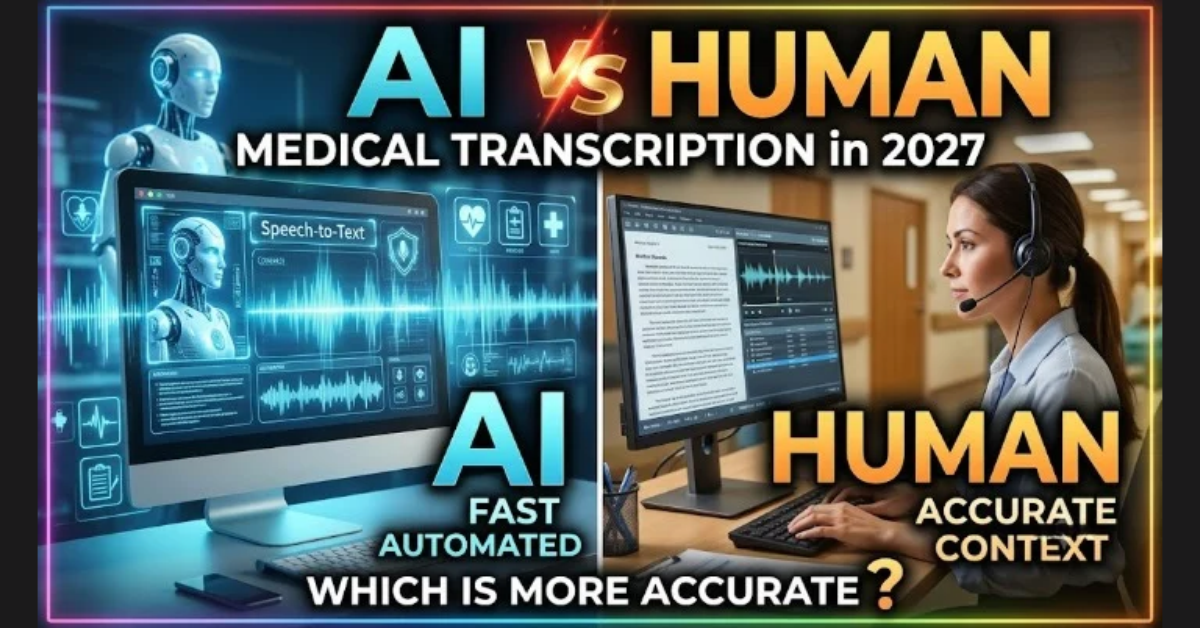
AI vs Human Transcription: Which Is Faster?
Artificial intelligence has made transcription faster than ever, but speed alone doesn't guarantee accuracy.
AI transcription performs well when audio is clear and conversations are straightforward.
However, qualitative interviews often include:
- Overlapping speakers
- Strong regional accents
- Emotional conversations
- Industry-specific terminology
- Background noise
- Non-verbal cues
For these projects, a hybrid workflow delivers the best results.
AI generates the initial transcript, while experienced human editors review, correct, and verify every detail before final delivery.
This approach combines speed with research-grade accuracy.
Typical Turnaround Times
| Project Type | Typical Delivery Time |
|---|---|
| 30-minute interview | 24–48 hours |
| 60-minute interview | 2–3 business days |
| Focus group discussion | 3–5 business days |
| Multilingual interviews | Depends on language and complexity |
| Large research studies | Scheduled project delivery |
Actual timelines depend on audio quality, project size, speaker count, and required formatting.
Best Practices to Reduce Transcription Delays
Researchers can significantly improve turnaround times by following these recommendations:
- Test recording equipment before interviews.
- Record in quiet environments.
- Upload interviews daily instead of batching files.
- Provide clear speaker information.
- Share technical terminology in advance.
- Set realistic delivery expectations.
- Maintain consistent file naming conventions.
- Partner with experienced transcription professionals.
These practices help ensure smoother workflows from interview to final transcript.
Why Researchers Choose MyTranscriptionPlace?
At MyTranscriptionPlace, we understand that transcription is more than document preparation—it's a critical step in the research process.
Our team supports academic researchers, market research firms, healthcare organizations, consulting companies, and universities with:
- Human-reviewed transcription
- Multilingual capabilities
- Confidential data handling
- Dedicated project management
- Flexible turnaround options
- Rigorous quality assurance
Our goal is to deliver accurate transcripts on schedule, allowing researchers to focus on analysis rather than administrative delays.
Conclusion
Delays in qualitative research transcription are often preventable. Clear audio, organized project management, realistic timelines, and experienced transcription professionals all contribute to faster, more accurate transcript delivery.
By planning ahead and following proven best practices, researchers can keep projects moving, reduce turnaround times, and begin qualitative analysis without unnecessary interruptions.
Whether you're conducting academic research, customer interviews, focus groups, or international studies, investing in a reliable transcription workflow helps ensure your research stays on schedule and delivers meaningful insights.
Our Best Translation Services
English to Indonesian Translation | English to Spanish Translation | English to Italian Translation | English to Russian Translation | English to Danish Translation | English to Vietnamese Translation | English to Japanese Translation | English to Finnish Translation | English to Dutch Translation | English to Arabic Translation | English to Norwegian Translation | English to Greek Translation
Frequently Asked Questions
1. Why does qualitative research transcription take so long?
Professional transcription includes listening, speaker identification, formatting, proofreading, terminology verification, and quality assurance. Poor audio quality and complex interviews also increase processing time.
2. How can I reduce transcription turnaround time?
Improve audio quality, upload files regularly, provide clear instructions, organize recordings, and work with an experienced transcription provider.
3. Does audio quality affect transcription speed?
Yes. Background noise, overlapping speakers, and poor recordings require additional review, increasing both transcription time and editing effort.
4. Is AI transcription better than human transcription?
AI transcription is faster for clean recordings, while human transcription provides superior accuracy for qualitative interviews. A hybrid approach often delivers the best balance of speed and quality.
5. How long does it take to transcribe one hour of audio?
Depending on audio quality and project complexity, one hour of recorded qualitative interviews may require several hours of professional transcription, editing, and quality review.
6. What types of research benefit from professional transcription?
Professional transcription is widely used in academic research, market research, healthcare studies, UX research, social sciences, legal research, customer interviews, and focus group discussions.
7. Can transcription begin before all interviews are completed?
Yes. Uploading recordings immediately after each interview allows transcription to begin earlier, reducing the overall project timeline.
8. What information should I provide with my recordings?
Include speaker names (if available), project instructions, preferred formatting, technical terminology, and any special requirements to improve efficiency and transcript accuracy.

Nishi Singh
(Content Writer & SEO Manager)
She is an SEO Manager with over 8 years of experience in marketing and content creation. She specializes in SEO, content strategy, and paid advertisements, helping website owners across SaaS, B2B businesses, and e-commerce platforms achieve measurable growth. With a strong focus on driving organic traffic and crafting impactful content, Nishi has established herself as a trusted expert in the digital marketing space. When she's not optimizing websites, she channels her energy into marathon running, embracing challenges both on and off the track.