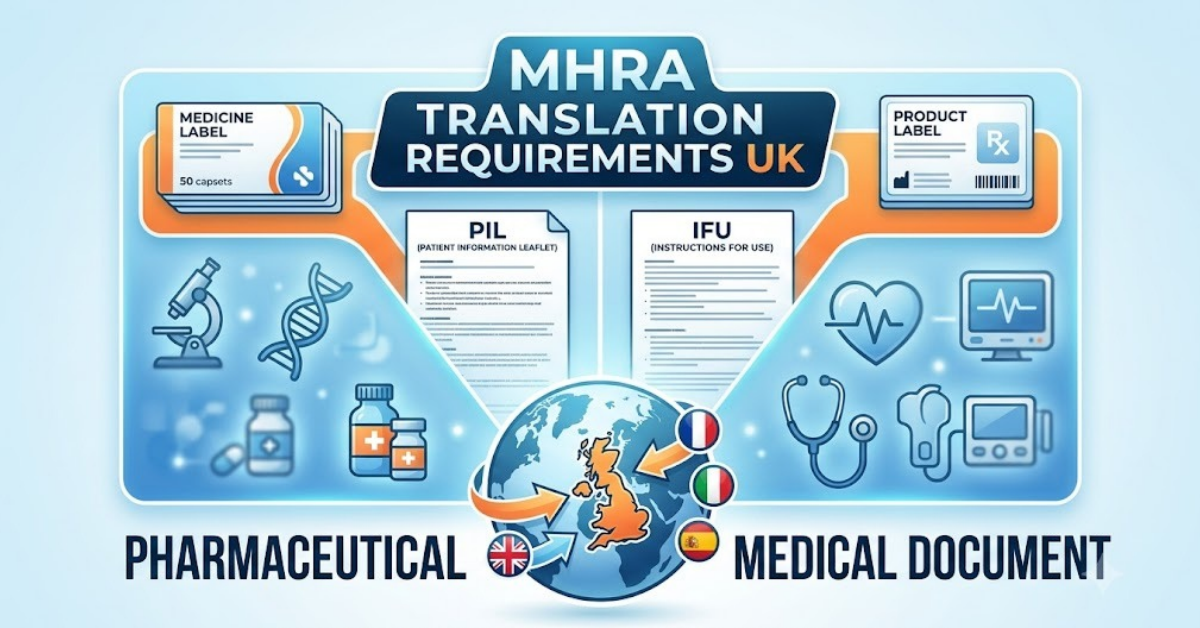
In the global pharmaceutical industry, accurate communication plays a crucial role in patient safety, regulatory compliance, and the success of clinical trials. Pharmaceutical companies frequently conduct research across multiple countries where healthcare professionals, researchers, and participants speak different languages. In such situations, pharmaceutical translation services ensure that complex medical and scientific information is communicated accurately and consistently.
Pharmaceutical translation refers to the specialized translation of medical, scientific, and regulatory documents related to drug development and clinical research. These translations must preserve scientific meaning while meeting international regulatory requirements such as those set by the FDA (Food and Drug Administration), EMA (European Medicines Agency), and ICH Good Clinical Practice (GCP) guidelines.
At MyTranscriptionPlace, we understand the critical importance of precise communication in pharmaceutical research. Our specialized clinical trial translation services help pharmaceutical companies, biotechnology firms, and research organizations maintain accuracy across multilingual documentation while meeting global regulatory standards.
What Are Pharmaceutical Translation Services?
Pharmaceutical translation services involve translating highly technical documents used in drug development, clinical research, and regulatory submissions. These documents require expert linguists who understand medical terminology, pharmacology, and regulatory language.
Unlike general translation, pharmaceutical translation requires:
Deep knowledge of medical terminology
Familiarity with clinical research documentation
Understanding of international regulatory frameworks
Strict adherence to scientific accuracy
Professional pharmaceutical translators ensure that every document maintains its original meaning, medical precision, and regulatory compliance across languages.
Why Accuracy Is Critical in Pharmaceutical Translation?
Accuracy is essential in pharmaceutical translation because even minor errors can have significant consequences for patient safety, research outcomes, and regulatory approvals.
Patient Safety
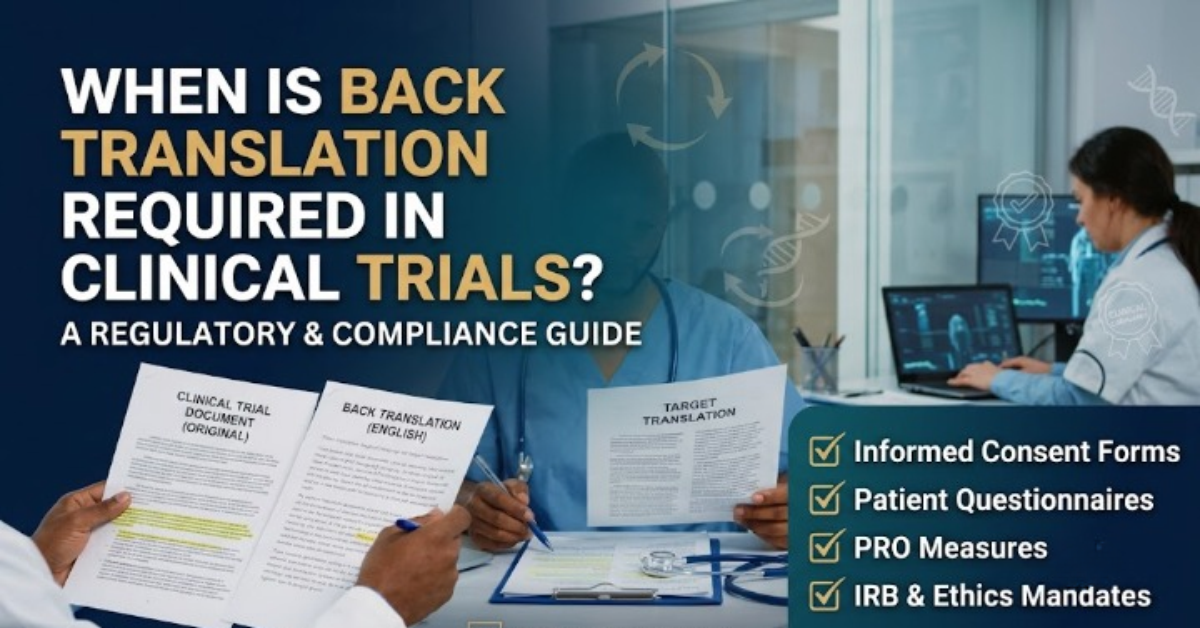
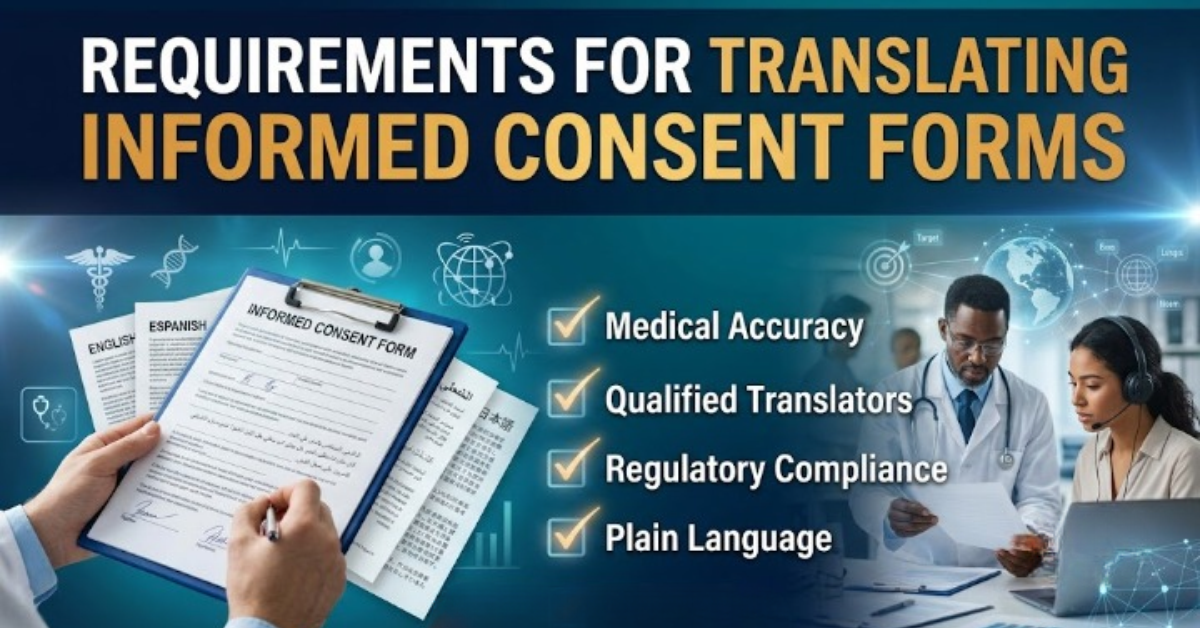
Clinical trial participants rely on translated documents such as informed consent forms and patient information leaflets to understand potential risks and procedures. Incorrect translation could lead to misunderstandings that affect patient safety and ethical compliance.
Regulatory Compliance
Pharmaceutical companies must comply with international regulatory bodies such as:
FDA (United States)
EMA (European Union)
ICH (International Council for Harmonisation)
Accurate translation ensures that regulatory submissions, safety reports, and study documentation meet strict compliance standards.
Clinical Trial Integrity
Global clinical trials require consistent communication among researchers, investigators, and participants. Poor translation may lead to:
Misinterpretation of study protocols
Inconsistent trial procedures
Delays in regulatory approval
High-quality clinical trial translation services help maintain consistency and clarity across multilingual research environments.
Supporting Global Clinical Trials with Professional Translation
Modern clinical trials are increasingly conducted across multiple countries. According to industry reports, over 70% of clinical trials involve international study sites, making multilingual communication essential.
Professional translation services support global clinical research by ensuring that critical documents are accurately translated for:
Clinical investigators
Study participants
Regulatory authorities
Research organizations
At MyTranscriptionPlace, our expert linguists provide reliable translation for:
Clinical trial protocols
Participant information sheets
Research questionnaires
Safety reports
Regulatory documentation
This ensures that all stakeholders clearly understand the research objectives, procedures, and safety requirements.
Key Documents That Require Pharmaceutical Translation
Clinical research generates a wide range of highly specialized documentation. These documents require accurate translation to maintain scientific integrity and regulatory compliance.
Common pharmaceutical documents requiring translation include:
Informed consent forms (ICFs)
Clinical trial protocols
Investigator brochures
Clinical study reports (CSRs)
Patient information leaflets
Regulatory submissions
Drug safety reports
Adverse event documentation
Accurate translation of these materials helps ensure consistent communication across international clinical trial sites.
Regulatory Requirements for Pharmaceutical Translation
Pharmaceutical translation must comply with strict international regulatory guidelines to ensure the reliability of medical information.
Key regulatory standards include:
FDA Regulations
The U.S. Food and Drug Administration require accurate documentation for clinical trial approvals and drug registrations.
EMA Guidelines
The European Medicines Agency mandates multilingual documentation for pharmaceutical products marketed across EU member states.
ICH Good Clinical Practice (GCP)
These international standards ensure ethical and scientific quality in clinical trials.
Professional translation providers must ensure that all translated documents remain consistent with regulatory terminology and submission requirements.
Our Pharmaceutical Translation Process
At MyTranscriptionPlace, we follow a rigorous translation process to ensure accuracy and regulatory compliance.
1. Subject Matter Expert Translation
Documents are translated by linguists with expertise in medical and pharmaceutical terminology.
2. Medical Editing
A second medical expert reviews the translation for scientific accuracy and clarity.
3. Terminology Validation
Specialized terminology is verified using standard medical dictionaries and regulatory terminology databases.
4. Quality Assurance
Each document undergoes a detailed quality review to ensure accuracy, consistency, and compliance.
5. Final Compliance Check
The completed translation is evaluated to ensure it meets regulatory and formatting requirements for submission.
Challenges in Pharmaceutical Translation
Pharmaceutical translation presents unique challenges due to the complexity of medical and scientific documentation.
Some common challenges include:
Complex Scientific Terminology
Medical terminology must be translated accurately without altering its meaning.
Regulatory Differences Between Countries
Each regulatory authority may have specific documentation requirements.
Multilingual Clinical Trial Participants
Participant-facing documents must be translated in clear and understandable language.
Consistency Across Multiple Documents
Large clinical trials involve thousands of pages of documentation that must remain consistent across languages.
Professional translation services help pharmaceutical companies overcome these challenges while maintaining accuracy and compliance.
Why Pharmaceutical Companies Trust MyTranscriptionPlace?
Pharmaceutical organizations trust MyTranscriptionPlace because we combine linguistic expertise with deep industry knowledge.
Our services offer:
Expert medical translators with pharmaceutical experience
Strict quality control procedures
Regulatory-compliant translations
Fast turnaround times
Support for multinational clinical trials
We provide reliable medical translation services for pharmaceutical companies, ensuring that research documentation remains accurate, consistent, and globally accessible.
The Role of Translation in Advancing Clinical Research
As pharmaceutical research continues to expand globally, the demand for specialized translation services continues to grow. Accurate pharmaceutical translation supports:
International clinical trials
Global drug development
Multilingual regulatory submissions
Cross-border collaboration among researchers
High-quality translation ensures that scientific knowledge is communicated effectively across languages, enabling pharmaceutical companies to advance medical research and deliver life-saving treatments worldwide.
Best Translation Service
English to Indonesian Translation | English to Spanish Translation | English to Italian Translation | English to Russian Translation | English to Danish Translation | English to Vietnamese Translation | English to Japanese Translation | English to Finnish Translation | English to Dutch Translation | English to Arabic Translation | English to Norwegian Translation | English to Greek Translation.
FAQs About Pharmaceutical Translation Services
1. What are pharmaceutical translation services?
Pharmaceutical translation services involve translating specialized medical and pharmaceutical documents such as clinical trial protocols, regulatory submissions, investigator brochures, and patient consent forms into multiple languages while preserving scientific accuracy and regulatory compliance.2. Why is accuracy critical in pharmaceutical translation?
Accuracy is essential because translation errors in medical or pharmaceutical documents can impact patient safety, research integrity, and regulatory approval. Precise translation ensures that clinical trial procedures and drug information are clearly understood by all stakeholders.3. What documents require pharmaceutical translation in clinical research?
Clinical research documents requiring translation include informed consent forms, clinical trial protocols, investigator brochures, clinical study reports, patient questionnaires, and regulatory submissions submitted to authorities such as the FDA or EMA.4. Who needs pharmaceutical translation services?
Pharmaceutical companies, biotechnology firms, contract research organizations (CROs), hospitals, and academic research institutions require pharmaceutical translation services to communicate medical research and regulatory documentation across global markets.5. What is clinical trial translation?
Clinical trial translation refers to the translation of documents used in clinical research, including study protocols, participant information sheets, consent forms, and safety reports, ensuring that all participants and investigators understand the trial procedures.
Nishi Singh
(Content Writer & SEO Manager)
She is an SEO Manager with over 8 years of experience in marketing and content creation. She specializes in SEO, content strategy, and paid advertisements, helping website owners across SaaS, B2B businesses, and e-commerce platforms achieve measurable growth. With a strong focus on driving organic traffic and crafting impactful content, Nishi has established herself as a trusted expert in the digital marketing space. When she's not optimizing websites, she channels her energy into marathon running, embracing challenges both on and off the track.