Market research interviews and focus groups help businesses understand customer behaviour, purchasing decisions, opinions and expectations. However, analysing hours of recorded conversations can be time-consuming, especially when dealing with multiple participants, different accents and overlapping discussions.
Market research transcription is the process of converting recorded interviews and focus group discussions into accurate, organised written documents for qualitative research and analysis.
Whether you are a market research agency, academic researcher, business analyst or marketing professional, accurate transcription helps you identify recurring themes, compare customer feedback and make informed decisions.
At MyTranscriptionPlace, we provide manual and automated transcription services to help researchers convert audio recordings into structured, readable transcripts. Our transcription solutions support interview transcription, focus group transcription and qualitative research workflows.
Need professional transcription support for your research project? Contact MyTranscriptionPlace to discuss your requirements.
What Is Market Research Transcription?
Market research transcription involves converting recorded customer interviews, focus group discussions and research conversations into written text. It allows researchers to organise qualitative information, examine participant responses and identify patterns in customer opinions and experiences.
Market research transcription is commonly used by:
Market research agencies conducting consumer studies.
Businesses collecting customer feedback.
Academic researchers conducting qualitative interviews.
Marketing teams analysing customer preferences.
Product development teams gathering user insights.
Research consultants conducting focus group discussions.
Accurate transcripts make it easier to search, compare and review participant responses without repeatedly listening to lengthy audio recordings.
Why Is Interview Transcription Important for Market Research?
Interview transcription plays an important role in qualitative market research because it creates a searchable written record of customer conversations and participant feedback.
Researchers can use accurate transcripts to:
Identify customer preferences: Understand what customers like, dislike and expect from products or services.
Recognise recurring patterns: Identify common opinions, concerns and experiences across multiple interviews.
Compare participant responses: Evaluate differences in feedback across customer groups and demographics.
Understand purchasing behaviour: Examine the motivations and factors influencing customer decisions.
Support qualitative analysis: Organise interview responses for coding, thematic analysis and research reporting.
Maintain accurate records: Preserve participant statements for future reference and verification.
Professional interview transcription services can also reduce the time researchers spend manually converting recordings into written documents.
How to Transcribe Market Research Interviews Step by Step
Transcribing market research interviews requires careful attention to audio quality, speaker identification, accuracy and formatting. Following a structured process helps ensure that the final transcript accurately represents the original conversation.
Step 1: Prepare and Organise Your Audio Recordings
Before starting transcription, organise your interview recordings and ensure that the audio is clear. Use good-quality recording equipment and minimise background noise wherever possible.
Check that all participants can be heard clearly and organise recordings using appropriate file names, dates and interview identifiers.
Step 2: Choose Between AI and Human Transcription
You can convert interview recordings into text using automated transcription software or professional human transcription services.
AI transcription tools can generate initial transcripts quickly, making them useful for clear recordings and large volumes of audio. Human transcription is particularly valuable when recordings contain multiple speakers, technical terminology, different accents or complex discussions.
Choose a transcription method based on your research requirements, audio quality, budget and accuracy expectations.
Step 3: Identify Speakers and Add Timestamps
Clearly identify each participant throughout the transcript. Consistent speaker labels help researchers understand who provided particular opinions or responses.
Adding timestamps can make it easier to locate important sections of the original recording, especially when reviewing lengthy interviews or preparing research reports.
Step 4: Review and Proofread the Transcript
Review the transcript against the original recording to identify missing sentences, incorrect words, speaker identification errors and transcription inconsistencies.
Avoid guessing unclear words or changing participant statements. The purpose of research transcription is to preserve the original meaning of the conversation.
Step 5: Organise Transcripts for Qualitative Research Analysis
Once transcription is complete, organise the documents using consistent formatting and speaker labels.
Researchers can then use transcripts for qualitative coding, thematic analysis, customer feedback analysis and research reporting.
At MyTranscriptionPlace, our transcription solutions help businesses and research professionals turn recorded conversations into organised written documents.
What Is Focus Group Transcription and How Does It Work?
Focus group transcription is the process of converting recorded group discussions into written text while identifying individual speakers and preserving the context of their conversations.
Unlike one-to-one interviews, focus groups involve several participants discussing a specific topic under the guidance of a moderator. Participants may interrupt one another, express different opinions or speak simultaneously.
An accurate focus group transcript helps researchers:
Identify individual participant opinions.
Understand how participants respond to one another.
Recognise recurring discussion themes.
Compare different perspectives.
Analyse customer experiences and expectations.
Organise qualitative feedback for further research.
Professional focus group transcription requires careful speaker identification, contextual listening and attention to overlapping conversations.
AI vs Human Transcription for Market Research: Which Is Better?
Choosing between AI and human transcription depends on the complexity of your recordings, research objectives and required accuracy.
Both methods can support market research, but they offer different advantages.
AI transcription is useful when speed and initial text generation are important. However, automated tools may struggle with accents, background noise, multiple speakers and specialised research terminology.
Human transcription provides an additional layer of contextual review, particularly for complex qualitative research recordings.
Which method should market researchers choose?
For straightforward interviews with clear audio, AI transcription may be sufficient after appropriate quality checks. For focus groups, overlapping conversations and research involving specialised terminology, professionally reviewed human transcription can provide greater confidence in speaker identification and contextual accuracy.
MyTranscriptionPlace offers manual and automated transcription options to support different research and business requirements.
Common Challenges in Interview and Focus Group Transcription
Transcribing research interviews and group discussions can involve several challenges that affect the quality of the final document.
Multiple Speakers and Overlapping Conversations
Focus group participants may speak simultaneously, making it difficult to identify individual responses. Consistent speaker labels and careful audio review help preserve the discussion.
Different Accents and Speaking Styles
Participants may have different accents, pronunciation patterns and speaking speeds. These variations can make automated speech recognition less reliable.
Background Noise and Poor Audio Quality
Background conversations, interruptions and recording equipment issues can make certain words difficult to understand. Good recording practices and careful transcription review help reduce these problems.
Technical and Industry-Specific Terminology
Market research interviews may include product names, industry terminology and specialised expressions. Transcriptionists should review unfamiliar terminology carefully rather than guessing the intended words.
Maintaining Original Meaning and Context
Research transcripts must accurately reflect participant opinions and experiences. Removing important statements or changing the meaning of responses can affect subsequent analysis.
At MyTranscriptionPlace, we understand the importance of accurate research documentation and focus on preserving the meaning and context of recorded conversations.
How to Maintain Confidentiality When Transcribing Market Research Interviews
Market research interviews may contain personal information, customer experiences, business discussions and commercially sensitive feedback. Protecting this information is an important part of the transcription process.
Researchers should consider the following practices:
Obtain appropriate participant consent before recording interviews.
Remove or anonymise personally identifiable information where required.
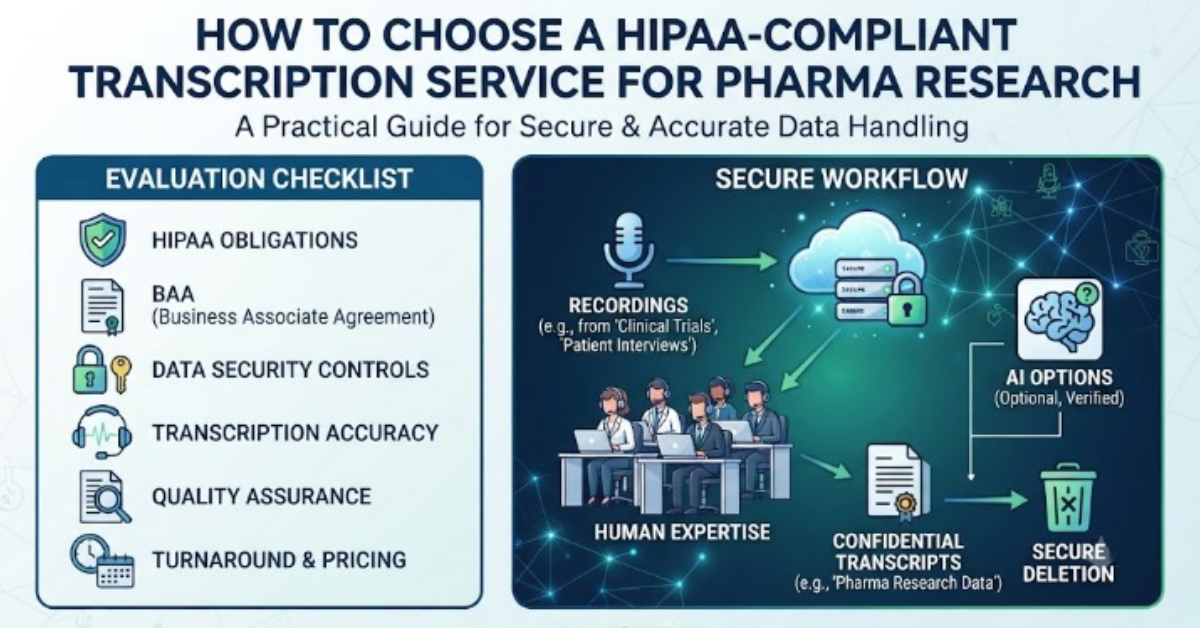
Use secure methods to transfer and store audio recordings.
Restrict access to recordings and transcripts.
Review the transcription provider's confidentiality and data protection practices.
Establish clear retention and deletion procedures for research files.
Before sharing recordings with a transcription provider, check its confidentiality arrangements and applicable data protection requirements.
How Much Does Market Research Transcription Cost?
The cost of market research transcription depends on the recording requirements, audio quality and complexity of the project.
Some of the main factors influencing transcription pricing include:
Audio duration: Longer recordings generally require more transcription work.
Number of speakers: Focus groups with several participants may require additional speaker identification.
Audio quality: Background noise and unclear speech can increase processing and review time.
Turnaround time: Urgent transcription requests may involve additional charges.
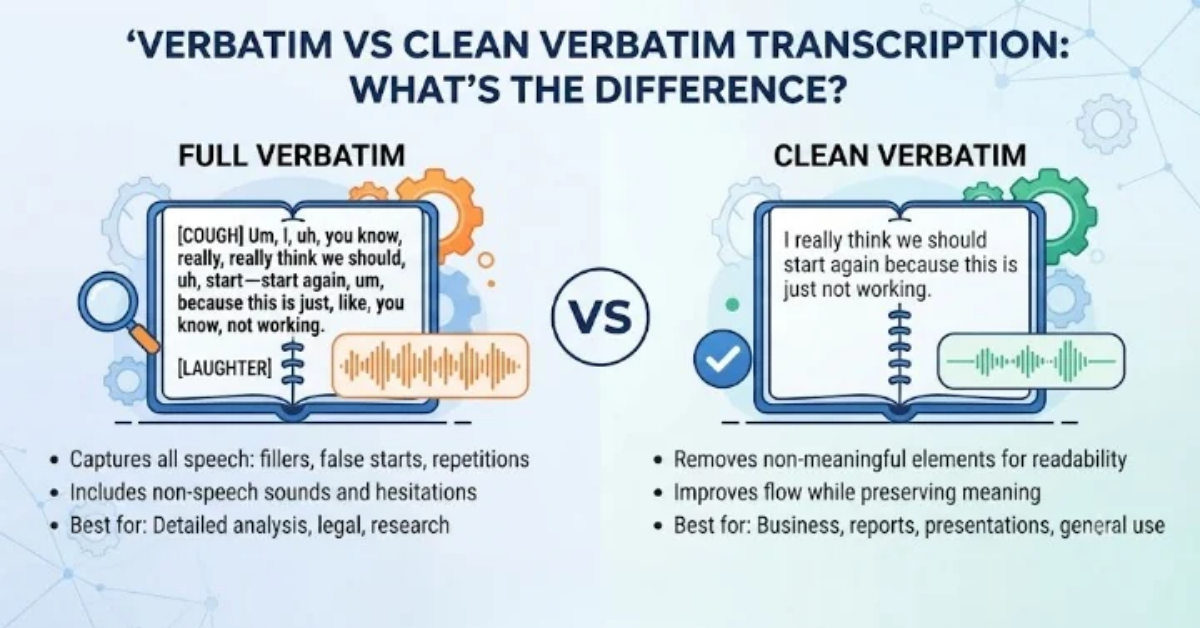
Transcription format: Verbatim, clean verbatim and intelligent verbatim formats have different requirements.
Additional services: Timestamps, speaker labels and specialised formatting may affect the overall cost.
If you are planning a large-scale research project, requesting a tailored quote can help you understand the expected cost and delivery requirements.
Need a quote for your research recordings? Contact MyTranscriptionPlace to discuss your transcription requirements.
How Accurate Transcription Improves Qualitative Research Analysis
Accurate transcription provides researchers with a reliable written record of interviews and focus group discussions. These documents can support several qualitative research activities.
1. Thematic analysis:
Researchers can identify recurring ideas, opinions and experiences across multiple interviews.
2. Customer behaviour analysis:
Transcripts help reveal purchasing motivations, customer concerns and product expectations.
3. Participant comparison:
Researchers can compare responses across different customer groups and identify differences in perspectives.
4. Research reporting:
Organised transcripts make it easier to extract relevant quotations and support research findings.
5. Product and service development:
Customer feedback can help businesses identify improvement opportunities and understand unmet customer needs.
Accurate transcripts provide a useful foundation for qualitative research, although researchers still need to interpret and analyse the information according to their research methodology.
Why Choose Professional Market Research Transcription Services?
Professional market research transcription services help research teams convert recorded conversations into organised documents without spending excessive time manually reviewing audio files.
Choosing a suitable transcription provider can help with:
Accurate conversion of recorded interviews into written text.
Speaker identification for multi-participant discussions.
Consistent formatting across research transcripts.
Handling of different accents and conversational styles.
Organising recordings for qualitative research workflows.
Reducing manual transcription workload.
At MyTranscriptionPlace, we support market research professionals, businesses and academic researchers with manual and automated transcription services.
Our services include interview transcription, focus group transcription and qualitative data-related support to help researchers organise their recorded information.
Whether you are processing individual customer interviews or multiple focus group recordings, our transcription solutions can support your research documentation requirements.
How MyTranscriptionPlace Supports Market Research Teams
MyTranscriptionPlace helps businesses, research agencies and academic professionals transform audio recordings into organised written documents.
Our transcription solutions are designed to support different project requirements, from individual interviews to larger research recording collections.
1. Manual Transcription Services
Our manual transcription option is suitable for projects that require careful listening, speaker identification and contextual review.
2. Automated Transcription Services
Automated transcription helps convert audio recordings into text quickly and can support projects where faster initial processing is required.
3. Qualitative Data Analysis Support
Our qualitative data analysis service can support researchers in organising research information and working with qualitative data.
We focus on providing transcription solutions that help research professionals save time and manage their recorded conversations more efficiently.
Have interviews or focus group recordings ready for transcription?
Get in touch with MyTranscriptionPlace to discuss your project requirements and explore the right transcription solution for your research.
Conclusion
Market research transcription plays an important role in converting customer interviews and focus group discussions into organised, searchable written documents.
Accurate transcripts help researchers identify recurring opinions, understand customer behaviour, compare participant experiences and organise qualitative information for further analysis.
Whether you choose AI transcription or professional human transcription, maintaining accuracy, speaker identification and original context is essential for reliable research documentation.
MyTranscriptionPlace provides manual and automated transcription services to help businesses, research agencies and academic professionals manage their interview and focus group recordings.
Looking for professional market research transcription services? Contact MyTranscriptionPlace today to discuss your requirements and request a tailored quote.
Frequently Asked Questions
1. What is market research transcription?
Market research transcription converts recorded customer interviews, focus group discussions and research conversations into written text. It helps researchers organise qualitative data, identify customer preferences, analyse opinions and understand consumer behaviour.
2. How do you transcribe interviews for market research?
Record the interview, convert the audio into text using AI or professional human transcription, identify speakers and proofread the transcript. Review the final document to ensure participant responses and their original meaning are accurately preserved.
3. What is focus group transcription?
Focus group transcription is the process of converting recorded group discussions into written text. It captures participant opinions, questions and responses while identifying individual speakers, making qualitative research analysis easier.
4. Why is transcription important in market research?
Transcription creates a written record of customer opinions and experiences. It helps researchers identify patterns, compare responses, understand purchasing behaviour and organise qualitative information for research reporting.
5. What is the difference between interview transcription and focus group transcription?
Interview transcription generally involves one-to-one conversations, whereas focus group transcription captures discussions involving multiple participants. Focus group transcription requires additional attention to speaker identification, interruptions and overlapping conversations.
6. What are the different types of interview transcription?
The three common types are verbatim, clean verbatim and intelligent verbatim transcription. Verbatim captures spoken words and speech patterns, clean verbatim removes unnecessary fillers, and intelligent verbatim improves readability while preserving the original meaning.
7. How do you transcribe multiple speakers in a focus group discussion?
Use consistent speaker labels, timestamps and careful audio review. Listen closely to overlapping conversations and mark unclear sections rather than guessing. Professional transcriptionists can help distinguish speakers and preserve discussion context.
8. Is AI transcription accurate enough for qualitative market research?
AI transcription can produce useful drafts, particularly from clear recordings. However, accents, background noise, overlapping speech and specialised terminology can affect accuracy. Human review is recommended when research findings depend on precise participant responses.
9. What is the best transcription format for qualitative research?
Clean verbatim is often suitable for general qualitative research because it improves readability while retaining participants' intended meaning. Full verbatim may be preferable when analysing speech patterns, pauses, hesitation and conversational details.
10. How long does it take to transcribe a market research interview?
Transcription time depends on audio duration, recording quality, speaker count, terminology and transcription method. AI tools can produce initial drafts quickly, while professional human transcription requires additional listening and quality checks.
11. How can researchers protect participant confidentiality during transcription?
Researchers should obtain appropriate recording consent, anonymise personal information where necessary and use secure file-sharing and storage processes. They should also review the transcription provider's confidentiality and data protection practices before sharing recordings.
12. Can focus group transcripts be used for thematic analysis?
Yes. Focus group transcripts can support thematic analysis by helping researchers identify recurring ideas, opinions, experiences and discussion patterns. Accurate speaker labels and timestamps make it easier to connect themes with individual participant responses.
13. Where can I get professional market research interview transcription services?
MyTranscriptionPlace provides manual and automated transcription services for research recordings. Businesses, academic researchers and market research professionals can contact the team to discuss their interview and focus group transcription requirements.

Nishi Singh
(Content Writer & SEO Manager)
She is an SEO Manager with over 8 years of experience in marketing and content creation. She specializes in SEO, content strategy, and paid advertisements, helping website owners across SaaS, B2B businesses, and e-commerce platforms achieve measurable growth. With a strong focus on driving organic traffic and crafting impactful content, Nishi has established herself as a trusted expert in the digital marketing space. When she's not optimizing websites, she channels her energy into marathon running, embracing challenges both on and off the track.