Quick Answer
AI-based English to Greek translation is highly accurate for simple, structured, and technical content, with typical accuracy levels ranging from 85% to 95%. However, for idioms, cultural nuance, legal language, marketing copy, and creative writing, human review remains essential to ensure contextual correctness and natural fluency.
Introduction
Accuracy is the cornerstone of any translation service especially in the age of artificial intelligence. As AI-powered translation tools become more advanced and widely adopted, businesses and researchers increasingly ask: How accurate is English to Greek translation using AI?
At myTranscriptionPlace, we work daily with AI-assisted English to Greek translations across business, legal, academic, and technical domains. Our linguists evaluate AI outputs for grammatical precision, tone accuracy, and cultural appropriateness, allowing us to benchmark real-world translation performance beyond theoretical claims.
While AI English to Greek translation has improved rapidly thanks to neural machine translation and deep learning, its accuracy still varies significantly depending on content type, sentence complexity, and contextual depth.
How Accurate Is English to Greek AI Translation?
AI translation from English to Greek is highly reliable for straightforward text such as technical manuals, emails, reports, and internal documentation, with accuracy rates typically between 85% and 95%. Accuracy drops for creative, legal, and idiomatic content due to cultural nuance, sentence complexity, and contextual meaning.
In real-world use:
Simple sentences and structured content: 90 - 95% accuracy
Technical documentation: 85 - 92% accuracy
Business communication: 80 - 90% accuracy
Marketing copy: 65 - 80% accuracy
Legal and medical content: 70 - 85% accuracy (human review mandatory)
Creative writing and storytelling: 55 - 70% accuracy
These figures reflect practical performance when using modern neural machine translation systems rather than ideal laboratory benchmarks.
The Evolution of English to Greek Translation with AI
Over the last decade, machine translation from English to Greek has evolved dramatically. Early rule based systems focused on word substitution and basic grammar alignment. Today’s Greek language translation AI relies on neural networks trained on massive multilingual datasets.
Modern systems:
Capture sentence structure rather than isolated words
Learn contextual meaning and phrasing
Improve fluency and grammatical consistency
Adapt to domain-specific terminology
This shift toward neural machine translation has led to major gains in English to Greek translation accuracy, particularly for technical, informational, and business texts.
Grammar, Syntax, and Sentence Structure
Greek grammar is inherently complex, featuring:
Gendered nouns
Verb conjugations
Rich inflection
Flexible word order
Modern AI translation tools handle most grammatical constructs well. However, long or syntactically dense sentences still produce occasional errors, such as:
Incorrect verb agreement
Awkward word order
Misplaced modifiers
This is why AI English to Greek translation software is most effective when paired with linguist verification to ensure stable and professional-grade accuracy.
Idioms, Cultural Meaning, and Context
Idioms and culturally embedded expressions remain one of the greatest challenges in Greek machine translation. AI systems often interpret such phrases literally, which can distort or completely alter meaning.
Examples of common failures include:
English idioms translated word-for-word into unnatural Greek
Loss of emotional tone or persuasive intent
Misinterpretation of culturally specific references
Although AI translation accuracy continues to improve, human intervention remains critical when tone, context, branding, or cultural nuance matters.
Formal vs Informal Greek Language
Greek contains clear distinctions between formal and informal registers, especially in professional and client-facing communication.
AI translation tools often default to a neutral tone, which may not always align with:
Business etiquette
Academic formality
Customer engagement style
Human linguists ensure the correct register is applied based on audience, intent, and industry norms.
When AI Translation Is Enough and When It Isn’t
Suitable Use Cases for AI Translation
Internal documents
Research notes
Technical drafts
Large-scale data processing
Preliminary content localization
Use Cases Requiring Human Review
Legal contracts
Medical documentation
Marketing and branding materials
Academic publications
Client-facing content
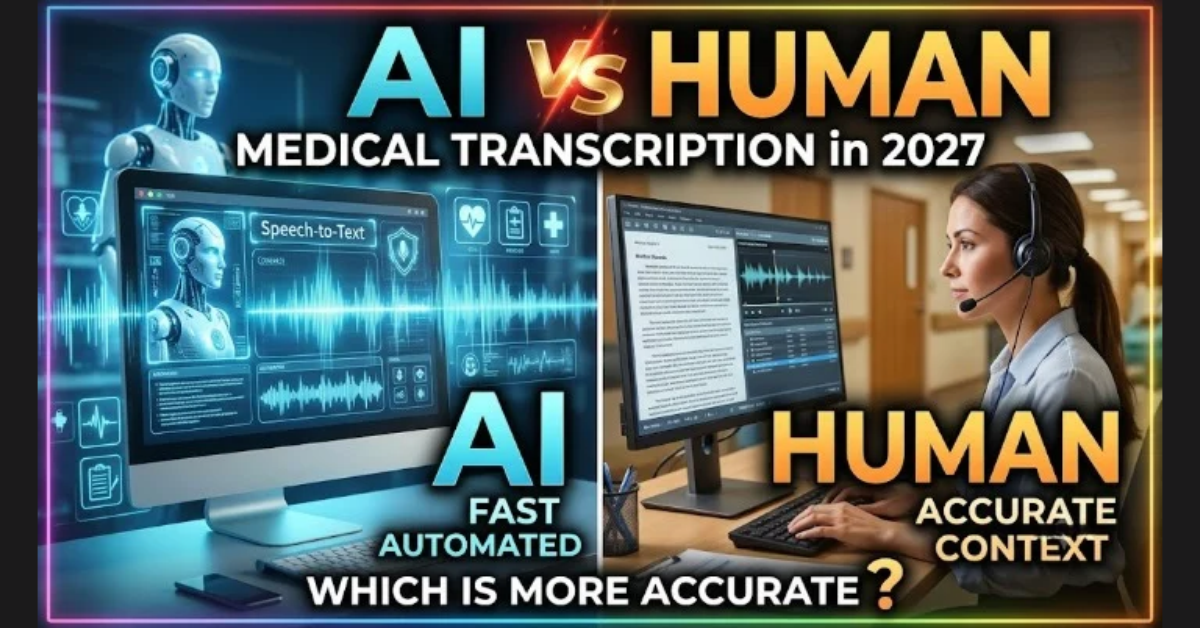
At myTranscriptionPlace, our philosophy is simple: AI is a powerful tool, but not a replacement for expert human translators.
Accuracy by Content Type (Quick Reference)
Our Perspective at myTranscriptionPlace
We believe technology is an enabler - not the final authority. English to Greek translation using AI delivers speed and scalability, but predictable quality comes from expert oversight and structured workflows.
By combining advanced AI translation tools with professional human review, we ensure:
Linguistic accuracy
Cultural appropriateness
Consistent terminology
Professional-grade quality
This hybrid model allows us to deliver reliable English to Greek translations for every use case.
Key Takeaways
AI delivers strong English to Greek translation accuracy for structured and technical content.
Idioms, cultural meaning, and creative language reduce reliability.
Grammar handling is strong, but complex sentence structures still cause errors.
Best results come from combining AI translation with human linguistic review.
Conclusion
AI-based English to Greek translation has reached impressive levels of accuracy, especially for structured, technical, and informational content. However, language is more than syntax it carries cultural meaning, emotional tone, and contextual depth.
For organizations seeking reliable and professional-grade translations, the most effective approach remains a hybrid model that combines AI efficiency with expert human linguistic oversight.
At myTranscriptionPlace, we ensure accuracy, consistency, and reliability by blending advanced AI translation with experienced human linguists - delivering translations you can trust.
Best Translation Service
English to Indonesian Translation | English to Spanish Translation | English to Italian Translation | English to Russian Translation | English to Danish Translation | English to Vietnamese Translation | English to Japanese Translation | English to Finnish Translation | English to Dutch Translation | English to Arabic Translation | English to Norwegian Translation | English to Greek Translation.
Frequently Asked Questions (FAQs)
1. How accurate is AI when translating English to Greek?
AI achieves 85 - 95% accuracy for simple and technical text but drops to 60 - 75% for idioms, marketing, and creative content. Human review is recommended for professional use.
2. Can AI translation tools handle Greek grammar correctly?
Yes. Modern neural translation tools handle Greek grammar well, though long and syntactically complex sentences still require human proofreading.
3. Does AI accurately translate English idioms into Greek?
No. AI often translates idioms literally, which can distort meaning. Human translators are needed for idiomatic and culturally nuanced content.
4. Which AI translation tool is best for English to Greek?
No single tool is perfect. The best results come from combining advanced AI translation engines with professional linguistic review.
5. Is AI translation suitable for business or legal Greek content?
AI can be used for drafts and internal reference, but all legal, medical, and client-facing Greek translations should be reviewed by a qualified linguist.


Nishi Singh
(Content Writer & SEO Manager)
She is an SEO Manager with over 8 years of experience in marketing and content creation. She specializes in SEO, content strategy, and paid advertisements, helping website owners across SaaS, B2B businesses, and e-commerce platforms achieve measurable growth. With a strong focus on driving organic traffic and crafting impactful content, Nishi has established herself as a trusted expert in the digital marketing space. When she's not optimizing websites, she channels her energy into marathon running, embracing challenges both on and off the track.