Every successful market research project begins with meaningful conversations—but valuable insights can only emerge when those conversations are accurately documented.
Whether you're conducting focus groups, in-depth interviews (IDIs), customer experience studies, usability testing, product evaluations, or online discussion panels, your research data is typically captured as audio or video recordings. Before researchers can code responses, identify patterns, perform thematic analysis, or generate business recommendations, those recordings must be transformed into reliable, searchable text.
This is where professional market research transcription plays a critical role.
A structured transcription workflow does far more than convert speech into text. It preserves participant responses, ensures speaker accuracy, supports qualitative analysis software, protects confidential information, and enables researchers to make evidence-based decisions with confidence.
In this guide, we'll walk through every stage of the end-to-end transcription workflow used in market research, explain why each step matters, and show how professional transcription improves the quality, efficiency, and credibility of qualitative research.
What Is Market Research Transcription?
Market research transcription is the process of converting recorded qualitative research conversations into accurate written transcripts. These recordings may include:
- Focus groups
- One-on-one interviews
- Customer interviews
- Product testing sessions
- Usability studies
- Consumer behavior research
- Ethnographic research
- Online discussion panels
- Voice of Customer (VoC) interviews
The resulting transcript becomes the foundation for coding, thematic analysis, reporting, and strategic decision-making.
Without accurate transcription, researchers risk overlooking important insights, misinterpreting participant feedback, or introducing bias into their analysis.
End-to-End Market Research Transcription Workflow at a Glance
| Stage | Purpose | Outcome |
|---|---|---|
| Receive Research Files | Collect recordings securely | Project ready for processing |
| Audio Assessment | Evaluate quality and complexity | Appropriate transcription strategy |
| Professional Transcription | Convert speech into text | Accurate verbatim transcript |
| Speaker Identification | Label every participant | Clear participant attribution |
| Quality Assurance | Proofread and verify accuracy | Error-free transcript |
| Formatting | Organize for research analysis | Analysis-ready document |
| Secure Delivery | Deliver files safely | Confidential final transcript |
Why Accurate Transcription Matters in Market Research?
The quality of qualitative research depends on the quality of its documentation.
Researchers rely on transcripts to:
- Identify emerging themes
- Compare participant opinions
- Perform sentiment analysis
- Conduct qualitative coding
- Support grounded theory research
- Validate findings
- Generate reports
- Share insights across teams
An inaccurate transcript can change the meaning of participant responses, introduce analytical errors, and reduce confidence in research findings.
Professional transcription minimizes these risks by combining linguistic expertise, quality assurance, and standardized workflows.
Step 1: Receive and Prepare Research Recordings
Every transcription project begins with securely receiving the client's audio or video recordings.
Research files may originate from:
- Zoom interviews
- Microsoft Teams meetings
- In-person focus groups
- Mobile recordings
- Video conferencing platforms
- Digital voice recorders
- Telephone interviews
Once received, every file is reviewed before transcription begins.
During this preparation stage, transcription specialists evaluate:
- Audio quality
- Background noise
- Number of participants
- Speaker overlap
- Technical terminology
- Regional accents
- Recording duration
- Required turnaround time
- Client formatting preferences
This assessment determines the most efficient workflow while ensuring consistent quality throughout the project.
Proper preparation reduces delays, improves transcription accuracy, and allows researchers to receive standardized transcripts across large research studies.
Step 2: Assess Audio Quality and Project Requirements
No two research projects are identical.
Some recordings involve two speakers in a quiet environment, while others include multiple participants speaking simultaneously in a busy focus group.
Professional transcription teams evaluate factors such as:
1. Audio clarity
Poor audio often requires additional review to ensure accurate transcription.
2. Number of speakers
The more participants involved, the greater the need for careful speaker differentiation.
3. Industry terminology
Healthcare, finance, legal, pharmaceutical, and technology research frequently include specialized vocabulary that requires subject-matter familiarity.
4. Verbatim or intelligent transcription
Researchers may request:
- Verbatim transcription
- Intelligent verbatim
- Clean read transcripts
- Timestamped transcripts
- Customized formatting
Establishing these requirements early creates consistency across the entire project.
Step 3: Convert Speech into Accurate Written Text
Transcription is the core of the workflow.
Professional transcriptionists carefully listen to each recording and convert spoken dialogue into accurate written text while preserving context, meaning, and participant intent.
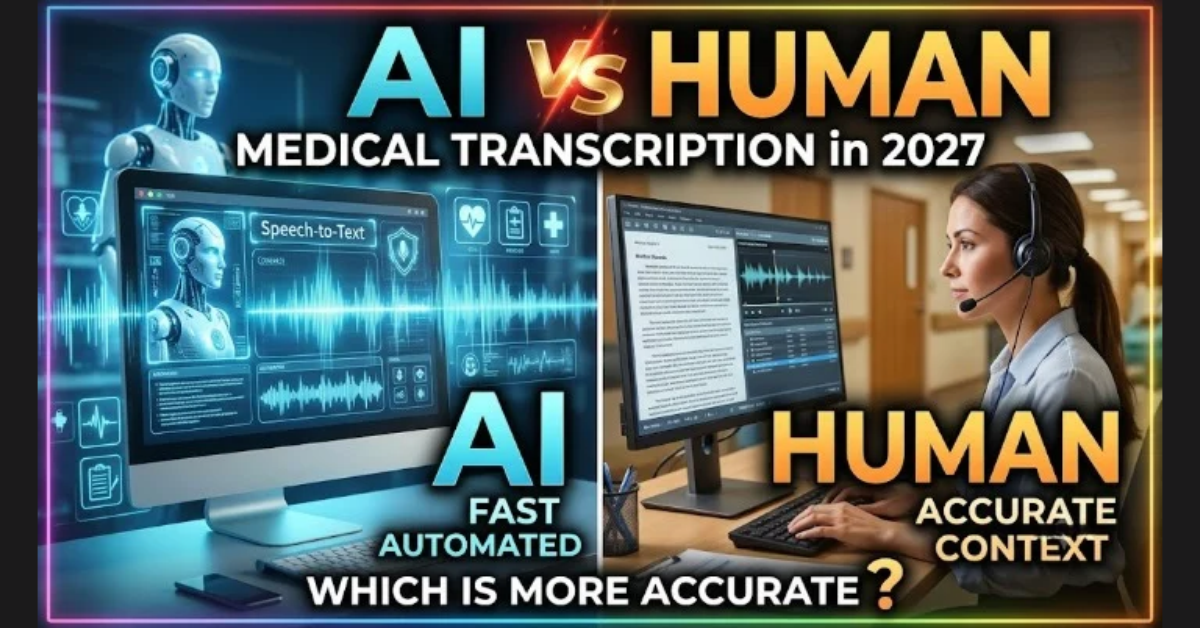
Unlike automated systems that often struggle with overlapping conversations, accents, industry jargon, or background noise, professional transcriptionists understand conversational nuances and can accurately interpret complex discussions.
For market research studies, accuracy is especially important because even minor wording differences can affect coding, sentiment analysis, and research conclusions.
Each transcript captures:
- Questions from moderators
- Participant responses
- Natural conversation flow
- Pauses where appropriate
- Non-verbal cues when requested
- Technical terminology
- Research-specific language
This detailed documentation provides researchers with a reliable foundation for qualitative analysis.
Our Best Translation Services
English to Indonesian Translation | English to Spanish Translation | English to Italian Translation | English to Russian Translation | English to Danish Translation | English to Vietnamese Translation | English to Japanese Translation | English to Finnish Translation | English to Dutch Translation | English to Arabic Translation | English to Norwegian Translation | English to Greek Translation.
Frequently Asked Questions (FAQs)
1. What is market research transcription?
Market research transcription is the process of converting recorded interviews, focus groups, customer discussions, and other qualitative research sessions into accurate written text. These transcripts help researchers analyze participant responses, identify themes, perform qualitative coding, and generate reliable business insights.
2. What is the end-to-end workflow of transcription in market research?
The end-to-end transcription workflow includes seven key stages: receiving research recordings, assessing audio quality, transcribing conversations, identifying speakers, conducting quality assurance checks, formatting transcripts, and securely delivering the final files. Each step ensures the transcripts are accurate, confidential, and ready for qualitative analysis.
3. Why is transcription important in qualitative market research?
Accurate transcription preserves every participant response, making it easier to identify patterns, compare opinions, conduct thematic analysis, and support data-driven decision-making. High-quality transcripts reduce interpretation errors and improve the reliability of research findings.
4. What types of market research require transcription services?
Professional transcription services are commonly used for focus groups, in-depth interviews (IDIs), customer interviews, usability testing, product testing, ethnographic studies, online discussion panels, healthcare research, and consumer behavior studies.
5. What is the difference between verbatim and intelligent transcription?
Verbatim transcription captures every spoken word, including pauses, filler words, and false starts, making it ideal for detailed qualitative analysis. Intelligent transcription removes unnecessary filler words while preserving the intended meaning, resulting in a cleaner and more readable transcript.

Nishi Singh
(Content Writer & SEO Manager)
She is an SEO Manager with over 8 years of experience in marketing and content creation. She specializes in SEO, content strategy, and paid advertisements, helping website owners across SaaS, B2B businesses, and e-commerce platforms achieve measurable growth. With a strong focus on driving organic traffic and crafting impactful content, Nishi has established herself as a trusted expert in the digital marketing space. When she's not optimizing websites, she channels her energy into marathon running, embracing challenges both on and off the track.