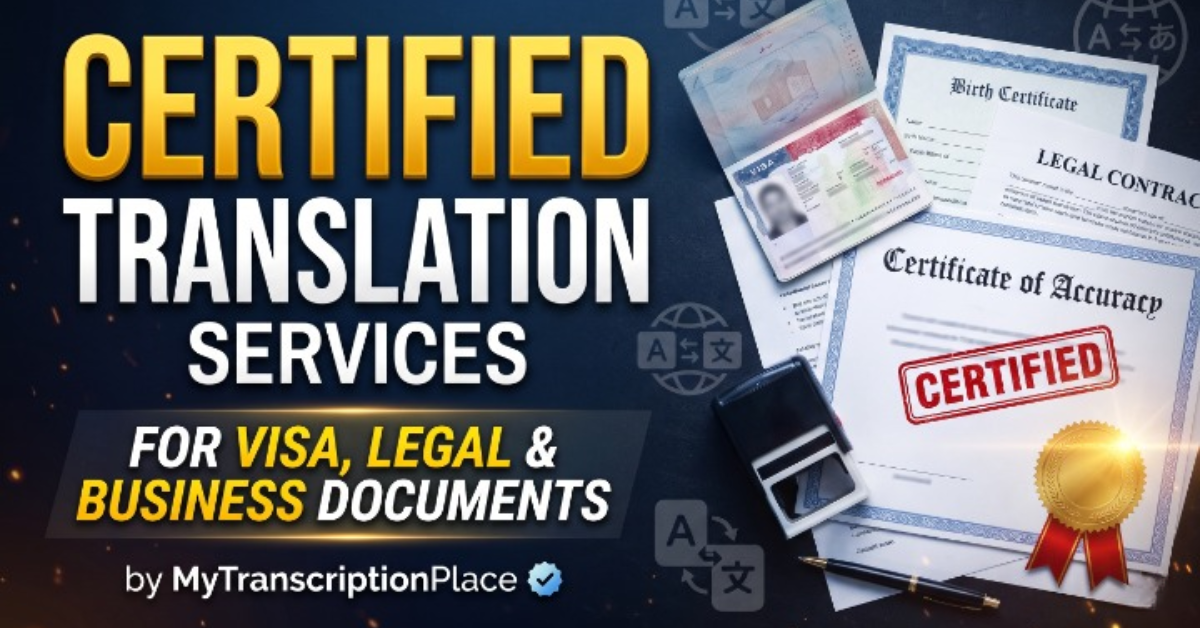
Certified Translation Services for Visa, Legal & Business Documents
A certified translation typically includes the translated document and a signed certificate of accuracy from the translator or translation provider. This statement confirms that the translation is a complete and accurate representation of the original document. Depending on the country and receiving authority, additional requirements such as notarisation, sworn translation, or an apostille may also apply.
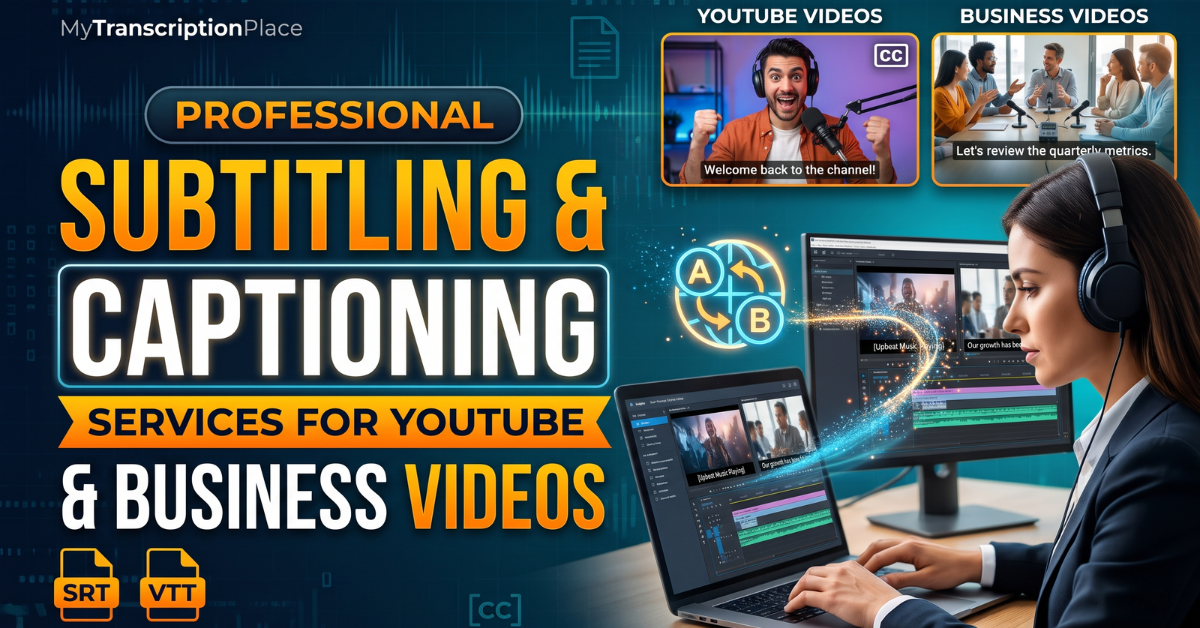
Professional Subtitling and Captioning Services for YouTube & Business Videos
Professional subtitling and captioning services convert spoken dialogue and relevant audio information in videos into accurately timed on-screen text.

How to Transcribe Interviews and Focus Groups for Market Research
Market research transcription is the process of converting recorded interviews and focus group discussions into accurate, organized written documents for qualitative research and analysis.
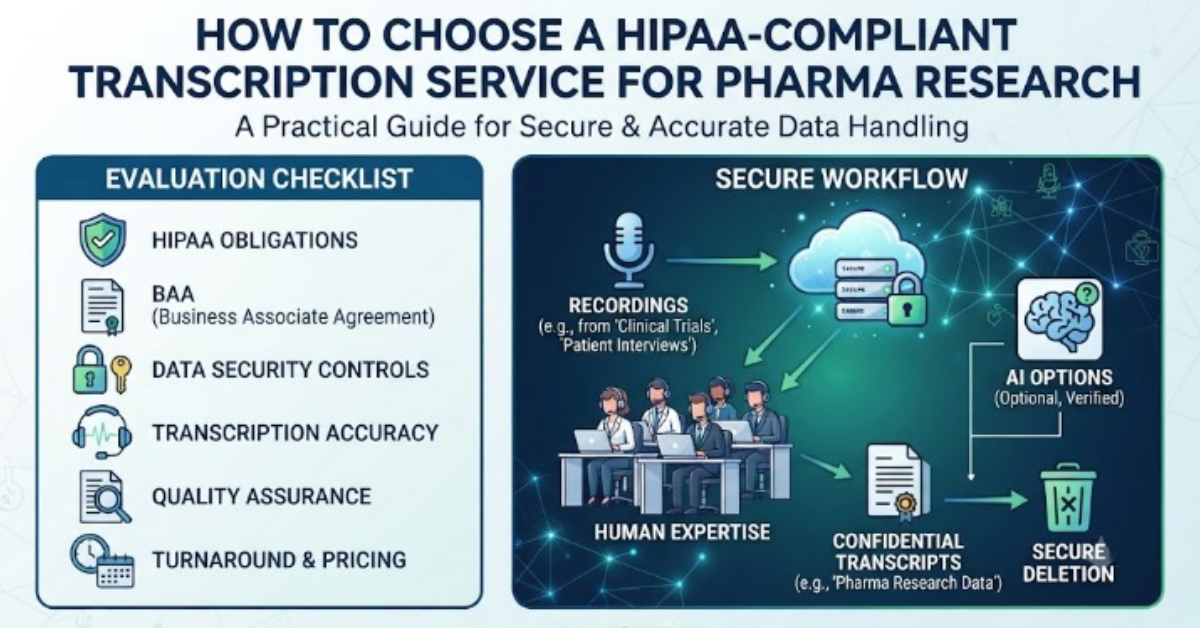
How to Choose a HIPAA-Compliant Transcription Service for Pharma Research
To choose a HIPAA-compliant transcription service for pharma research, evaluate the provider's HIPAA obligations, Business Associate Agreement (BAA), data security controls, confidentiality practices, transcription accuracy, and quality assurance process. You should also understand how recordings are transferred, accessed, stored, processed, and deleted before sharing sensitive research data.
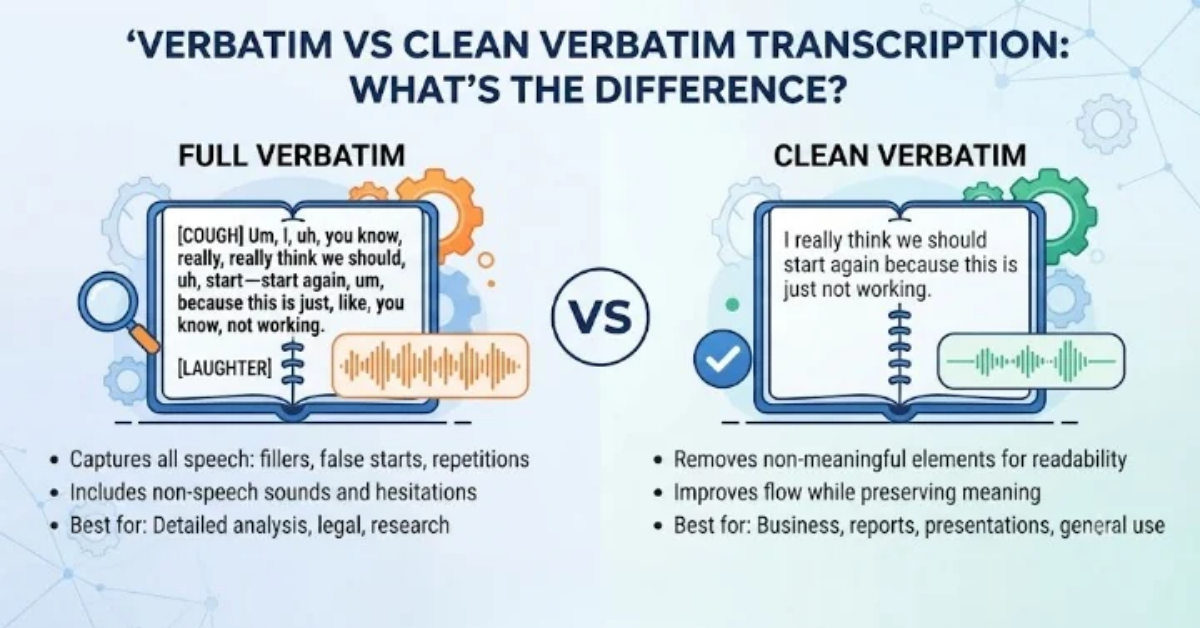
Verbatim vs Clean Verbatim Transcription: What's the Difference?
Verbatim transcription captures speech as it is spoken, while clean verbatim transcription removes unnecessary speech elements to improve readability without changing the speaker’s intended meaning.
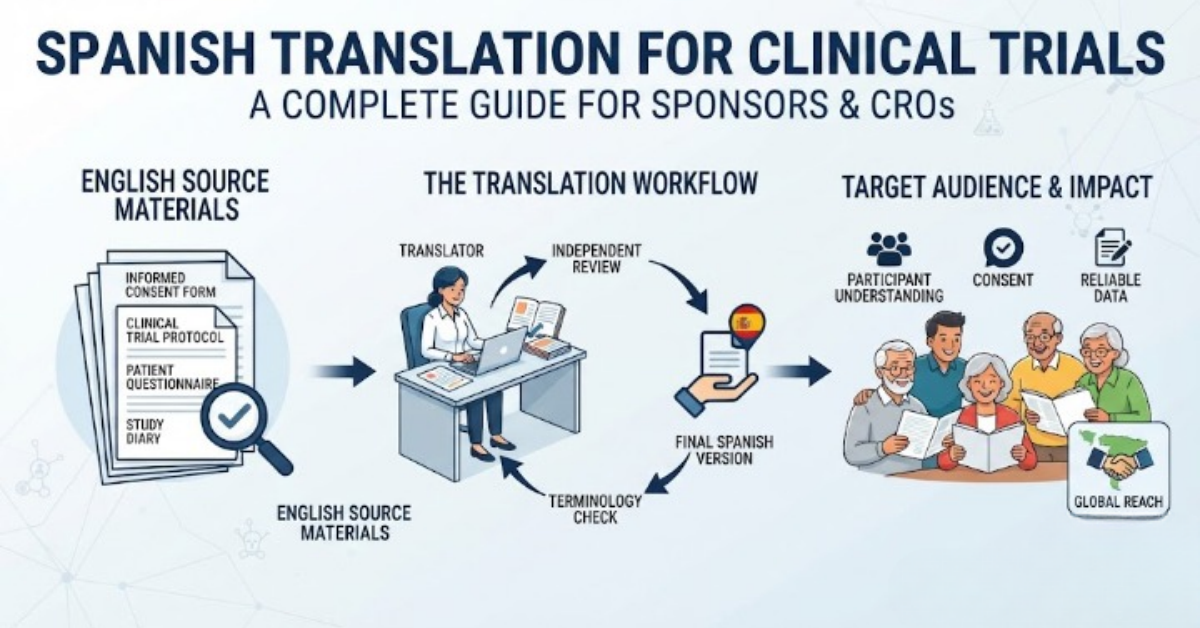
Spanish Translation for Clinical Trials: A Complete Guide for Sponsors & CROs
Spanish clinical trial translation is the process of translating clinical research documents and participant-facing materials into Spanish while preserving the source content's medical meaning, intent, and relevant context. Depending on the document and study requirements, the process may include specialist translation, independent review, terminology checks, quality assurance, and linguistic validation.
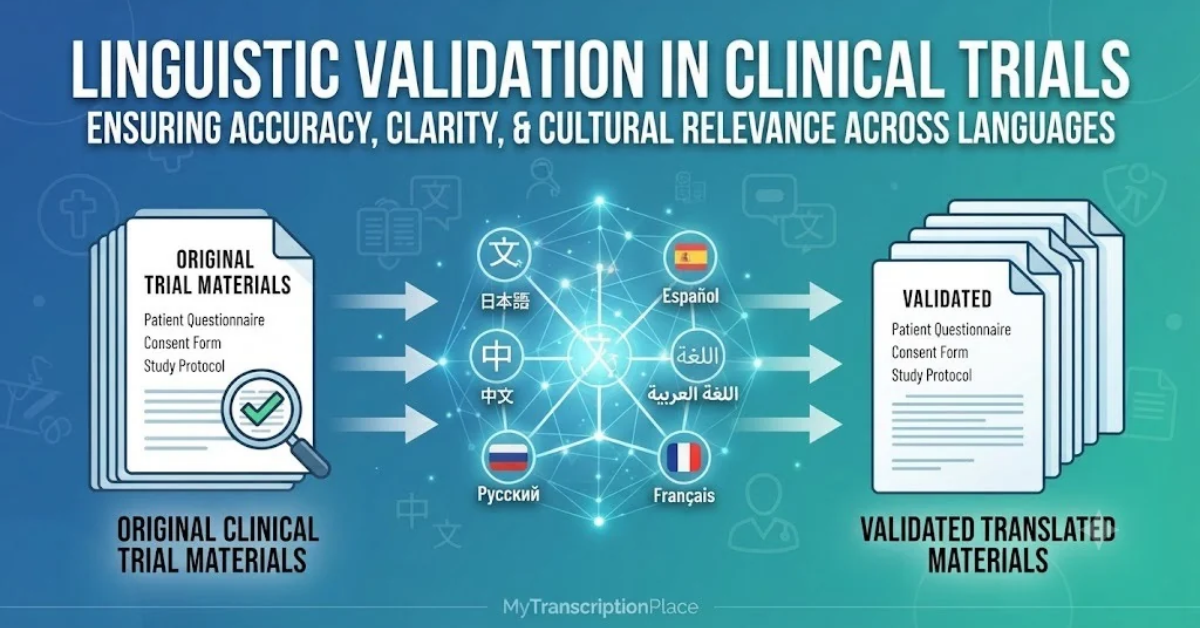
Linguistic Validation in Clinical Trials: Process, Steps & Best Practices
Linguistic validation in clinical trials ensures that translated study materials are accurate, clear, and culturally appropriate for participants across different languages and regions. It is particularly important for patient-reported outcome (PRO) questionnaires and clinical outcome assessment (COA) tools, where differences in wording can affect how participants understand questions and report their symptoms, experiences, or quality of life.
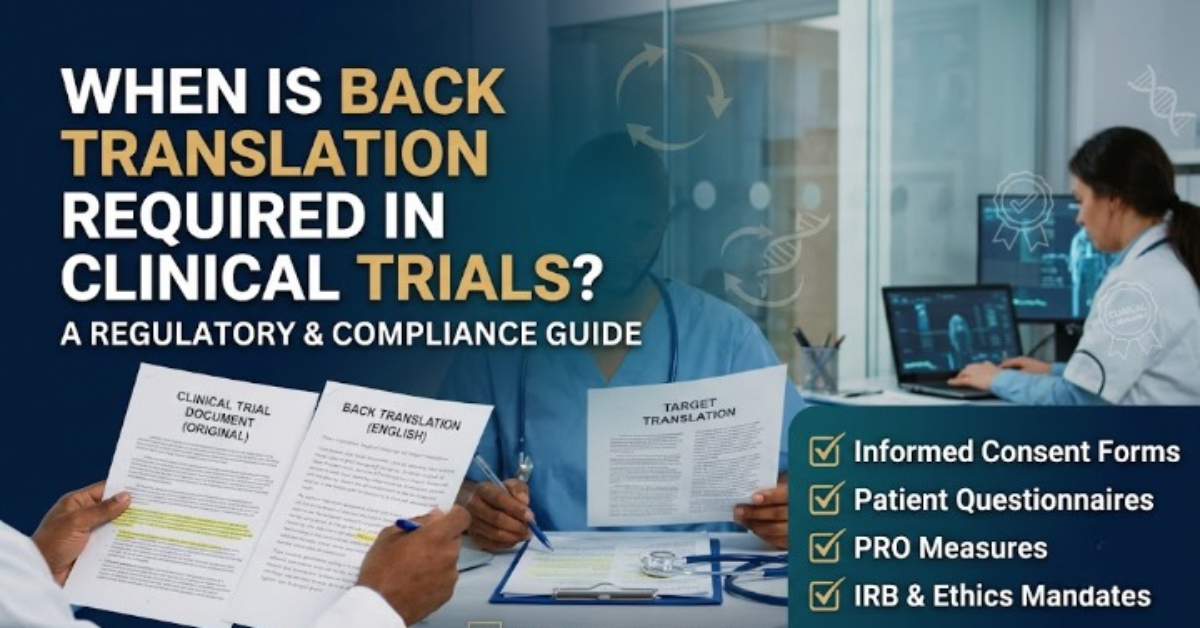
When Is Back Translation Required in Clinical Trials? A Regulatory & Compliance Guide
Clinical trials often involve participants across multiple countries and language groups. To support informed consent, participant safety, and reliable data collection, clinical trial documents must communicate the intended information clearly and accurately in every required language.
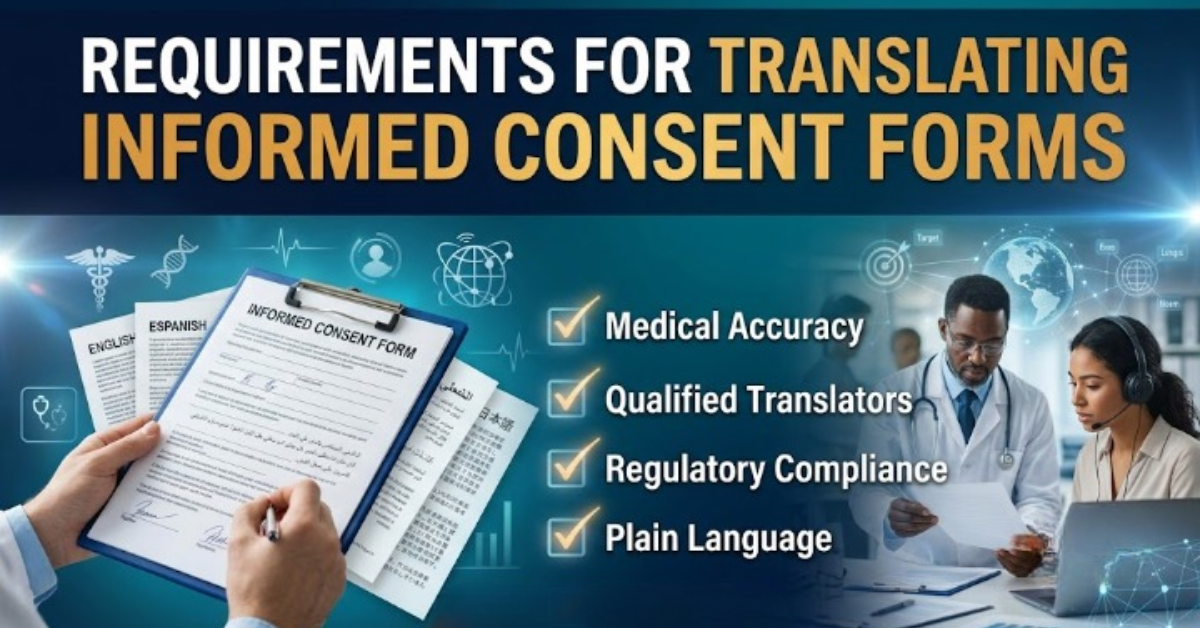
What Are the Requirements for Translating Informed Consent Forms?
Translating informed consent forms for clinical trials requires medical accuracy, qualified translators, clear and culturally appropriate language, confidentiality safeguards, and thorough quality checks. The translation must preserve essential information about study procedures, potential risks and benefits, participant rights, and voluntary participation. Depending on the study and applicable regulations, the translated form may also require review and approval by an Institutional Review Board
KOL Interview Transcription: A Complete Guide for Pharmaceutical and Life Sciences Research
Key Opinion Leaders (KOLs) play an important role in pharmaceutical and life sciences research by sharing their expertise on clinical practice, treatment approaches, healthcare challenges, and emerging medical developments. Interviews with physicians, clinical researchers, healthcare professionals, and other subject-matter experts help research teams understand clinical perspectives and gather valuable qualitative insights.
10 Questions to Ask Before Choosing a Pharmaceutical Translation Company
Choosing the right pharmaceutical translation company is essential for communicating clinical, scientific, regulatory, and drug-related information accurately across languages. The right provider should offer relevant pharmaceutical expertise, a documented quality assurance process, appropriate confidentiality safeguards, and experience with your specific document types and target markets.
Is AI Transcription HIPAA & GDPR Compliant? A Complete Healthcare Guide
AI transcription is transforming healthcare documentation by converting medical conversations, clinician dictations, and recorded consultations into written text. While these tools can help healthcare organizations streamline documentation, they also raise important questions about patient privacy, data security, and regulatory compliance.